Top 3 AI Humanizers for Students
Tue, 22 September 2026

Inspirational journeys
Follow the stories of academics and their research expeditions
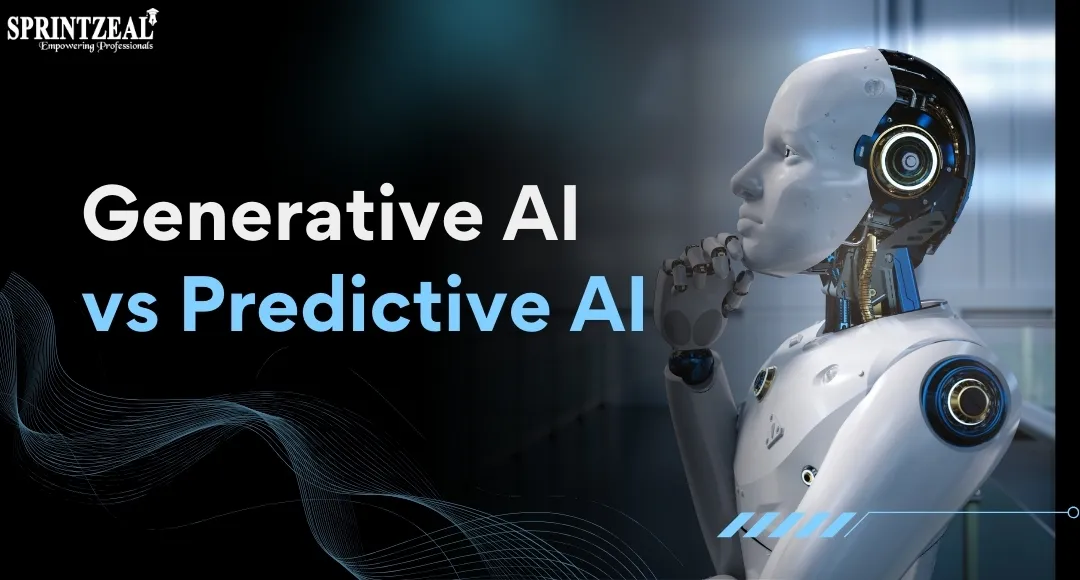
Artificial intelligence (AI), which is a field aimed at building systems that can perform tasks that usually require human intelligence, is the main factor changing the modern digital landscape. The technologies of AI have gone through a striking change in their journey, the change being very fast, and thus, the technologies have moved very fast from only being theoretical to being used in the real world. You can read more about this transformation in this artificial intelligence article. One of the main factors that has made this development possible is machine learning (ML), which is a very influential part of the AI and machine learning area that equips computers with the ability to learn from data without the need for explicit programming instructions. This breakthrough is what this artificial intelligence article is largely about.
When we are talking about AI today, we cannot but see the two main concepts. The traditional approach has always been centered on prediction, while innovation in the latter wave has been found in creation. This difference is what points out the article's main issue: Generative AI vs Predictive AI. Both, however, use advanced algorithms and large data sets, but their goals and hence their results, are completely different, which is a very important point for professionals or enthusiasts who are engaged in the rapidly growing field of AI to know.
AI is an area of Computer Science that strives to copy the mental processing of human beings. To achieve this goal, researchers are figuring out how to create machines that have the ability to reason, solve problems, and make decisions just like a human does. These systems use very complex algorithms and very large data sets that help them to understand very complex patterns in generative ai vs predictive ai and then do what the patterns require.
The diversified ai uses that have been put in place across various fields of the economy have facilitated the realization of substantial ai benefits. The leading ai applications to mention are the increased and improved automation that is the main source of efficiency of operations and the excellent data analysis that is almost error-free and very fast as compared to research. The main principles of artificial intelligence still remain the most important points to start from when one is trying to understand all modern computational intelligence.
In fact, the massive expansion of AI capabilities is one of the factors that contributed to the ML development. ML algorithms that control learning allow systems to learn and adjust to the data without human intervention, i.e., they do not have to be programmed for every single result that they come up with. This system is at the core of predictive modeling, where the goal is to either anticipate events or put data into categories using the patterns and the possibility observed in the past.
Predictive modeling: Entities such as financial fraud detection, customer churn forecasting, and medical diagnosis support are just some examples. The cooperation between AI and machine learning techniques opens a whole new world to organizations. They can now both quantify risk and gain the foresight that is critical to their success. Nevertheless, these models mainly concentrate on distinguishing or labeling the existing data points of generative ai vs predictive ai, which is a significant operational difference from creation-focused systems when you compare them.
The advent of Generative AI indicates a fundamental conceptual change in view, where the orientation of intelligent systems is no longer towards analysis but towards synthesis. In contrast to the previous methods, GenAI is aimed at producing new content, whether it is human-like text or a new image, video, music, or computer code that works. The original technology, which is a very big model, is most of the time called ai generative because the output is in the form of creation.
Industries from almost every sector are massively impacted by this revolutionary GenAI technology and how it is going to fundamentally change the way they create content. This ability vividly demonstrates the pinpoint that is at the core of the present technological debate: does analysis have a role to play or is the power of creation the one that matters most? To be able to harness the most of these highly advanced systems of the present time, it is extremely important to know what the strengths and the weaknesses of each side are in generative ai vs predictive ai.
The blog on the future of quality management explores how Generative AI is transforming Six Sigma practices by automating data analysis, accelerating defect detection, and enabling predictive improvements. It highlights real-world applications in manufacturing and healthcare, showing how AI can reduce project timelines and boost efficiency.
Generative AI models operate on the principle of synthesis. They essentially learn the whole distribution and statistical patterns of huge datasets like millions of texts or images and then are able to create new data points that are statistically very similar but still unique. For example, Large Language Models (LLMs), which are based on transformers, work by predicting the next word in a sentence in a probabilistic way using all the words that came before, thus achieving coherence of the "AI-created content" process. In contrast to these, Generative Adversarial Networks (GANs), or Diffusion Models, implement very complicated methods (for example, "fighting" a generator network with a discriminator or gradually eliminating the noise from the random data) to do the "ai to generate images" trick and other media. What they fundamentally do is to "ai generate" new things from scratch.
Predictive AI comes from the concepts of Analysis and inference. The ultimate aim of predictive ai models is to establish the relationships between the input features and the target outcome variable so that one can make a particular forecast or decision. This can be done through the use of traditional machine learning prediction models such as regression (for the purpose of forecasting continuous values like house prices) and classification (for determining categories). like "fraud" or "not fraud"), and clustering. The model gets trained on past, labeled data, and the result is usually a number, a probability, or a categorical label. The final product is an AI's estimate of a previous state that took place, not an entirely new AI model.
Fundamentally, there are various differences between the two paradigms. The biggest differences between them lie in their ultimate goals, the information produced, and the methods used to complete and achieve those goals. While both paradigms belong to the category of AI and develop their outputs through machine-learning methodologies, the differences between the two are fundamental and essential. Knowing the generative ai vs predictive ai interaction is very important for the right usage. This division is also helpful in explaining the difference between machine learning and ai, as both employ ML methods but have different end goals.
|
Feature |
Generative AI |
Predictive AI |
|
Core Goal |
Creation/Synthesis |
Forecasting / Classification |
|
Output Type |
Novel content (Text, Image, Code) |
Scores, Labels, Probabilities (e.g., 85%, Yes/No) |
|
Key Question |
"What should come next?" / "What is the structure of this data?" |
"What is the value?" / "Which category does this belong to?" |
|
Primary Models |
GANs, VAEs, Transformers (LLMs) |
Regression, Decision Trees, SVM, Clustering |
|
Example Use |
Drafting an article, generating synthetic data |
Credit risk assessment, demand forecasting |
Generative AI is a major change from merely analyzing to synthesizing and hence has unique features that are changing the way work is done in every sector. The main function of Gen AI is its power to produce new and contextually appropriate content in different modes (text, image, audio, video) by basically learning from the huge datasets. Quite often it is a deep learning Foundation Model that is used.
Some of the main features that distinguish generative ai vs predictive ai models are Creativity and Originality (coming up with fresh, non-templated content), Adaptability Across Tasks (a single large model can be used for summarization, translation, and generation), and Personalization at Scale (tailoring outputs for millions of individual users made instantly).
Generative AI’s most direct and clear use is content creation. Tools powered by Large Language Models (LLMs) and diffusion models make the content pipeline super efficient. This content creation ai greatly enhances the writer's output, as it takes care of writing long-form articles, creating social media copy, video scripting, and even the generation of software code suggestions in generative ai vs predictive ai.
The idea is not to substitute human inventiveness with a machine but to supplement it. Thus, rough notes get converted into refined drafts. Besides, the problem of 'writer's block' is solved. For example, an AI-generated content tool is capable of creating thousands of distinct descriptions of products and variations of ads in, let us say, one hour of human work, thereby allowing businesses to create AI content in a very productive manner and generate content using ai at a tremendous level.
The effect of generative ai for business is so powerful that it goes a long way beyond merely writing content, essentially changing the ways a business interacts with its customers and how it manages itself. Marketing is one area where the technology facilitates absolute hyper-personalization, whereby businesses can employ the ai in marketing functions to compose advertising content that is dynamic and create communications (emails, for instance) that are customized and changed automatically depending on the behavior of each customer.
Customer service can use Gen AI-powered sophisticated chatbots and voicebots to respond quickly, accurately, and efficiently to customer queries by scanning a large volume of data. In addition, digital marketing ai serves as an idea generator for campaigns, a tool to improve resource management, and a means to produce synthetic data for other AI models, thus leading to the reduction of expenses concurrently with the introduction of innovations through generative ai vs predictive ai.
The spread of GenAI among the general public is due to the availability of ai software and platforms. Good examples of ai programs are ChatGPT, Grok, and Claude, which are conversational models that are good at general text tasks and in specialized areas such as code generation in generative ai vs predictive ai.
For instance, image creators like DALL-E, MidJourney, and Adobe Firefly present a chance to ai create images by writing a simple prompt, and then the picture can be altered by the user in many different ways. Developers might use platforms like Google AI Studio and Firebase Studio to bring these models into their apps. Hence, creating a custom generative ai app has never been easier or more accessible if you are just looking for an ai free tier to do your testing and prototyping.
Generative AI is a significant technology, which finds applications across many sectors, thereby demonstrating its capability:
Artificial Intelligence careers highlight the growing demand for AI professionals as industries rapidly adopt machine learning and automation. It outlines essential skills and career paths like AI engineers and NLP specialists and emphasizes how mastering AI can open up diverse opportunities in 2026 and beyond.
Predictive AI, which is based on statistical analysis and machine learning, is the main source of information for the future through the use of past and present data. Its core focus is different from that of generative ai vs predictive ai is more about analysis, reasoning, and projecting future results based on previous examples than it is about synthesis. In fact, it is an extremely valuable instrument for decision-making that anticipates the future and risk control, as well as, in general, for planning at the strategic level across different industries.
The AI driven example for data analysis (AI Data Analytics) is powered by the Predictive AI component of AI Data Analytics, which is a subset of Data Analysis AI. As such, the majority of data analysis includes answering four questions (Prescriptive, Predictive, Diagnostic, and Descriptive), with Predictive AI providing answers for the third question: "What will happen next?" Predictive AI identifies the underlying patterns, utilizing machine learning and statistical techniques, within the large volume of data to allow the predictive system to project the upcoming behavior of an individual or event, as well as predict an event occurring within the near future in generative ai vs predictive ai.
The realization of AI in data analysis does not only end in the retrospective sphere but moves a step ahead to become forward-looking as well, through which trends can be easily identified and the whole process gets simplified and scaled.
The success of AI predictive modeling depends entirely on whether the right machine learning AI algorithm is selected for the task at hand.
Each of these model types serves a different purpose in predictive analytics AI as described in detail below:
The core of business AI optimization is basically the use of predictions for the two main objectives of the enterprise, i.e., the increase of efficiency and the decrease of risk. Besides, modeling in generative ai vs predictive ai and capabilities AI contribute to the generation of real-time interventional insights in crucial operational areas of the company:
The implementation of marketing and AI via generative ai vs predictive ai has been a game-changer for both ROI and the relationship with customers. By means of the historical data on the customer's behavior, AI in Digital Marketing can work out extremely focused strategies like:
Both generative ai vs predictive ai offer significant value, but their strategic use in a business setting is largely dependent on the objective: creation vs. foresight. Companies that combine the use of both technologies not only become able to predict the future but also automatically produce the resources required to respond to it. Thus, making them highly competitive.
In marketing and content, the two AI kinds complement each other. Predictive AI gives the who and where, and Generative AI comes up with the what.
Predictive Role (Targeting): Algorithms employ ai marketing course knowledge (statistical models and historical data) to conduct highly precise lead scoring, estimate customer churn probability, and segment audiences for maximum effect. It responds to the question: Which 10% of customers are most likely to convert?
Generative Role (Creation): By using generative ai in marketing, the instruments take the extremely precise audience segments given by the predictive model and produce hyper-personalized content, new ad copy, customized email subject lines, or even synthetic product visuals that are directly attractive to that small group. Thus, the system becomes an ai creative partner, which is capable of producing the required output at a large volume.
An efficient decision-making AI system requires not only thorough analysis but also clear articulation. In this context, Predictive AI represents the main source of quantified foresight, and Generative AI is the one that facilitates the communication of the insight.
Predictive Role (Foresight): The AI is employed for making the most important business decisions, e.g., dynamically pricing goods/services, evaluating new investment risks, and figuring out the best number of employees for work scheduling. The AI outputs a numerical or categorical probability—the basic ai work that is essential for making decisions with confidence.
Generative Role (Synthesis & Strategy): The AI is used to swiftly and effectively synthesize intricate reports, extract key points from thousands of research papers to create brief executive summaries, or compose alternative strategic proposals based on the predictive outcomes (e.g., "If risk is high, draft a report outlining mitigation strategies"). Thus, it speeds up the comprehension and getting of the predictive findings.
Operational effectiveness relies heavily on accurate and timely AI forecasting in conjunction with well-orchestrated execution. Consequently, the union of these two generative ai vs predictive ai categories is a great enabler for ai automation.
Predictive Role (Optimization): This revolves around ai data analysis for the purpose of achieving efficiency. Retail demand forecasting is managed by predictive models, which also provide workers with optimized warehouse layouts that are based on anticipated order volumes and enable factory equipment to have scheduled predictive maintenance.
Generative Role (Enabling Automation): The generative AI comes up with the resources or the code necessary for the operational ai automation. It also includes the automatic writing of the structured code or scripts needed for a new API integration, the production of synthetic data for testing new logistical scenarios, or assisting in internal IT by preparing service bot conversational flows.
Learn why AI content detection is vital in classrooms. It emphasizes protecting academic integrity, encouraging critical thinking, and fostering honest student-teacher dialogue, while also helping shape fair AI policies and empowering teachers to focus more on teaching.
The full potential of present-day AI can be understood when both generative ai vs predictive ai models are used tactically in various business units. By dividing the use of technology by industry function, companies can easily see the places where Generative (creation) and Predictive (foresight) activities bring the most value.
Marketing AI is an effective mixture of efficiency through forecasting and creative output at scale. This couple is revolutionizing both content pipelines and customer relationship management (CRM).
Generative AI Role (Creation): The ai creative is the one most identified with this area. It creates extremely personalized ad copy, invents new images and short videos for marketing, writes long-form SEO articles, and also makes scripts for chatbots interacting with customers. Products based on generative ai in marketing give enterprises the ability to simultaneously execute thousands of different versions of ads.
Predictive AI Role (Foresight): Based on the artificial intelligence in the digital marketing knowledge base, very complex lead scoring, churn prediction, and real-time advertising efficiency can be done by algorithms. The result is that the creative work GenAI has made is used properly by targeting the people most likely to be converted. Thus, ROI is at its highest and the value of marketing ai is demonstrated.
Media Specifics: In the media world, Predictive AI can identify box office hits or streaming content with the highest viewership, while Generative AI can generate localized dubbing, synthetic voiceovers, and even procedural background elements for films or video games.
AI in the technical area is like a jack of all trades. It not only shortens the development cycles but also can help the ai engineer in defect prevention and management process optimization in generative ai vs predictive ai.
Generative AI Role (Synthesis): Most of its use is in programming and designing. It supports the ai engineer by producing code snippets, changing one code language into another, writing detailed technical documents, and creating artificial test data for new features with which to do stress testing. In product design, it quickly generates UI/UX concepts from wireframe descriptions.
Predictive AI Role (Risk & Optimization): indispensable for ai project management certification jobs. Models can tell the risk of a feature deadline being missed due to the complexity of the code and the speed of the team, spot abnormal sensor readings in manufacturing (predictive maintenance), and even estimate technical debt accumulation in a codebase. Large-scale projects thus have safer risk mitigation possibilities.
Education: Highly specialized ai engineer course syllabi are quickly embedding both Gen and Pred AI elements to adequately equip the professionals in this field with AI-assisted roles that are constantly changing.
This is the main area for the implementation of generative ai vs predictive ai, where the rules of ai data science are applicable to both the modeling and the interpreting parts.
Predictive AI Role (Core Modeling): The main focus of the data science ai ml course is training of this kind of AI which is at the center of the most important analytical tasks: time-series prediction, handling difficult classification problems (categorization e.g. of images and natural language processing), and spotting clusters in the case of unlabeled data. It is the main instrument for obtaining practical insights from ai data.
Generative AI Role (Augmentation & Reporting): Gen AI helps the data science team by providing them with the necessary synthetic data of high quality and in a manner that is friendly to the model training process, especially in cases where there are privacy requirements and real PII (Personally Identifiable Information) cannot be used. More importantly, it is leveraged to simplify the most difficult parts of work done by the analyst and to make them much more understandable through graphs, which are then shared with non-technical stakeholders, as well as their summaries and reports written in natural language.
To keep up with AI advancements, individuals have to continuously upgrade their knowledge by taking specialized generative ai vs predictive ai courses, AI/ML programs, and following recognized AI certification paths. Contemporary learning includes both Generative and Predictive AI, which aids the professionals in learning generative AI, mastering traditional ML, and creating production-ready systems.
A generative AI course is very much focused on real-life scenarios and experience. Among the major topics are prompt engineering, transformer-based foundation models, multimodal creation tools that AI uses to generate images, video, and audio, and RAG for enterprise grounding. The majority of generative AI courses adopt a project-based approach, wherein students learn to integrate APIs and frameworks not only to develop authentic systems but also to simulate media, e.g., 'AI images' and 'art creating AI assets.'
Predictive AI / ML Learning
One can significantly gain machine learning knowledge from well-structured traditional machine learning classes. These classes also include an ML course or broader AI/ML course that mainly focuses on statistical aspects and goes deep into algorithms. Students are introduced to regression, SVMs, trees, ensembles, evaluation metrics, CNNs, RNNs, and robust data preparation. The learned skills serve as a direct input for AI predictive analytics as well as for positions that demand expertise in large-scale modeling.
Read about how AI is reshaping employee evaluation and development. It highlights benefits like real-time feedback, personalized growth plans, and predictive analytics, enabling organizations to boost productivity while fostering a culture of continuous improvement.
One way of ensuring the high quality of one's professional skills in the AI area is to get an AI certification. Typically, a vendor-specific AI certification course from Google, AWS, or Azure revolves around cloud tooling, whereas the platform-agnostic AI online certification programs concentrate on theory. The prices of courses vary considerably—from free courses in AI to expensive boot camps and degree programs. A career in Data Science, as an ML Engineer or an AI Engineer, is one of the possibilities that can be realized with the support of the emerging AI Engineer certification tracks.
Generative tools are LLMs (Gemini, GPT-4, and Claude), image models like Midjourney, DALL·E, and Stable Diffusion for AI generate images, and developer frameworks such as Hugging Face, TensorFlow, and PyTorch. On the other hand, predictive tools that are part of an AI data analytics course include scikit-learn, NumPy/Pandas, deep learning frameworks, and cloud platforms like Vertex AI, SageMaker, and Azure ML for end-to-end AI data analytics workflows.
Today, AI systems have turned into a hybrid where they mostly combine the features of both generative and predictive models. The latter ones help to anticipate the client needs and the former ones to create the custom messages, extract summaries from the confidential documents or even write the safe code. What this fusion does is not only widen the AI capabilities but also make the companies able to link the foresight with smart automation.
Hybrid AI systems that combine creation and prediction constitute AI’s future. These systems will have capabilities that blur the line between analytical and generative tasks. Thus, they will be able to produce more adaptive, context-aware AI applications. In offices, the influence of AI on work will be mainly through augmentation, as predictive models will automate routing, scheduling, and triage. Thus, Generative AI will be a co-pilot for content drafting, concept designing, and coding support; the rising AI automation will shift human roles more toward oversight and creative strategy.
The development of AI models will eventually do away with the separation of analysis and generation, as multimodal AI creation systems will be able to understand text, images, and video and at the same time generate mixed-media outputs, with priorities such as explainability, grounding, and ethical alignment being there to ensure that the behavior is trustworthy.
Education will be more and more dependent on learning with AI, using predictive tools to find gaps and generative tools to create customized lessons and materials, which will be at the core of studying AI methods, while companies will be taking AI as a fundamental layer of their operations, where prescriptive systems will be guiding decisions and Generative AI will be facilitating communication, creativity, and innovation.
Generative AI vs Predictive AI are two different concepts that refer to very different uses of technology: predictive models are used to foresee what will happen, while generative models are capable of producing new content. In fact, both utilize common machine learning bases and bring in different kinds of value to the table—prediction, which is at the core of most efficiency, and generation, which is the main driver of innovation. An AI summary that is well completed with respect to organizations states that prediction is a means to achieve smarter decisions, while generation is a way to open up creative potential.
The point is that contemporary AI study has to encompass both areas. Those experts who are able to work with predictive modeling and generative workflows and at the same time understand how to integrate them into hybrid systems are the ones that will be most successful. Integrating AI knowledge in this way is a step ahead for you towards the powerful, transformative AI systems of the future and at the same time, you will have versatility in terms of tools, roles, and impact. Sprintzeal offers courses that are helpful for any aspirants who are willing to pursue a career in AI. There are numerous options available to consider.
AI Mastery and Machine Learning (ML): This is a very in-depth, broad, and comprehensive course that includes all of the basics of AI/ML as well as many of the more advanced topics, such as neural networks, deep learning, Natural Language Processing, computer vision, and the introduction to large language models. Predictive Analytics is one of the key areas that this program can provide information and experience in and will set a foundation for anyone contemplating going this route.
Data Science Mastery: This will focus on Machine Learning, Big Data toolsets, Data Analysis, and the basics of Predictive Analysis, and is ideal for any applicant wishing to become proficient at employing data to drive decision-making and develop Predictive AI workflows.
For more details, contact us and let us assist you to select the best course track to meet your career goals
A generative AI is a technology in artificial intelligence used for generating content such as texts, images, or musical compositions based on an understanding of the pattern in data.
Predictive AI is an artificial intelligence application that utilizes past information in making predictions with regard to future trends.
Predictive AI will be widely used in decision-making through the use of Generative AI (for creativity) and the subsequent development of sound, feasible predictions from these results.
A generative AI engages in operations involving a massive and diversified dataset from which new information can be generated.
Predictive AI technology is based on the usage of labeled datasets for predicting future events.
Entertainment and publishing (i.e., books, newspapers and magazines), as well as Marketing, Graphic Design, Healthcare and Education are commonly cited areas of use.
Finance, retail, healthcare, and logistics are a few among many sectors that have adopted Predictive AI in functions such as risk analysis and forecasting.
Although Generative AI can be applied in creative innovation, Predictive AI can be applied in forecasting.
Yes, their integration makes possible an extreme level of creativity and equal accuracy.

Tue, 22 September 2026
Tue, 08 September 2026

Mon, 24 August 2026
Wed, 19 August 2026
Mon, 17 August 2026
Mon, 17 August 2026
Thu, 13 August 2026

Mon, 24 August 2026
Tue, 28 July 2026

© 2026 Sprintzeal Americas Inc. - All Rights Reserved.

 USA : +1315-322-7821
 UK : +44 7700 174870
 IND : +919036108287
 AUS : +61 480 005 455