Top 3 AI Humanizers for Students
Tue, 22 September 2026

Inspirational journeys
Follow the stories of academics and their research expeditions
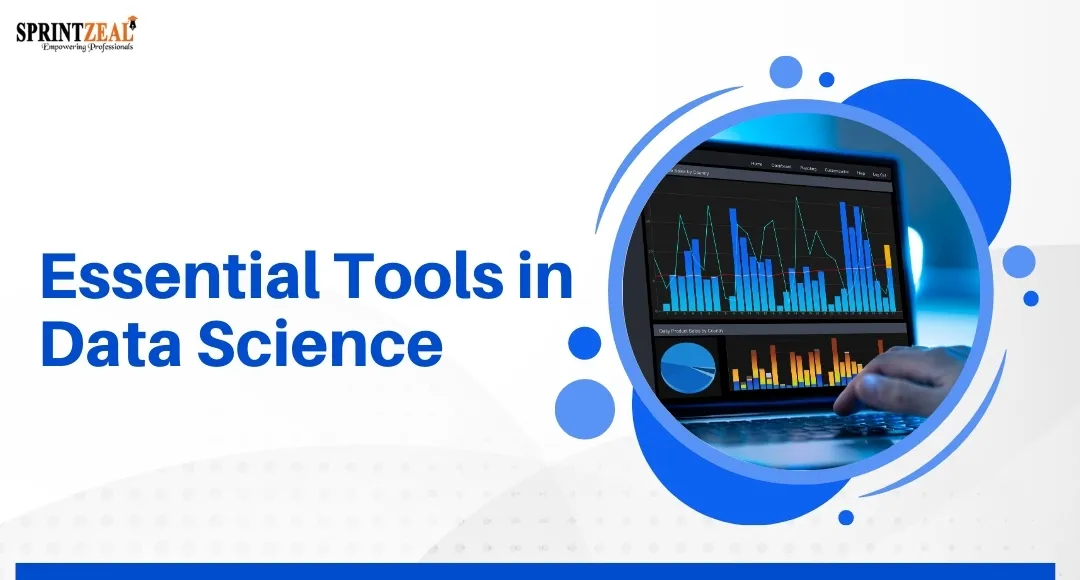
Introduction to Data Science Tools
Data science tools are becoming the basis of modern systems, especially in a data-driven world where everything revolves around data. The demand for data scientists is extremely high, as evidenced by the number of job openings, which is more than 520,000 globally and 137,000 in the US only. With such a high demand, knowing data science tools such as Python, R, SQL, machine learning frameworks, and cloud platforms is not only a great advantage, but it is also becoming the key to industry survival and success.
The market that feeds this demand is expanding rapidly. According to Business Research Insights, the global data science platform market will be worth USD 274 billion by 2034 after an overall annual growth rate of about 20.7 percent. Another forecast by Precedence Research is even more surprising, as it sets the 2034 value at USD 676 billion. The U.S. Bureau of Labour Statistics is also indicating that the number of data scientist positions will go up by 34 percent between 2024 and 2034. This is a rate that is considerably higher than the average for all jobs.
So, why not take a look at the top 15 data science tools that have been dominating the fields of analytics, automation, and AI technologies which help professionals to upgrade their workflows and achieve greater results?
Python was made by Guido van Rossum in the late 1980s and came out in 1991. The main idea behind the language was to make the code easy to read and writing the code intuitive. The language's simplicity eventually allowed it to grow from a general scripting language to the most popular language for data science and AI. That’s why it comes to the first place if data science tools are concerned.
One of the reasons why Python is chosen as one of the top data science tools is that it offers a complete ecosystem for data professionals. No matter if you are setting up machine learning models, modifying datasets, or deploying AI systems, Python will have the library that suits your needs—NumPy for numerical calculation, pandas for data wrangling, scikit-learn for machine learning, and many more. Machine learning libraries such as TensorFlow and PyTorch are very easy to use together with Python, hence giving developers no other choice but to choose it to be their tool of work.
The main reason why Python is so good is the fact that it can be readable and flexible and has a large supportive community all around the world. The code is written in such a way (syntax) that it is understandable even to a beginner and this is why it takes a very short time before the beginner becomes productive. The language has no limitation in terms of its ability; as the language is very scalable, it can be used for small projects as well as for complex large solutions by different enterprises. The huge community constantly comes up with new tools, resolves issues, and collaborates to create new ideas—thus making Python upgrades faster than almost any other programming language in the tech field.
Python is great for almost all data-related tasks, such as:
Data cleaning: quick, easy, and user-friendly data manipulation with pandas.
Machine learning: Build, test, and implement ML models by using scikit-learn, XGBoost, or TensorFlow.
NLP: Implement and analyse language using libraries like NLTK, spaCy, and Hugging Face.
Visualisation: Generate stunning visuals with Matplotlib, Seaborn, and Plotly.
It was a University of Auckland duo, Ross Ihaka and Robert Gentleman, who made R the statistical computing and analysis language. Their vision was to invent one single tool that provides vast modelling and visualisation possibilities along with the use of stats but at that time, the idea of data science tools was far from being known.
The key reason to use R refers to its uncompromisingly methodological foundation in statistics and thus to be highly effective in those tasks that require complex mathematical modelings like probability or inferential statistics. In addition, R is an environment where statistical methods are not only easy to apply but also to test and visualise. Thanks to a multitude of specialised R packages (and as an example, one can think of epidemiology or econometrics), R is still a leading solution in academic and research-intensive areas.
R is behind the high-end graphics ecosystem known worldwide and therefore one of the main reasons it is singled out is the R libraries like ggplot2, lattice, and Shiny, which lead the way in this visualisation ecosystem. These are libraries that facilitate the users with optically stunning and precise as well as interactive dashboards and publication-style charts. Leveraging research as its solid foundation, R is consistent with the usual characteristics that come with scientific research: accuracy, credibility, and reproducibility. These are the must-have attributes of any field where data has to be treated with scientific rigour.
R is a perfect match for situations needing thorough statistical exploration, for instance:
Surveys: Data from complex surveys can be designed, analysed, and interpreted.
Statistical tests: Tests of hypotheses, regressions, and interactions of advanced models.
Academic research: Works great for journal articles, scientific studies, research that involves stat simulations, and all kinds of nat/econ/soc. science-based studies.
As a progression of the different numeric Python libraries, NumPy was made by Travis Oliphant. In order to provide Python with the high-performing numerical capability it needed for scientific computing, Oliphant had a bright idea. In this way, Python was no longer just a scripting language but became the main foundation of modern data science tools thanks to the introduction of the multi-dimensional array object.
The main reason why NumPy is used is that it can perform numerical computations very fast, and it is very good at handling complex mathematical operations and large datasets. On top of that, the NumPy library provides efficient implementations for vectorised operations, linear algebra routines, Fourier transforms, and other similar operations—thus enabling developers and data scientists to carry out these operations which are computationally intensive and would take a very long time if done in pure Python. In the same way, the library which is the main engine of many other libraries has become more and more indispensable in almost all data workflows over time.
Just the fact that NumPy is the oxygen without which almost all other Python data libraries cannot live makes it stand out. In other words, pandas, scikit-learn, TensorFlow, and SciPy, to name a few, are dependent on NumPy arrays for their intrinsic working. Therefore, its power, reliability, and smooth compatibility with other software make it the silent workhorse that is the main cause of numerous data pipelines, machine learning models, and scientific applications.
NumPy functions best in operations that require a lot of computational power, such as
Matrix operations: The high-speed performance of the manipulation of vast arrays and matrices.
Feature engineering: Changing raw data into understandable features for ML models.
Numerical simulations: Perfect for physics, finance, engineering, and scientific Pandas
Pandas was a project of Wes McKinney to fix a big problem in Python: the lack of a quick, flexible, and easy way to deal with structured data. The way he solved it, the DataFrame, is now probably one of the most important in the entire recent data science field.
So, pandas is the data science tool of choice when one wants to clean, transform, and analyse data in a way that is fast and almost effortless. The functions provided in the library give the users the possibilities of filtering, reshaping, merging, aggregating, and manipulating data in a highly convenient manner.
The DataFrame concept was a radical change in how data could be managed, giving a very intuitive, spreadsheet-like format but with all the power of Python.
It is just the right tool for tasks in ETL pipelines, doing exploratory data analysis, handling time series, and getting datasets ready for machine learning models.
Scikit-learn began as a Google Summer of Code project and has since evolved into one of the most widely adopted data science tools. Built on Python libraries like NumPy, SciPy, and matplotlib, it focuses on reliability, performance, and ease of experimentation.
Basically, the library is a unified interface for traditional machine learning algorithms, thus preprocessing, model training, evaluation, and tuning become tasks that are extremely simple both for students and professionals and that can be done in just a few lines of code.
Besides being an excellent learning tool, due to its consistent, straightforward API, great documentation, and strong community support, scikit-learn is also a powerful tool for advanced users.
It is an excellent tool for performing classification, regression, clustering, and dimensionality reduction, as well as for constructing end-to-end ML pipelines.
Facebook AI Research
PyTorch is essentially one of the major influential data science tools in the data science domain of Deep learning, that is basically a researcher's tool to give him/her the maximum control and flexibility.
Model development is dynamic, flexible, and pythonic, which is supported by the tool; thus, experimenting with neural networks in real time becomes very easy. The dynamic computation graph of the tool is actually like normal Python code, which is great for researchers since they can now iterate faster and test new ideas without any limitations.
Pytorch's eager execution model is very instrumental in achieving a smooth and intuitive debugging process, which is the main way developers can easily locate the source of a problem. Besides its neat, minimalist API and strong GPU support make it a perfect tool both for quick prototyping and extensive training.
PyTorch is the major tool behind the success of NLP architectures, computer vision pipelines, and generative AI models like GANs and diffusion systems, which are all being backed by the rich ecosystem that includes TorchVision, TorchText, and Lightning
Steven Bird, Edward Loper, Ewan Klein
NLTK is one of the earliest and most widely used data science tools for natural language processing, designed to help developers and researchers work with raw human language efficiently.
It provides a complete suite of text-processing utilities such as tokenisers, stemmers, lemmatizers, parsers, and linguistic datasets. This makes it ideal for transforming unstructured text into meaningful, structured information that can be analysed or fed into machine learning models.
NLTK’s vast collection of corpora, grammar resources, and built-in algorithms allows users to perform complex NLP tasks without needing to build everything from scratch. Its academic orientation, detailed documentation, and approachable interface make it excellent for learning and research.
Tokenization, sentiment analysis, part-of-speech tagging, and named-entity recognition (NER).
John D. Hunter
Matplotlib is considered to be one of the core data science instruments that is used to generate static, animated, and highly customizable visualizations in Python. Many advanced plotting libraries are built on top of it, and it offers users absolute freedom to every visual aspect.
The tool is essential for creating basic pictorial representations such as line plots, bar charts, histograms, and scatter plots, which are a must for exploratory data analysis and the presentation of insights.
The tool has an endless number of customization options that allow the user to adjust the colors, axes, annotations, layouts, and much more so as to create graphics of a quality suitable for publication. Thus, its flexibility makes it a favorite in academic work, research, and detailed reporting.
Charts, analytical reports, model diagnostics, and exploratory data visualisations.
Mike Bostock
D3.js is an extremely powerful data science tool to make highly interactive, internet-based visualisations that turn the raw data into compelling visual stories.
This library gives developers the power to directly bind data with HTML elements, SVG graphics, and CSS styles that let the visuals adapt, animate, and become a response to the user's activities. Therefore, it is perfect for situations where data has to be deeply explored, interacted with, or presented dynamically in real time.
D3.js is not like normal charting libraries that just give you a fixed set of plots. Instead, it offers total creative freedom to the users. They have the option of creating visuals from the ground up by integrating art, movement, and information to tell the story in a unique way. Among other things, its power to animate transitions, pick out trends, and create immersive interfaces is why most people choose it for data-driven content of the present era.
Interactive dashboards, data-driven websites, digital journalism visualisations, and animated infographics or visual stories.
Germany’s KNIME GmbH
KNIME is one of the most versatile data science tools, aimed at simplifying analytics by employing a visual, drag-and-drop interface. This approach eliminates the necessity of having extensive programming knowledge.
Through modular nodes—data ingestion, preprocessing, modelling, and reporting—that can be connected visually, users are enabled to build complete data workflows. As no complex code needs to be written, the tool is perfect for analysts, business teams, and organisations. Moreover, KNIME can be combined without any hassle with Python, R, SQL, and big-data platforms, thus allowing for an eventual advanced use case alongside the beginner ones.
By its collaborative, no-code environment, the company’s teams can as a result of it, prototype fast, automate that which is repetitive, and standardize their processes. Also, it is highly effective for organisations which depend upon cross-functional teams where members are not coders but still need to work with data.
ETL pipelines, rapid prototyping of ML workflows, routine analytics automation, and data cleaning or transformation tasks.
University of Waikato
WEKA is a quintessential data science tool that has been a major contributor in the machine learning education, experimentation, and research scene. The University of Waikato is the origin of this user-friendly application with a GUI, developed to facilitate ML tasks by people who are not programmers.
WEKA is equipped with a very broad algorithm arsenal—classification, clustering, regression, and feature selection, to name a few—that allows for the rapid testing and benchmarking of models. The GUI-based method of the application enables students, analysts, and researchers to open datasets, run algorithms, see the outputs, and judge the results without facing any difficulties.
This data science tool, due to its ease and openness, is the brightest in the learning sphere. By letting users experiment with machine learning firsthand, it helps them get the basics of the subject, thus making complex notions more approachable. The researchers also find WEKA useful because of its fast prototyping and testing of their ideas before coding.
Clustering analysis, teaching ML concepts, academic research projects, and rapid evaluation of machine learning algorithms.
Christian Chabot, Pat Hanrahan, Chris Stolte
Tableau is a leading data science tool that enables users to construct clear, interactive, and visually attractive dashboards without the necessity of coding. The tool operates on a straightforward drag-and-drop principle, which makes it accessible to anyone—even non-technical teams—to delve into data, identify trends, and share insights rapidly.
Tableau is the tool that is used to "simplify" raw data into charts, graphs, and dashboards that are easy to read and understand. Almost any data source can be connected to it, and users can have the freedom to analyse the data in real time. Therefore, it is valuable for business teams that are looking for concise answers or want to compare data from different perspectives.
What sets it apart is principally the power to produce eye-catching visuals in just a couple of clicks. The spotless design, picture-perfect transitions, and narrative capabilities of Tableau enable users to unveil insights in a very clear way; hence, the decision-making process becomes quicker and better.
Business intelligence dashboards, interactive storytelling reports, sales and marketing analytics, and executive performance dashboards.
SAS Institute
SAS is a pioneering data science tool that is still one of the most reliable methods for conducting advanced statistical work in situations where precision and trustworthiness are required. Because of its capability to manage large datasets in a secure manner and to generate results that comply with strict industry standards, it is predominantly utilized by big organisations.
It is mainly recognised for its very strong statistical features, straightforward reporting, and accurate functioning. Analysts are able to discover patterns, develop models, and forecast outcomes in a way that is supported by evidence. Also, the system that is designed for security makes it applicable to the data of businesses that are ill-informed in this aspect.
SAS is the instrument that is on the top of the list of banks, insurance companies, and pharmaceutical HCs, as it is dependable, well-tested, and very trusted for making the important choices. Besides this, it provides continuous support as well as an exact and detailed record of the activities, which figure prominently in the world of regulated industries.
Credit risk analysis, fraud detection, clinical trial reporting, and regulatory compliance analytics.
Microsoft
Power BI is a data science tool that is very popular among the users. It is especially suitable for creating interactive and easy-to-understand dashboards with a minimal amount of coding. Essentially, it is a tool designed to empower business users to generate visually attractive charts, reports, and insights from the raw data in no time.
This stems from the fact that the Power BI empowers clients to connect to a plethora, or you can say plenty of data sources, execute data cleaning, and fabricate dashboards by merely dragging and dropping. Hence, teams become trend analysis, performance tracking, and decision-making facile and efficient.
The single most outstanding characteristic of Power BI is its wide-ranging integration possibilities with other Microsoft products like Excel, Azure, and Teams.
The use of the tool is not limited to reporting within organizations, KPI tracking, sales dashboards, and monitoring of financial performance.
Microsoft Excel is one of the most common, yet surprisingly one of the most powerful, data science tools that is available in almost every industry. It enables users to manage data in a simple spreadsheet layout, which is very user-friendly for organizing data, applying formulas, and carrying out quick calculations.
Excel can be the basis of everything from very simple math to complex
functions, charts, and lookup formulas. It enables users to clean data, create mini models, and test concepts without the need for programming skills. Quite a few departments use it for brief experiments, everyday tasks, and distributing outcomes.
The fact that it is available to everyone and is simple to use makes it a tool that both novices and professionals cannot do without. In fact, Excel is capable of dealing with very complicated issues to be able to work with pivot tables, conditional formatting, and what-if analysis, which is why it is so much more potent than the majority of people think.
Data analysis, quick prototyping, pivot tables, and basic reporting.
UC Berkeley AMPLab
Apache Spark is counted among the top powerful data science tools that were created to handle vast (huge) volumes of data at high speed. As part of its work, it operates on several machines and employs an in-memory engine, which is the reason why it is significantly faster than the old big-data frameworks.
Spark is a tool that assists teams in managing huge datasets that are not able to be stored on a single computer. In addition, it does data cleaning, ETL, streaming, and machine learning. Python, Java, and Scala have very simple APIs which are supported by Spark; hence, anyone can quickly create data pipelines of any complexity.
By using in-memory computing, Spark becomes ultra-fast even if you are dealing with large-scale data of several terabytes. Additionally, it is trustworthy, scalable, and widely adopted by companies for both real-time and batch processing.
Big-data machine learning, ETL pipelines, real-time streaming analysis, and large-scale data processing.
Google Brain
TensorFlow is a cutting-edge data science tool made for the creation and training of neural networks on a large scale. As a product of Google Brain, it is quite helpful for developers who want to build deep learning models that can process huge datasets.
With the help of TensorFlow, one can perform very complex tasks, such as constructing image models, speech systems, and recommendation engines. The framework is very flexible, which means that users can create, train, and implement their models on CPUs, GPUs, or even TPUs. This, in turn, makes the framework suitable for small projects as well as for a large system in production.
The product is engineered to be used in real life; therefore, it offers excellent performance, is easily scalable, and is equipped with tools that facilitate deployment. Besides that, TensorFlow is also equipped with TensorFlow Lite and TensorFlow Serving that, respectively, allow the execution of models on mobile devices and production servers.
Image recognition, speech processing, text classification, and large-scale deep learning applications.
Jupyter Notebook was initially the idea of the IPython project, which was managed by Fernando Pérez and later it became a separate project under the Jupyter umbrella. The main idea of the project was to build an interactive environment where code, results, explanatory text, and graphics could coexist in a single seamless manner – in fact, the data science tools market was void of such a solution at that time.
Jupyter Notebook is chosen because it offers an interactive, experimentally friendly working environment that enables the user to code, see the output, document the analysis, and quickly iterate – all in one place. More than 40 programming languages can be used in it and besides, it is a perfect fit for the scientific stack of Python.
By combining code, markdown, visuals, charts, and interactive widgets, it is the best tool for experimentation, teaching, prototyping, and storytelling with data. It has been the environment of choice for data science.
It is a perfect data science tool for exploratory data analysis, machine learning experiments, data visualisation, writing tutorials, conducting reproducible research, and sharing interactive notebooks with teams or clients.
Each of these data science tools, on its own, is capable of resolving a particular issue. When combined, they are the means that fuel AI, business intelligence, scientific research, automation, and decision-making of the present era. These are the tools that are capable of everything from handling terabytes of data to creating the latest neural networks, and they are the ones that keep the data universe going.
Experimenting with just a few of the aforementioned data science tools can have a long-term impact on the speed of your career progression, make a large number of well-paying jobs available to you, and provide you with the ability to find impactful solutions to real-life problems.
For upskilling your career, using these data science tools will be the smartest move of your life. Don't hesitate to check out this excellent course: Data Science Masters Program will give your career the boost you've been looking for. Follow our page for more interesting blogs like this.
Data science tools mean platforms, libraries, and environments that are software-based to help data scientists in gathering, cleaning, analyzing, visualizing, and modeling data. Essentially, they enhance the flow of work, increase the output of work, and in the case of complex mathematical operations, they facilitate them greatly. The irony is that without efficient data science tools, even those who are highly skilled in data science will have a hard time dealing with the challenges that come with real-world data.
One of the major reasons why Python for data science is the most popular choice is that it is user-friendly and it has a vast ecosystem (NumPy, pandas, TensorFlow, scikit-learn) and thus perfectly supports the needs of machine learning and AI applications. The other reason is that the code in Python is quite readable which thus allows for easy collaboration and experimentation.
People who are new to the field usually go ahead and pick up the use of Python, Jupyter Notebook, pandas, Tableau, and scikit-learn. They not only provide a smooth path to learning but at the same time, they have sufficient strength to be used in real projects in the fields of AI and data science.
The majority of people would say that python is the most famous data science tool; however, depending on the task at hand, other tools like R, Tableau, and Apache Spark are most commonly used in the industry for visualisation, statistical modelling, or big data processing, respectively.
Employers treasure skills in tools such as Python, SQL, TensorFlow, and Power BI. A potential job seeker who is proficient in these can be at the forefront of the position he or she is aiming at i.e., data science roles in different industries.
Definitely. A crucial factor access to which AI and data science have been heavily incumbent on their success, is the availability of such tools, as they not only facilitate large-scale computation but also make deep learning exploration, visualization, and model deployment more efficient
It would be more beneficial for a data scientist to first learn Python, SQL, pandas, and visualisation tools such as Tableau or Power BI before learning advanced machine learning tools like PyTorch.
Indeed, R is still extensively used in academic research as well as in the fields of bioinformatics and in the industries where statistics play a major role and is also research environment-based instrumentation.
Apache Spark is the leading entity when it comes to distributed big data computing and thus able to efficiently manage gigantic datasets.
First of all, these tools relieve workers from doing repetitive jobs. Then, they make it possible to try something new in a much shorter time than formerly, and last but not least, they give you dependable structures for constructing testing, and releasing models—thereby considerably facilitating the whole process flow from start to finish.
Data science tools are becoming the basis of modern systems, especially in a data-driven world where everything revolves around data. The demand for data scientists is extremely high, as evidenced by the number of job openings, which is more than 520,000 globally and 137,000 in the US only. With such a high demand, knowing data science tools such as Python, R, SQL, machine learning frameworks, and cloud platforms is not only a great advantage, but it is also becoming the key to industry survival and success.
The market that feeds this demand is expanding rapidly. According to Business Research Insights, the global data science platform market will be worth USD 274 billion by 2034 after an overall annual growth rate of about 20.7 percent. Another forecast by Precedence Research is even more surprising, as it sets the 2034 value at USD 676 billion. The U.S. Bureau of Labour Statistics is also indicating that the number of data scientist positions will go up by 34 percent between 2024 and 2034. This is a rate that is considerably higher than the average for all jobs.
So, why not take a look at the top 15 data science tools that have been dominating the fields of analytics, automation, and AI technologies which help professionals to upgrade their workflows and achieve greater results?
Python was made by Guido van Rossum in the late 1980s and came out in 1991. The main idea behind the language was to make the code easy to read and writing the code intuitive. The language's simplicity eventually allowed it to grow from a general scripting language to the most popular language for data science and AI. That’s why it comes to the first place if data science tools are concerned.
One of the reasons why Python is chosen as one of the top data science tools is that it offers a complete ecosystem for data professionals. No matter if you are setting up machine learning models, modifying datasets, or deploying AI systems, Python will have the library that suits your needs—NumPy for numerical calculation, pandas for data wrangling, scikit-learn for machine learning, and many more. Machine learning libraries such as TensorFlow and PyTorch are very easy to use together with Python, hence giving developers no other choice but to choose it to be their tool of work.
The main reason why Python is so good is the fact that it can be readable and flexible and has a large supportive community all around the world. The code is written in such a way (syntax) that it is understandable even to a beginner and this is why it takes a very short time before the beginner becomes productive. The language has no limitation in terms of its ability; as the language is very scalable, it can be used for small projects as well as for complex large solutions by different enterprises. The huge community constantly comes up with new tools, resolves issues, and collaborates to create new ideas—thus making Python upgrades faster than almost any other programming language in the tech field.
It was a University of Auckland duo, Ross Ihaka and Robert Gentleman, who made R the statistical computing and analysis language. Their vision was to invent one single tool that provides vast modelling and visualisation possibilities along with the use of stats but at that time, the idea of data science tools was far from being known.
The key reason to use R refers to its uncompromisingly methodological foundation in statistics and thus to be highly effective in those tasks that require complex mathematical modelings like probability or inferential statistics. In addition, R is an environment where statistical methods are not only easy to apply but also to test and visualise. Thanks to a multitude of specialised R packages (and as an example, one can think of epidemiology or econometrics), R is still a leading solution in academic and research-intensive areas.
R is behind the high-end graphics ecosystem known worldwide and therefore one of the main reasons it is singled out is the R libraries like ggplot2, lattice, and Shiny, which lead the way in this visualisation ecosystem. These are libraries that facilitate the users with optically stunning and precise as well as interactive dashboards and publication-style charts. Leveraging research as its solid foundation, R is consistent with the usual characteristics that come with scientific research: accuracy, credibility, and reproducibility. These are the must-have attributes of any field where data has to be treated with scientific rigour.
As a progression of the different numeric Python libraries, NumPy was made by Travis Oliphant. In order to provide Python with the high-performing numerical capability it needed for scientific computing, Oliphant had a bright idea. In this way, Python was no longer just a scripting language but became the main foundation of modern data science tools thanks to the introduction of the multi-dimensional array object.
The main reason why NumPy is used is that it can perform numerical computations very fast, and it is very good at handling complex mathematical operations and large datasets. On top of that, the NumPy library provides efficient implementations for vectorised operations, linear algebra routines, Fourier transforms, and other similar operations—thus enabling developers and data scientists to carry out these operations which are computationally intensive and would take a very long time if done in pure Python. In the same way, the library which is the main engine of many other libraries has become more and more indispensable in almost all data workflows over time.
Just the fact that NumPy is the oxygen without which almost all other Python data libraries cannot live makes it stand out. In other words, pandas, scikit-learn, TensorFlow, and SciPy, to name a few, are dependent on NumPy arrays for their intrinsic working. Therefore, its power, reliability, and smooth compatibility with other software make it the silent workhorse that is the main cause of numerous data pipelines, machine learning models, and scientific applications.
NumPy functions best in operations that require a lot of computational power, such as
Pandas was a project of Wes McKinney to fix a big problem in Python: the lack of a quick, flexible, and easy way to deal with structured data. The way he solved it, the DataFrame, is now probably one of the most important in the entire recent data science field.
So, pandas is the data science tool of choice when one wants to clean, transform, and analyse data in a way that is fast and almost effortless. The functions provided in the library give the users the possibilities of filtering, reshaping, merging, aggregating, and manipulating data in a highly convenient manner.
The DataFrame concept was a radical change in how data could be managed, giving a very intuitive, spreadsheet-like format but with all the power of Python.
It is just the right tool for tasks in ETL pipelines, doing exploratory data analysis, handling time series, and getting datasets ready for machine learning models.
Scikit-learn began as a Google Summer of Code project and has since evolved into one of the most widely adopted data science tools. Built on Python libraries like NumPy, SciPy, and matplotlib, it focuses on reliability, performance, and ease of experimentation.
Basically, the library is a unified interface for traditional machine learning algorithms, thus preprocessing, model training, evaluation, and tuning become tasks that are extremely simple both for students and professionals and that can be done in just a few lines of code.
Besides being an excellent learning tool, due to its consistent, straightforward API, great documentation, and strong community support, scikit-learn is also a powerful tool for advanced users.
It is an excellent tool for performing classification, regression, clustering, and dimensionality reduction, as well as for constructing end-to-end ML pipelines.
Facebook AI Research
PyTorch is essentially one of the major influential data science tools in the data science domain of Deep learning, that is basically a researcher's tool to give him/her the maximum control and flexibility.
Model development is dynamic, flexible, and pythonic, which is supported by the tool; thus, experimenting with neural networks in real time becomes very easy. The dynamic computation graph of the tool is actually like normal Python code, which is great for researchers since they can now iterate faster and test new ideas without any limitations.
Pytorch's eager execution model is very instrumental in achieving a smooth and intuitive debugging process, which is the main way developers can easily locate the source of a problem. Besides its neat, minimalist API and strong GPU support make it a perfect tool both for quick prototyping and extensive training.
PyTorch is the major tool behind the success of NLP architectures, computer vision pipelines, and generative AI models like GANs and diffusion systems, which are all being backed by the rich ecosystem that includes TorchVision, TorchText, and Lightning
Steven Bird, Edward Loper, Ewan Klein
NLTK is one of the earliest and most widely used data science tools for natural language processing, designed to help developers and researchers work with raw human language efficiently.
It provides a complete suite of text-processing utilities such as tokenisers, stemmers, lemmatizers, parsers, and linguistic datasets. This makes it ideal for transforming unstructured text into meaningful, structured information that can be analysed or fed into machine learning models.
NLTK’s vast collection of corpora, grammar resources, and built-in algorithms allows users to perform complex NLP tasks without needing to build everything from scratch. Its academic orientation, detailed documentation, and approachable interface make it excellent for learning and research.
Tokenization, sentiment analysis, part-of-speech tagging, and named-entity recognition (NER).
John D. Hunter
Matplotlib is considered to be one of the core data science instruments that is used to generate static, animated, and highly customizable visualizations in Python. Many advanced plotting libraries are built on top of it, and it offers users absolute freedom to every visual aspect.
The tool is essential for creating basic pictorial representations such as line plots, bar charts, histograms, and scatter plots, which are a must for exploratory data analysis and the presentation of insights.
The tool has an endless number of customization options that allow the user to adjust the colors, axes, annotations, layouts, and much more so as to create graphics of a quality suitable for publication. Thus, its flexibility makes it a favorite in academic work, research, and detailed reporting.
Charts, analytical reports, model diagnostics, and exploratory data visualisations.
Mike Bostock
D3.js is an extremely powerful data science tool to make highly interactive, internet-based visualisations that turn the raw data into compelling visual stories.
This library gives developers the power to directly bind data with HTML elements, SVG graphics, and CSS styles that let the visuals adapt, animate, and become a response to the user's activities. Therefore, it is perfect for situations where data has to be deeply explored, interacted with, or presented dynamically in real time.
D3.js is not like normal charting libraries that just give you a fixed set of plots. Instead, it offers total creative freedom to the users. They have the option of creating visuals from the ground up by integrating art, movement, and information to tell the story in a unique way. Among other things, its power to animate transitions, pick out trends, and create immersive interfaces is why most people choose it for data-driven content of the present era.
Interactive dashboards, data-driven websites, digital journalism visualisations, and animated infographics or visual stories.
Germany’s KNIME GmbH
KNIME is one of the most versatile data science tools, aimed at simplifying analytics by employing a visual, drag-and-drop interface. This approach eliminates the necessity of having extensive programming knowledge.
Through modular nodes—data ingestion, preprocessing, modelling, and reporting—that can be connected visually, users are enabled to build complete data workflows. As no complex code needs to be written, the tool is perfect for analysts, business teams, and organisations. Moreover, KNIME can be combined without any hassle with Python, R, SQL, and big-data platforms, thus allowing for an eventual advanced use case alongside the beginner ones.
By its collaborative, no-code environment, the company’s teams can as a result of it, prototype fast, automate that which is repetitive, and standardize their processes. Also, it is highly effective for organisations which depend upon cross-functional teams where members are not coders but still need to work with data.
ETL pipelines, rapid prototyping of ML workflows, routine analytics automation, and data cleaning or transformation tasks.
University of Waikato
WEKA is a quintessential data science tool that has been a major contributor in the machine learning education, experimentation, and research scene. The University of Waikato is the origin of this user-friendly application with a GUI, developed to facilitate ML tasks by people who are not programmers.
WEKA is equipped with a very broad algorithm arsenal—classification, clustering, regression, and feature selection, to name a few—that allows for the rapid testing and benchmarking of models. The GUI-based method of the application enables students, analysts, and researchers to open datasets, run algorithms, see the outputs, and judge the results without facing any difficulties.
This data science tool, due to its ease and openness, is the brightest in the learning sphere. By letting users experiment with machine learning firsthand, it helps them get the basics of the subject, thus making complex notions more approachable. The researchers also find WEKA useful because of its fast prototyping and testing of their ideas before coding.
Clustering analysis, teaching ML concepts, academic research projects, and rapid evaluation of machine learning algorithms.
Christian Chabot, Pat Hanrahan, Chris Stolte
Tableau is a leading data science tool that enables users to construct clear, interactive, and visually attractive dashboards without the necessity of coding. The tool operates on a straightforward drag-and-drop principle, which makes it accessible to anyone—even non-technical teams—to delve into data, identify trends, and share insights rapidly.
Tableau is the tool that is used to "simplify" raw data into charts, graphs, and dashboards that are easy to read and understand. Almost any data source can be connected to it, and users can have the freedom to analyse the data in real time. Therefore, it is valuable for business teams that are looking for concise answers or want to compare data from different perspectives.
What sets it apart is principally the power to produce eye-catching visuals in just a couple of clicks. The spotless design, picture-perfect transitions, and narrative capabilities of Tableau enable users to unveil insights in a very clear way; hence, the decision-making process becomes quicker and better.
Business intelligence dashboards, interactive storytelling reports, sales and marketing analytics, and executive performance dashboards.
SAS Institute
SAS is a pioneering data science tool that is still one of the most reliable methods for conducting advanced statistical work in situations where precision and trustworthiness are required. Because of its capability to manage large datasets in a secure manner and to generate results that comply with strict industry standards, it is predominantly utilized by big organisations.
It is mainly recognised for its very strong statistical features, straightforward reporting, and accurate functioning. Analysts are able to discover patterns, develop models, and forecast outcomes in a way that is supported by evidence. Also, the system that is designed for security makes it applicable to the data of businesses that are ill-informed in this aspect.
SAS is the instrument that is on the top of the list of banks, insurance companies, and pharmaceutical HCs, as it is dependable, well-tested, and very trusted for making the important choices. Besides this, it provides continuous support as well as an exact and detailed record of the activities, which figure prominently in the world of regulated industries.
Credit risk analysis, fraud detection, clinical trial reporting, and regulatory compliance analytics.
Microsoft
Power BI is a data science tool that is very popular among the users. It is especially suitable for creating interactive and easy-to-understand dashboards with a minimal amount of coding. Essentially, it is a tool designed to empower business users to generate visually attractive charts, reports, and insights from the raw data in no time.
This stems from the fact that the Power BI empowers clients to connect to a plethora, or you can say plenty of data sources, execute data cleaning, and fabricate dashboards by merely dragging and dropping. Hence, teams become trend analysis, performance tracking, and decision-making facile and efficient.
The single most outstanding characteristic of Power BI is its wide-ranging integration possibilities with other Microsoft products like Excel, Azure, and Teams.
The use of the tool is not limited to reporting within organizations, KPI tracking, sales dashboards, and monitoring of financial performance.
Microsoft Excel is one of the most common, yet surprisingly one of the most powerful, data science tools that is available in almost every industry. It enables users to manage data in a simple spreadsheet layout, which is very user-friendly for organizing data, applying formulas, and carrying out quick calculations.
Excel can be the basis of everything from very simple math to complex
functions, charts, and lookup formulas. It enables users to clean data, create mini models, and test concepts without the need for programming skills. Quite a few departments use it for brief experiments, everyday tasks, and distributing outcomes.
The fact that it is available to everyone and is simple to use makes it a tool that both novices and professionals cannot do without. In fact, Excel is capable of dealing with very complicated issues to be able to work with pivot tables, conditional formatting, and what-if analysis, which is why it is so much more potent than the majority of people think.
Data analysis, quick prototyping, pivot tables, and basic reporting.
UC Berkeley AMPLab
Apache Spark is counted among the top powerful data science tools that were created to handle vast (huge) volumes of data at high speed. As part of its work, it operates on several machines and employs an in-memory engine, which is the reason why it is significantly faster than the old big-data frameworks.
Spark is a tool that assists teams in managing huge datasets that are not able to be stored on a single computer. In addition, it does data cleaning, ETL, streaming, and machine learning. Python, Java, and Scala have very simple APIs which are supported by Spark; hence, anyone can quickly create data pipelines of any complexity.
By using in-memory computing, Spark becomes ultra-fast even if you are dealing with large-scale data of several terabytes. Additionally, it is trustworthy, scalable, and widely adopted by companies for both real-time and batch processing.
Big-data machine learning, ETL pipelines, real-time streaming analysis, and large-scale data processing.
Google Brain
TensorFlow is a cutting-edge data science tool made for the creation and training of neural networks on a large scale. As a product of Google Brain, it is quite helpful for developers who want to build deep learning models that can process huge datasets.
With the help of TensorFlow, one can perform very complex tasks, such as constructing image models, speech systems, and recommendation engines. The framework is very flexible, which means that users can create, train, and implement their models on CPUs, GPUs, or even TPUs. This, in turn, makes the framework suitable for small projects as well as for a large system in production.
The product is engineered to be used in real life; therefore, it offers excellent performance, is easily scalable, and is equipped with tools that facilitate deployment. Besides that, TensorFlow is also equipped with TensorFlow Lite and TensorFlow Serving that, respectively, allow the execution of models on mobile devices and production servers.
Image recognition, speech processing, text classification, and large-scale deep learning applications.
Jupyter Notebook was initially the idea of the IPython project, which was managed by Fernando Pérez and later it became a separate project under the Jupyter umbrella. The main idea of the project was to build an interactive environment where code, results, explanatory text, and graphics could coexist in a single seamless manner – in fact, the data science tools market was void of such a solution at that time.
Jupyter Notebook is chosen because it offers an interactive, experimentally friendly working environment that enables the user to code, see the output, document the analysis, and quickly iterate – all in one place. More than 40 programming languages can be used in it and besides, it is a perfect fit for the scientific stack of Python.
By combining code, markdown, visuals, charts, and interactive widgets, it is the best tool for experimentation, teaching, prototyping, and storytelling with data. It has been the environment of choice for data science.
It is a perfect data science tool for exploratory data analysis, machine learning experiments, data visualisation, writing tutorials, conducting reproducible research, and sharing interactive notebooks with teams or clients.
Each of these data science tools, on its own, is capable of resolving a particular issue. When combined, they are the means that fuel AI, business intelligence, scientific research, automation, and decision-making of the present era. These are the tools that are capable of everything from handling terabytes of data to creating the latest neural networks, and they are the ones that keep the data universe going.
Experimenting with just a few of the aforementioned data science tools can have a long-term impact on the speed of your career progression, make a large number of well-paying jobs available to you, and provide you with the ability to find impactful solutions to real-life problems.
For upskilling your career, using these data science tools will be the smartest move of your life. Don't hesitate to check out this excellent course: Data Science Masters Program will give your career the boost you've been looking for. Follow our page for more interesting blogs like this.
Data science tools mean platforms, libraries, and environments that are software-based to help data scientists in gathering, cleaning, analyzing, visualizing, and modeling data. Essentially, they enhance the flow of work, increase the output of work, and in the case of complex mathematical operations, they facilitate them greatly. The irony is that without efficient data science tools, even those who are highly skilled in data science will have a hard time dealing with the challenges that come with real-world data.
One of the major reasons why Python for data science is the most popular choice is that it is user-friendly and it has a vast ecosystem (NumPy, pandas, TensorFlow, scikit-learn) and thus perfectly supports the needs of machine learning and AI applications. The other reason is that the code in Python is quite readable which thus allows for easy collaboration and experimentation.
People who are new to the field usually go ahead and pick up the use of Python, Jupyter Notebook, pandas, Tableau, and scikit-learn. They not only provide a smooth path to learning but at the same time, they have sufficient strength to be used in real projects in the fields of AI and data science.
The majority of people would say that python is the most famous data science tool; however, depending on the task at hand, other tools like R, Tableau, and Apache Spark are most commonly used in the industry for visualisation, statistical modelling, or big data processing, respectively.
Employers treasure skills in tools such as Python, SQL, TensorFlow, and Power BI. A potential job seeker who is proficient in these can be at the forefront of the position he or she is aiming at i.e., data science roles in different industries.
Definitely. A crucial factor access to which AI and data science have been heavily incumbent on their success, is the availability of such tools, as they not only facilitate large-scale computation but also make deep learning exploration, visualization, and model deployment more efficient
It would be more beneficial for a data scientist to first learn Python, SQL, pandas, and visualisation tools such as Tableau or Power BI before learning advanced machine learning tools like PyTorch.
Indeed, R is still extensively used in academic research as well as in the fields of bioinformatics and in the industries where statistics play a major role and is also research environment-based instrumentation.
Apache Spark is the leading entity when it comes to distributed big data computing and thus able to efficiently manage gigantic datasets.
First of all, these tools relieve workers from doing repetitive jobs. Then, they make it possible to try something new in a much shorter time than formerly, and last but not least, they give you dependable structures for constructing testing, and releasing models—thereby considerably facilitating the whole process flow from start to finish.

Tue, 22 September 2026
Tue, 08 September 2026

Mon, 24 August 2026
Wed, 19 August 2026

Mon, 17 August 2026

Mon, 17 August 2026

Thu, 13 August 2026

Mon, 24 August 2026

Tue, 28 July 2026


© 2026 Sprintzeal Americas Inc. - All Rights Reserved.

 USA : +1315-322-7821
 UK : +44 7700 174870
 IND : +919036108287
 AUS : +61 480 005 455