Best AI Video Generators in 2027: Tested & Compared
Mon, 28 September 2026

Inspirational journeys
Follow the stories of academics and their research expeditions
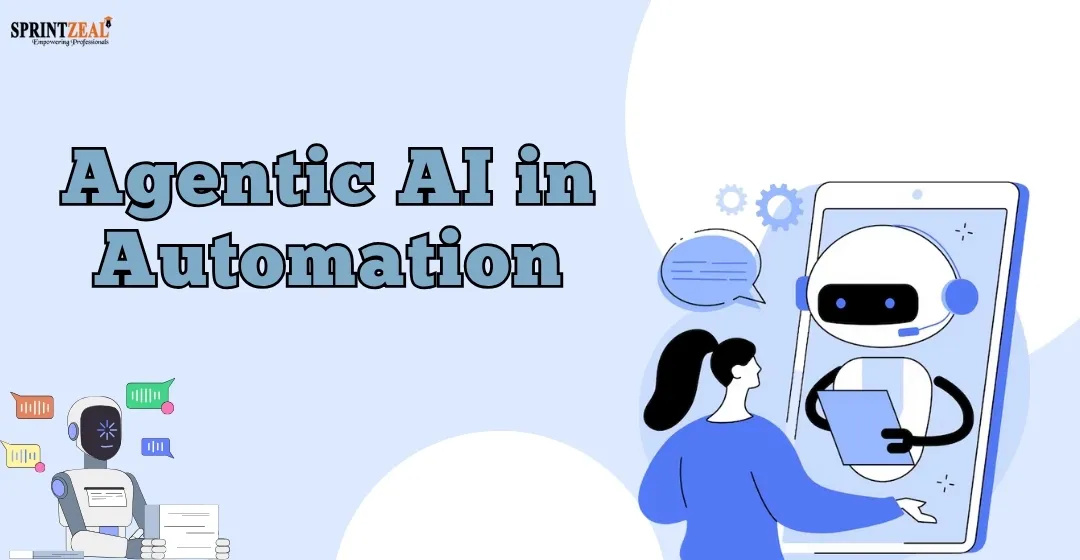
In reality it has been years that automation in customer support was limited to scripted chatbots and rule-based workflows. And yes, these tools helped reduce repetitive tasks but failed when conversations veered off-script. So what happened in the end? Eventually. What we get are frustrated users, disconnected experiences, and limited scalability.
Well, good news that nowadays a shift is underway. Agentic AI is changing the game for support automation. We have to grateful to better generative models, smarter intent recognition, and real-time context skills, these systems don’t just spit out canned responses like old-school bots. Instead, they act more like junior teammates. How?
They ask follow-up questions, know when to escalate an issue, and actually learn from the feedback people give them.
In this article, we are sharing practical insights on how agentic AI is changing automation, which allows support teams to handle more conversations with better accuracy, consistency, and personalization. Why so? Because instead of forcing customers through rigid flows, agentic AI adapts in real time, unlocking more value per interaction.
How can we define agentic AI? It refers to systems that act with autonomy. So, rather than executing simple instructions, they can analyze user intent, weigh historical context, and decide the next best action. Which evidently allow them to behave more like live agents: asking clarifying questions, choosing when to escalate, and even adjusting tone depending on emotional cues.
Unlike static bots, agentic AI is not bound by a predefined tree of responses. It uses natural language understanding and machine reasoning to move flexibly within a conversation. In the end we have a system that isn’t just faster, but it’s smarter, more resilient, and constantly improving through feedback loops.
As a rule, agentic AI is already being deployed across industries to simplify complex workflows.
How is it done? In these 3 simple steps: Support ticket resolution, onboarding automation, and internal help desks. Here is the explanation.
So, as it be can seen the difference lies in flexibility. If a user’s question isn’t straightforward, agentic AI doesn’t break like it happened before, it adapts and evolves.
A Shift in Team Dynamics
So we don’t need human agents anymore? Well, no. Because adopting agentic AI doesn’t mean removing humans from the loop. Instead, it redefines the human-AI relationship. Agents become mentors and editors, shaping the AI’s tone and strategy over time. This model increases agent engagement while reducing repetitive strain.
According to a 2024 report by Deloitte, organizations that integrated AI in a collaborative model, where agents train and monitor AI, saw a 31% increase in support team efficiency within the first six months.
When implemented correctly, agentic AI delivers operational wins across the board. What are those wins? Let’s see in detail.
The Importance of Feedback Loops
So what is all fuzz about Agentic AI? It is so, because one of the most powerful traits of agentic AI is its ability to learn. Every time a human agent edits a response or takes over a case, that decision becomes a training signal. Logically, that over time, these signals create a continuously improving system.
To fully benefit from agentic AI, organizations must build structured feedback loops. These loops usually result in tagging corrections, reviewing escalations, and analyzing where AI decisions diverge from expected behavior. So, it’s not enough to deploy AI. The first step is to teach your AI.
Risks and What to Watch Out For
Despite its promise, agentic AI requires thoughtful deployment. Because it brings up certain risks such as data bias, overconfidence, and compliance risks. Here are the details.
There are certain ways to mitigate these risks, and doing this is actually makes much sense. Companies simply must implement guardrails like review queues, human-in-the-loop escalation triggers, and regular audits. Those guardrails get set per client when one team supports several organisations: an AI agent for MSPs should carry a separate confidence threshold and escalation path for each account, so a pattern learned in one environment never auto-resolves a ticket in another.
The old playbook of automation focused on reducing headcount. The new playbook is about increasing leverage. With agentic AI, every agent’s knowledge can scale across hundreds of conversations. Every edit improves the system. Every ticket contributes to the model’s intelligence.
All in all, the companies that are adopting this mindset are not just reducing costs, they’re building adaptive, responsive, and resilient service organizations.
Agentic AI is not another tool on the stack, it’s a co-pilot. When deployed with structured feedback, human mentorship, and clear policies, it becomes a force multiplier. Support teams become smarter. Customers get faster, more consistent answers. And businesses unlock a new tier of scalable, personalized automation.
The future of AI is not static or robotic. It’s fluid, learning, and deeply collaborative. Those who harness practical insights on how agentic AI is changing automation won’t just survive the shift, because they’ll lead it.

Mon, 28 September 2026
Tue, 22 September 2026

Tue, 08 September 2026

Mon, 24 August 2026
Wed, 19 August 2026
Mon, 17 August 2026
Mon, 17 August 2026
Thu, 13 August 2026

Mon, 24 August 2026

© 2026 Sprintzeal Americas Inc. - All Rights Reserved.

 USA : +1315-322-7821
 UK : +44 7700 174870
 IND : +919036108287
 AUS : +61 480 005 455