Best AI Video Generators in 2027: Tested & Compared
Mon, 28 September 2026

Inspirational journeys
Follow the stories of academics and their research expeditions
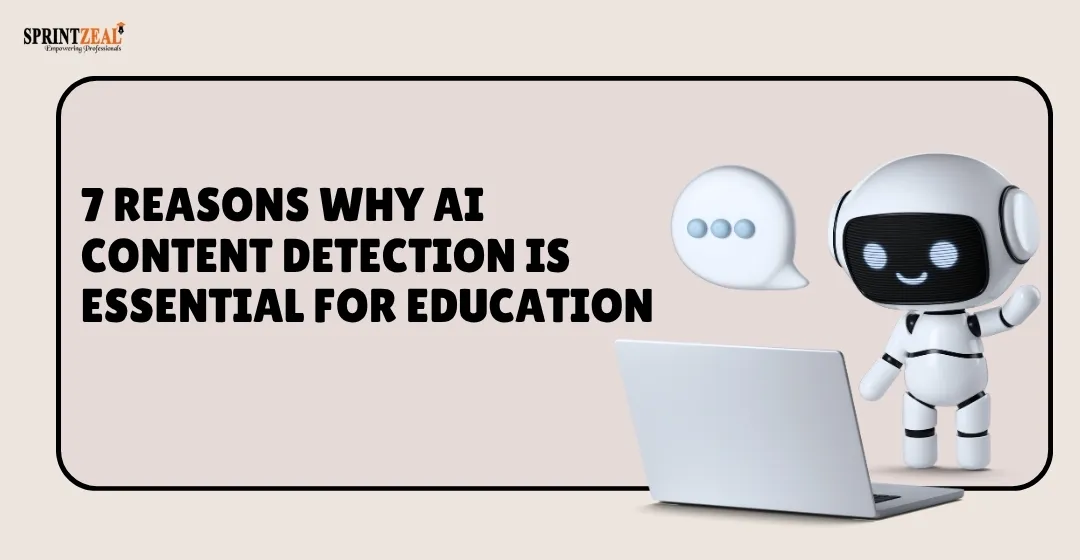
From business to education, AI has shifted the way you think, for both great and not-so-great reasons.
AI in the education sphere continues to make definitive changes for both students and teachers. Students now have access to tools that can summarize, draft, and even rewrite an entire thesis in mere seconds.
While that ease and accessibility can improve learning and save time, it blurs the line between genuine effort and AI support.
This is why AI detection is paramount, not to guard students’ every word and move, but to simply protect the integrity and encourage honesty. AI detectors can be fantastic tools when used thoughtfully.
Today, we’re exploring 7 reasons why AI content detection is essential for education.
What teachers always strive to do is encourage honesty and inspire fairness among their students. If you’re a teacher, you want to know what your student wrote, is really theirs, especially these days. But with AI tools becoming more and more accessible, that’s getting harder to verify.
However, AI detection tools have eased that worry to a great extent. When you effectively use an AI detector, you can see just which parts of the text are generated by the machine and which parts are written by your student.
You have to understand that using these detection tools, even when the student is aware of it, you’re not catching them out in a lie. You’re just ensuring fairness and inspiring honesty.
When students know you are putting their work through AI detectors, they’re likely to put in more real effort. Even when the tools are right there when they need them, they’re more expected to start from scratch, think more critically, and write themselves.
As we were saying, when students know that you’re going to review their work for AI, they’ll take a step back from their easy and time-saving practices and really put the work in. They’ll engage with the topic more seriously and come up with their own ideas to expand upon.
So you see, when you use AI detectors, you’re motivating students to use their God-given talents and skills, and put them down on paper without machine assistance. You help develop problem-solving skills, critical thinking, have original thoughts, and grow as independent thinkers and members of society.
When using AI detection, you must know that it’s not just limited to flagging AI use. It makes a safe space for open dialogue between students and teachers. If you’re a student, you learn accountability and responsibility. As a teacher, you can ask important questions like, “How did you approach this assignment?” or, “How much of this is authentically your idea?”
This strategy of asking important questions shifts the perspective from punishment to understanding and learning. Students are able to take another look at how they’re using AI, instead of just copying and pasting responses. Teachers can guide them to make use of more ethical and responsible practices.
What happens over time is that these approaches cultivate conversations and exchanges that help both students and teachers trust one another.
This eventually creates an honest and fair classroom and encourages students to use their own ideas, creativity, and nurture their existing talent, which they all have!
The truth is, AI is not going away anytime soon. You’re not likely to wake up to a reality where all AI-assisted writing tools have vanished at once. If anything, there are going to be new and more improved versions coming up every other day!
The key here is to get with the wave, or be crushed by it. As defenders of academic integrity, you need to work with AI, and not against it. It is important to help students use these tools responsibly in a way that won’t diminish their own human skills.
Establishing AI literacy means to combine AI detection with responsible use and showing students that these tools are, at the end of the day, just tools. They can improve learning processes, but in no way they can or should replace critical thinking, researching, or problem solving.
The reality of AI-assisted learning has its jagged edges; not all students have the same background and history. Some may encounter challenges that make AI detection quite tricky, such as ESL learners or those still working to develop strong writing skills.
This makes AI detectors so important to reduce bias and protect fairness.
When detection is fair and unbiased, it makes sure that all students are evaluated and assessed based on their own ideas and effort, not on their inability to master another language or writing skills. In a classroom environment, this prioritizes learning, creativity, and authenticity.
AI detection isn’t all about reviewing assignments and checking theses; it can completely change how you set rules for your classroom when it comes to AI use. When you see patterns in how students use these tools, you can create tailored, practical, and supportive policies, rather than strict ones.
These policies you set concerning AI use are layers of protection. For example, if your students are using AI frequently for something like brainstorming ideas, but are still writing their own essays, you can allow AI to generate ideas but still have your students submit drafts with their original ideas.
When you use AI detection this way, your classroom becomes more transparent, your policies work like a charm, and your students are well-versed on using AI honestly and to their advantage.
One of the biggest challenges teachers face today is ensuring authentic work by spending the time actually needed to teach. This is where AI detectors can make a difference, as they show you the AI-generated parts of the text exactly, without you having to sit there and guess which phrases read human and which don’t.
But don’t get this wrong, it doesn’t mean that you’re in any way reducing your judgment depending on the detectors, you’re just supporting it. For instance, if a teacher notices that several students are using AI in the same way, they can adjust their approaches to promote responsible AI use.
At the end of the day, making use of AI detection tools as a supporting tool, instead of a primary one, helps you spend more time inspiring your students to use their own ideas, original thoughts, and make honest decisions.
It is crucial to remember that, as supportive and effective AI detection tools can be in encouraging honest and fair learning, it has its limits. No system can catch every single word generated by AI; they aren’t perfect.
Let’s explore those limits of AI detection tools,
Imperfect Detection:
No tool is smart enough to catch every single text generated by AI; accuracy is higher with texts in English.
False Positives:
Texts written by those who are still developing their language skills, like ESL learners, might get detected as AI even if their work is original.
Use It As A Signal:
Use AI detectors as a signal, not a verdict. The results should be used to teach and not as punishments.
Effective Teaching Practices:
Use detection alongside well-executed assignments, set clear expectations, and open communication so your classroom is fair, honest, and accountable.
AI Evolves Constantly:
As language models constantly improve, detection patterns can change, so tools need regular updates and considerate judgment.
The content that was detected as AI today might read as human to a detector tomorrow.
Human Judgment Is Key:
Comparing AI detection results with review and discussion makes for fair and supportive teaching.
Language and Cultural Nuances:
Idioms, slang, or non-standard grammar can be detected by AI, so consider the context carefully.
Specialized and Technical Content:
Scientific, legal, or highly specialized writing may be miscategorized or misread as AI, as detectors are usually trained to read more general and everyday text.
But with constant evolution, that is also changing. In the very near future, AI detectors will be able to differentiate between different types of text.
AI is changing education faster than ever, and detection tools are becoming increasingly important for teachers to navigate this shift. They help protect integrity, encourage critical thinking, and promote responsible use, while keeping human judgment and decision at its core.
When used thoughtfully and effectively, AI detection can nurture honesty, fairness, and important discussion, giving students the skills, awareness, and freedom to use their own skills and creativity, beyond the classroom.
What teachers always strive to do is encourage honesty and inspire fairness among their students. If you’re a teacher, you want to know what your student wrote, is really theirs, especially these days. But with AI tools becoming more and more accessible, that’s getting harder to verify.
However, AI detection tools have eased that worry to a great extent. When you effectively use an AI detector, you can see just which parts of the text are generated by the machine and which parts are written by your student.
You have to understand that using these detection tools, even when the student is aware of it, you’re not catching them out in a lie. You’re just ensuring fairness and inspiring honesty.
When students know you are putting their work through AI detectors, they’re likely to put in more real effort. Even when the tools are right there when they need them, they’re more expected to start from scratch, think more critically, and write themselves.
As we were saying, when students know that you’re going to review their work for AI, they’ll take a step back from their easy and time-saving practices and really put the work in. They’ll engage with the topic more seriously and come up with their own ideas to expand upon.
So you see, when you use AI detectors, you’re motivating students to use their God-given talents and skills, and put them down on paper without machine assistance. You help develop problem-solving skills, critical thinking, have original thoughts, and grow as independent thinkers and members of society.
When using AI detection, you must know that it’s not just limited to flagging AI use. It makes a safe space for open dialogue between students and teachers. If you’re a student, you learn accountability and responsibility. As a teacher, you can ask important questions like, “How did you approach this assignment?” or, “How much of this is authentically your idea?”
This strategy of asking important questions shifts the perspective from punishment to understanding and learning. Students are able to take another look at how they’re using AI, instead of just copying and pasting responses. Teachers can guide them to make use of more ethical and responsible practices.
What happens over time is that these approaches cultivate conversations and exchanges that help both students and teachers trust one another.
This eventually creates an honest and fair classroom and encourages students to use their own ideas, creativity, and nurture their existing talent, which they all have!
The truth is, AI is not going away anytime soon. You’re not likely to wake up to a reality where all AI-assisted writing tools have vanished at once. If anything, there are going to be new and more improved versions coming up every other day!
The key here is to get with the wave, or be crushed by it. As defenders of academic integrity, you need to work with AI, and not against it. It is important to help students use these tools responsibly in a way that won’t diminish their own human skills.
Establishing AI literacy means to combine AI detection with responsible use and showing students that these tools are, at the end of the day, just tools. They can improve learning processes, but in no way they can or should replace critical thinking, researching, or problem solving.
The reality of AI-assisted learning has its jagged edges; not all students have the same background and history. Some may encounter challenges that make AI detection quite tricky, such as ESL learners or those still working to develop strong writing skills.
This makes AI detectors so important to reduce bias and protect fairness.
When detection is fair and unbiased, it makes sure that all students are evaluated and assessed based on their own ideas and effort, not on their inability to master another language or writing skills. In a classroom environment, this prioritizes learning, creativity, and authenticity.
AI detection isn’t all about reviewing assignments and checking theses; it can completely change how you set rules for your classroom when it comes to AI use. When you see patterns in how students use these tools, you can create tailored, practical, and supportive policies, rather than strict ones.
These policies you set concerning AI use are layers of protection. For example, if your students are using AI frequently for something like brainstorming ideas, but are still writing their own essays, you can allow AI to generate ideas but still have your students submit drafts with their original ideas.
When you use AI detection this way, your classroom becomes more transparent, your policies work like a charm, and your students are well-versed on using AI honestly and to their advantage.
One of the biggest challenges teachers face today is ensuring authentic work by spending the time actually needed to teach. This is where AI detectors can make a difference, as they show you the AI-generated parts of the text exactly, without you having to sit there and guess which phrases read human and which don’t.
But don’t get this wrong, it doesn’t mean that you’re in any way reducing your judgment depending on the detectors, you’re just supporting it. For instance, if a teacher notices that several students are using AI in the same way, they can adjust their approaches to promote responsible AI use.
At the end of the day, making use of AI detection tools as a supporting tool, instead of a primary one, helps you spend more time inspiring your students to use their own ideas, original thoughts, and make honest decisions.
It is crucial to remember that, as supportive and effective AI detection tools can be in encouraging honest and fair learning, it has its limits. No system can catch every single word generated by AI; they aren’t perfect.
Let’s explore those limits of AI detection tools,
But with constant evolution, that is also changing. In the very near future, AI detectors will be able to differentiate between different types of text.
AI is changing education faster than ever, and detection tools are becoming increasingly important for teachers to navigate this shift. They help protect integrity, encourage critical thinking, and promote responsible use, while keeping human judgment and decision at its core.
When used thoughtfully and effectively, AI detection can nurture honesty, fairness, and important discussion, giving students the skills, awareness, and freedom to use their own skills and creativity, beyond the classroom.

Mon, 28 September 2026
Tue, 22 September 2026
Tue, 08 September 2026

Mon, 24 August 2026

Wed, 19 August 2026
Mon, 17 August 2026
Mon, 17 August 2026
Thu, 13 August 2026
Mon, 24 August 2026

© 2026 Sprintzeal Americas Inc. - All Rights Reserved.

 USA : +1315-322-7821
 UK : +44 7700 174870
 IND : +919036108287
 AUS : +61 480 005 455