Best AI Photo Enhancer Tools for Marketing Teams in 2026
Tue, 08 September 2026

Inspirational journeys
Follow the stories of academics and their research expeditions
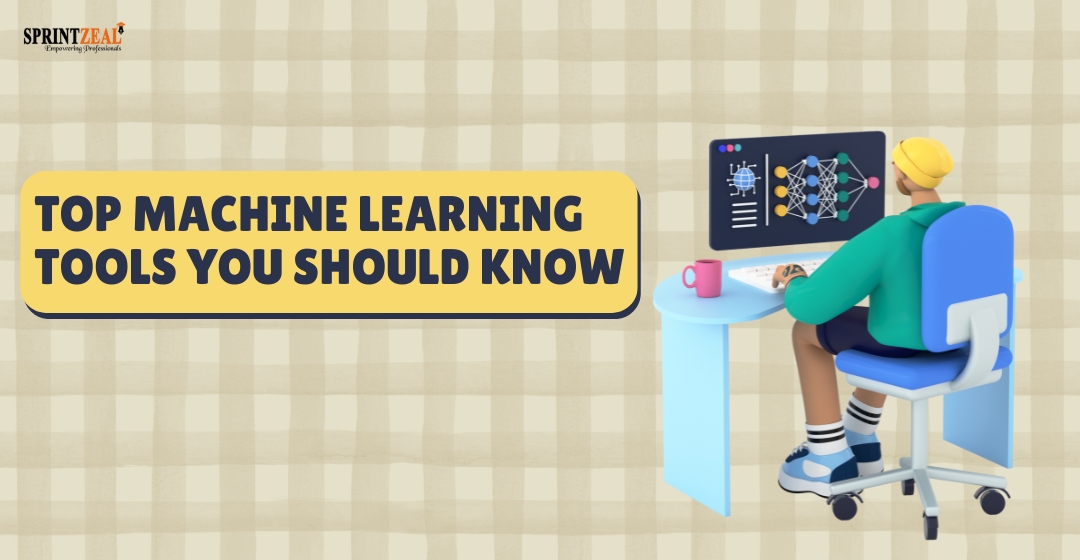
Machine learning is a team sport. Building dependable models demands more than just algorithms; it requires clean data, repeatable tests, and scalable computers. This domain also needs deployment infrastructure and continuous monitoring. The appropriate machine learning tools make each stage of the journey convenient, from discovery to production, allowing teams to transition from prototypes to reliable solutions. As per Business Insights, the machine learning market is projected to grow from USD 47.99 billion in 2025 to USD 309.68 billion by 2032, achieving a CAGR of 30.5% during the forecast period. Retail analytics has grown quickly in recent years. Numerous e-commerce sites, such as Alibaba, eBay, and Amazon, have adopted data analysis and machine learning technologies to enhance sales and customer satisfaction. Cognitive speech coding approaches based on ML principles have come out of R&D in speech and voice recognition technologies.
This guide synthesizes the best-practice guidance and current tool landscape to give you a practical, original, and actionable view of the top machine learning tools that matter in 2026:
Machine learning allows systems to independently learn and improve their efficiency through experience without direct programming. It focuses on developing software that can analyze and use information to learn independently. This autonomous learning starts with data evaluation, observations, or experiences, including instances of direct teaching, to recognize trends in the data and enhance future decision-making based on given examples. The primary objective is for computers to autonomously learn and adjust their actions without human direction or assistance.
→ Data and preprocessing tools include those for importing, cleaning, manipulating, and visualizing data.
→ Modeling frameworks consist of libraries or platforms that execute algorithms (like classification, regression, and clustering) or offer assistance for neural networks and deep learning
→ Experimentation and tracking tools include those for tracking model experiments, logging hyperparameters, managing runs, and updating models.
→ Deployment and operationalization platforms provide tools for putting a trained model into production, monitoring performance, and measuring drift.
→ MLOps/lifecycle management tools are frameworks that include orchestration, scaling, reproducibility, governance, and monitoring.
Pro-Tip: Consider deepinfra for APIs to open source LLMs.
Before checking out the top 20 machine learning tools, it is worth remembering why tooling acts as a multiplier:
→ Tools help alleviate tedium (data wrangling, environment management) so that teams can spend their valuable time iterating on modeling and evaluating impacts.
→ Tooling provides repeatability—experiments with your models, hyperparameters, and artifacts that are tractable.
→ Tools also bridge you to production (e.g., model serving, autoscaling, A/B testing, and monitoring).
→ Good tools will also help to enforce governance (e.g., logging, lineage, access controls, and explainability primitives).
In summary, these tools allow you to iterate or run with your work more quickly, safely, and reliably. This is relevant for you regardless of whether you are doing hands-on machine learning experiments (for example, with notebooks) or running a fleet of models for the enterprise on AWS, GCP, or Azure.
To digest the machine learning tools landscape, it is valuable to sort the "machine learning tools" ecosystem into a few primary categories:
These are the basic building blocks when you write code, design algorithms, test architectures, or train neural networks. Examples include TensorFlow, Pytorch, scikit learn, and Apache Mahout.
These are dedicated environments used for the complete ML workflow: data acquisition, feature engineering, model building, and deployment. These are typically cloud-based (or hybrid) platforms, including Microsoft Azure Machine Learning, Google Cloud Vertex AI, IBM Watson Studio, etc.
As ML systems and architectures scale, you need to record and track experiments, revisit model runs and metadata, and deploy ML responsibly. Tools in this category include MLflow, Comet ML, and Dagster (orchestration).
Once a model is trained, deploying it into a production environment will require infrastructure, as well as monitoring latency, performance, adapting to drift, and scaling. Some of these platforms have this built in from data solutions, while others are very boutique in this area. "Sets across a tool set may include container orchestration, such as Kubernetes, model serving frameworks, and monitoring dashboards."
These tools are targeting non-expert Data Scientists, with more drag-and-drop user interfaces, automated feature engineering, and hyperparameter tuning
Occasionally, you'll use tools for certain domains: computer vision, natural language processing, time-series forecasting, and reinforcement learning. There are a lot of general tools that solve the problems in these domains, but there will be optimizations and integrations that are domain-specific.
PyTorch utilizes a Define-by-Run paradigm, which uses the Dynamic Computational Graph. In this machine learning tool, the computational graph is created dynamically while the code is running, just like normal Python. This is why Pytorch is a popular framework for research and prototyping quickly: it has the most flexibility, and it easily allows Python controls, such as if/else statements and loops, to be incorporated into a complex network design, which depends on conditions (this is often seen in models like RNNs or even in Reinforcement Learning).
The other essential aspect of this flexible framework can help with debugging, as the errors happen where you would expect typical Python to fail (no surprise), and that can really speed up the development and testing process.
Pros:
→ A dynamic computation graph enables flexible model building.
→ Pythonic syntax makes it intuitive for researchers and developers.
→ Strong community support and vast pretrained models (via Torch Hub).
→ Excellent integration with GPU acceleration and popular libraries.
Cons:
→ Slightly slower deployment compared to TensorFlow.
→ Limited mobile and embedded deployment options.
→ Requires more manual optimization for production.
This machine learning tool traditionally functions based on a Define-and-Run mode of working that focuses on the Static Computational Graph. This signifies that the complete neural network structure, encompassing all processes and data movement, must be carefully specified and constructed prior to inputting any real data for training.
This pre-configured, optimized template enables TensorFlow to conduct comprehensive graph-level optimizations prior to execution, resulting in enhanced performance in large-scale, distributed training settings and rendering the outcome models remarkably portable and production-ready (e.g., through TensorFlow Lite for mobile/edge deployment). Although contemporary TensorFlow 2.x enables eager (dynamic) execution, it still utilizes the static graph idea with @tf.function for optimal deployment performance
Pros:
→ It offers high scalability and supports both CPUs and GPUs
→ It has a vast community and integrates well with tools like Keras and TensorBoard for model visualization.
Cons:
→ Its learning curve is steep; debugging can be complex.
→ It’s heavier for simple models.
Key Points: This machine learning tool is ideal for production-level ML projects, research, and large-scale neural networks due to its strong deployment and optimization features
This machine learning tools library is the core library for any classical Machine Learning task on structured, tabular data. It provides a single, uniform interface (with the standard methods, .fit() and .predict(), applied to all algorithms) for a wide range of algorithms, including robust classifiers (e.g., Support Vector Machines, Decision Trees), regression, and clustering methods. However, its true utility lies in the fact that it has a useful function for every part of the workflow: data preprocessing, feature selection, model evaluation, and hyperparameter tuning for hands-on machine learning with scikit-learn.
It is the very best starting point for any machine learning problem, and it will often be the final solution when deep learning and high complexity aren't required.
Pros:
→ User-friendly with clear and uniform APIs.
→ Outstanding documentation and engaged community assistance
→ This machine learning tool supports a wide range of machine learning methods, which are often used for operations like classification, regression, and clustering.
→ Has good command of libraries like NumPy, Pandas, and Matplotlib.
→ Perfectly fits the role for quick experiments and prototyping.
Cons:
→ No native support for deep learning.
→ Lacks GPU acceleration.
→ Not suitable for very large-scale datasets.
One of the machine learning tools that is best for traditional ML tasks, academic use, and small to medium projects.
This machine learning tool is more than just a regular data science workbench; it is an enterprise-grade platform that offers a consolidated experience for the entire AI lifecycle, with trust and accountability as key factors, and this is the primary reason it is often chosen in regulated industries such as finance and healthcare.
It provides you with a collaborative space to use open-source tools (Jupyter Notebooks with Python/R) alongside IBM's proprietary AutoAI for automated model building and SPSS Modeler for no-code visual workflows, but the primary differentiator is IBM WatsonX. governance that has integrated ModelOps capabilities that provide audit trails, explainability, bias detection, and compliance monitoring to ensure models are fair, explainable, and meet compliance requirements (GDPR, HIPAA) throughout their production life cycle.
Advantages:
→ One-stop solution, as this platform offers data preparation, data modeling, and code deployment.
→ Supports a variety of programming languages like R, Python, and Scala.
→ Provides AI automation features through AutoAI.
→ Integrates effectively with various enterprise applications and IBM Cloud.
→ Ideal for teamwork within a data team.
Cons:
→ Excessively expensive for individual consumers and small enterprises.
→ Requires a dependable internet connection.
→ Somewhat intricate for novices to configure.
This machine learning tool is ideal for large-scale AI initiatives, extensive data analysis, and cloud-based machine learning processes
JupyterLab is the benchmark for interactive computing, acting as the main platform for Exploratory Data Analysis (EDA), visualization, and creating reproducible research documentation. Its worth arises from its notebook structure, allowing for the execution of code in real time.
This machine learning tool is paired with expandability for text documentation (Markdown), mathematical expressions (LaTeX), and embedded instant output visuals, leading to narrative-driven data analyses. Additionally, Jupyter, or its contemporary equivalent JupyterLab, significantly improves this experience in a multi-modal workspace combining notebooks, code editors, terminals, and file navigation altogether. With this setup, this tool allows users to be productive and enables teams to effortlessly collaborate and sustain a unified analytical context for a project.
Advantages:
→ An engaging interface built for programming, visualization, and documentation.
→ Kernels provide support for a variety of languages (including Python, R, and Julia).
→ Excellent for data analysis, education, and testing.
→ Functions effectively with the majority of ML and various data libraries.
→ Notebooks are simple to share for teamwork activities.
Disadvantages:
→ Not ideal for extensive production processes
→ May be complicated and require significant resources, and is typically more challenging to manage version control compared to scripts.
→ Allows for limited real-time collaboration
This machine learning tool is a fully managed AWS offering, a full-fledged, scalable platform covering all aspects of the machine learning lifecycle. It improves workflows through SageMaker Pipelines that automate the total CI/CD workflow, ensuring consistency and transparency of the model.
For production, it offers scalable Hosting Endpoints with auto-scaling and continuous monitoring through Model Monitor so that you can have a reliable, low-latency inference capacity at any scale, allowing your team to focus only on developing the model and not on the infrastructure.
Advantages:
An entirely managed solution for developing, training, and implementing ML models.
→ This tool offers scalability as well as seamless integration with the AWS environment.
→ Has access to common AutoML capabilities for easily deploying models like Amazon Sagemaker.
→ Expertise in a variety of frameworks, including TensorFlow, PyTorch, and Scikit-learn.
Reduces the load for handling basic infrastructure.
Disadvantages:
→ Expensive for extended or extensive use.
→ Intricate pricing structure.
→ Require understanding of AWS configuration and enhancement
This machine learning platform or tool represents the critical tool for managing data science dependencies, as it includes the Conda package manager and a collection of essential packages to utilize with Python and R. The tool allows users to create a separate, project-dependent virtual environment to eliminate any package conflicts.
When obtaining an environment.yml file to share, teams can ensure everyone executing the code is working in a precise, reproducible environment, thereby greatly enhancing teamwork and consistency.
Pros:
→ Simplifies the management of the environment and packages for data science.
→ Core libraries (NumPy, pandas, scikit-learn) are pre-installed
→ Assistance is provided on Windows, macOS, and Linux platforms, ensuring accessibility and versatility.
→ Ideal for both new users and experts since it removes the challenges associated with platform-specific dependencies during setup and guarantees that project structure, code, and environments can be easily replicated.
Cons:
→ Large installation size consumes more storage.
→ Slower updates for some libraries compared to pip.
→ Can be resource-heavy for lightweight projects.
Anaconda, a popular machine learning tool, streamlines Python environment management, making machine learning workflows more efficient and reproducible.
Anaconda, a popular machine learning tool, streamlines Python environment management, making machine learning workflows more efficient and reproducible.
Azure Machine Learning (Azure ML) is a machine learning platform by Microsoft designed for large-scale model development and MLOps. The main advantage is the integrated governance features, particularly detailed Role-Based Access Control (RBAC) and auditing functionalities, essential for regulated sectors and various compliance requirements.
Azure ML also provides automated machine learning (AutoML) for quick model discovery and integration throughout the ecosystem of Azure (e.g., Azure Synapse Analytics, Azure Kubernetes Service), ensuring models are built rapidly and securely and reliably deployed, managed, and monitored within a comprehensive corporate context.
Advantages:
→ It offers tight integration with other Microsoft services, such as Power BI for visualization and reporting, and Azure Data Lake for secure and massive data storage, ensuring data scientists operate within the existing corporate cloud framework.
→ Supports drag-and-drop development, as well as code-first development.
→ Includes AutoML, MLOps, and strong scalability
→ Outstanding security and compliance for businesses.
Cons:
→ Costly for small groups or new businesses.
→ More challenging learning process for novices.
→ Relying on Azure cloud services
Weka is a widely used, open-source machine learning tool or suite from the University of Waikato that provides an all-in-one and seamless graphical interface for data preprocessing, visualization, classification, regression, and clustering. Weka is intended to make complex data mining accessible to any skillset and supports flexible data management for cloud and on-premises deployments.
In addition to its analysis features, Weka can also be employed by organizations to store, process, and manage data in the cloud or on-premises to provide users with flexible choices based on back-end data infrastructure.
Key Features:
→ Protocol Interoperability Across Multiple Protocols: The platform supports accessing data at the same time from several systems and formats, utilizing common industry protocols such as NVIDIA GPUDirect Storage, NFS, SMB, POSIX, and S3, without difficulty for seamless integration within complex data environments.
→ Cloud Native / Hybrid Flexibility: The product supports various deployment methods, including on-premises to cloud, for easy moving of data workloads from the cloud to on-premises infrastructure in a one-click scalable way, now and in the future.
→ Large Range of Algorithms: Weka provides a vast selection of algorithms to implement for both supervised and unsupervised learning.
→ Interactive Visualization Tools: Enjoy integrated graphs, diagrams, and other visuals that assist users with a better understanding of data trends and model accuracy.
Advantages
→ High Portability: Since Weka is written entirely in the Java programming language, it will run on most operating systems with little to no modification when installing or executing a newly written application.
→ No Coding Required: Its graphical user interface (GUI) is relatively easy to understand and helps the user build, test, and explore machine learning models without needing to have hours of programming experience.
→ Educational Purposes: As one of the most used software in university classrooms and certifications for teaching machine learning concepts in visual and experiential manners.
→ Extensible & Open Source: Users can add more plugins or different methods of using Weka to extend its functionality or compatibility with our tools.
Disadvantages
→ Not Optimized for Big Data: Weka does not work for distributed computing and larger datasets. For big data, other services like Apache Spark or Hadoop would be more suitable.
→ No Capabilities for Deep Learning: Weka is not built in such a way that it can use more advanced computation techniques like neural networks or frameworks like TensorFlow or PyTorch
→ Not as Good for Production: Weka is mainly designed for training, teaching, or experimenting rather than for production deployment pipelines.
Google Vertex AI is Google's fully managed MLOps platform and one of the popular machine learning tools in Google Cloud that brings the entire end-to-end process from data preparation to production in one service. In one service, it combines managed Jupyter Notebooks, ML Pipelines for CI/CD, a feature store, and model monitoring for governance and reproducibility.
As you mentioned, it is ideal for groups that do a lot of development using TensorFlow or that have integrated closely with Google Cloud, and it provides excellent performance, built-in security, and easy scaling across all Google AI products.
Advantages:
→ Single platform for data preparation, training, and deployment.
→ Easy integration with Google Cloud services.
→ Support for both AutoML and custom model training.
→ Able to scale to meet demand and be efficient for end-to-end machine learning capabilities.
→ Uses simple tools to make MLOps easier, including monitoring and pipelines.
Disadvantages:
→ Complex or hard-to-understand pricing structure.
→ Requires Google Cloud expertise.
→ Limited options for offline or hybrid deployment.
For your foundational start in ML, choose approachable, well-documented platforms. Scikit-learn is the ideal, professional-grade entry point, offering a streamlined Python gateway to mastering core algorithms like classification, regression, and clustering. Pair it with a “hands-on machine learning” mindset — build a full machine learning workflow: data prep → model training → evaluation.
Traditional machine learning tools allow you to be in charge of each step of the pipeline (feature engineering, choice of algorithm, tuning of hyperparameters). In contrast, automated machine learning (AutoML) frameworks (for example, on cloud platforms) are meant to reduce or automate many of these steps so that you can concentrate on “what problem to solve”, rather than “how to build every piece”.
Yes — if you’re familiar with MATLAB, you can absolutely use its machine learning toolbox to experiment, especially for prototyping. But to build a real-world “machine learning tools” skillset, it’s helpful to also know open-source libraries (e.g., scikit-learn) and cloud-based tools (including AWS AI tools) so you can scale or deploy models. In practice, you might build in MATLAB, then export to Python or the cloud for deployment in a full machine learning workflow.
The choice depends on your task:
→ For classic machine learning (e.g., decision trees, SVMs, clustering) the toolset “machine learning tools” and libraries like scikit-learn are great.
→ For deep learning (neural networks, CNNs, RNNs), you’ll want tools designed for “deep learning” (e.g., TensorFlow, PyTorch).
→ For each case, you’ll still follow a machine learning workflow: data ingestion → preprocessing → model design → AI model training → evaluation → deployment.
→ Make sure the tool supports your scale (data size, compute), integration with automl tools if desired, and any deployment platform (e.g., AWS AI tools, cloud).
Cloud-based platforms and AWS AI tools (alongside options from Azure, Google Cloud, etc.) offer end-to-end support for machine learning tools: data storage, scalable compute, model training, deployment, and monitoring. They streamline the “machine learning workflow” in a managed way and often include AutoML capabilities. Using such platforms allows you to move from prototype (hands-on machine learning on your laptop) to production (distributed training, scalable inference) more smoothly.
Here are a few:
Always begin with a well-defined machine learning workflow: define a problem statement, prepare data, choose tool(s), train model (AI model training), evaluate/model performance, and deploy.
Make sure to use the right tools for your task: classic ML moderation tasks may benefit from scikit-learn, neural nets with deep learning frameworks, and, where scales matter, cloud automl or AWS AI automation tools.
For reproducibility: document your tool versions, environment, and seed values.
Monitor performance over time (model drift).
And keep learning: explore newer “AI learning tools” and automl tools as they evolve.
With the progress in MLOps platforms like Azure ML and Vertex AI, creating trustworthy, functional AI systems for production requires more than excellent code—you need solid systems and defined guidelines (governance). These professional machine learning tools simplify complex workflows, enhance model reproducibility, and accelerate your time-to-value.
To master such amazing machine learning tools, we have a complete guide to make you proficient and an expert in the world of AI/ML. Certify your skills and advance your career today with our top-tier course to give your career the boost you've always wanted.

Tue, 08 September 2026
Mon, 24 August 2026

Wed, 19 August 2026

Mon, 17 August 2026

Mon, 17 August 2026
Thu, 13 August 2026

Mon, 24 August 2026

Tue, 28 July 2026

Thu, 23 July 2026

© 2026 Sprintzeal Americas Inc. - All Rights Reserved.

 USA : +1315-322-7821
 UK : +44 7700 174870
 IND : +919036108287
 AUS : +61 480 005 455