Anthropic's LLM vs ChatGPT: Key Differences and Uses
Fri, 23 October 2026

Inspirational journeys
Follow the stories of academics and their research expeditions
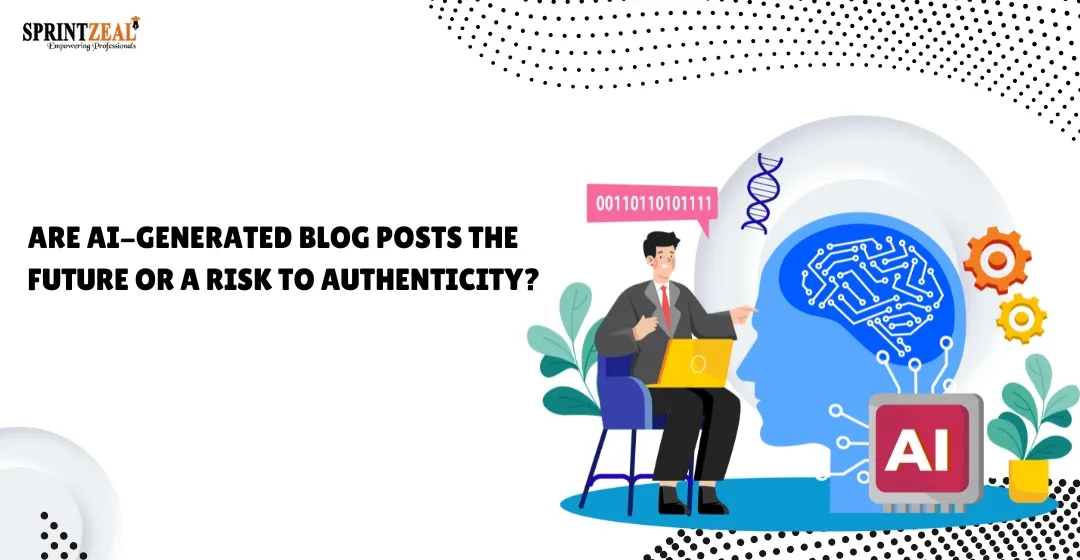
AI-generated content has transformed people's blog post creation and consumption patterns. Businesses currently use ChatGPT along with Jasper AI to generate content at lower costs and increased speed. These tools generate articles in only a few seconds.
These tools help organizations minimize their expenses while speeding up their operations and improving their overall efficiency. The situation also reveals another important aspect. Readers express doubts about the genuine human nature and authenticity of content created by AI. People desire to hear authentic human speech in each written statement.
A vital question arises from this situation: Should AI technology produce blog content, or does it damage the authenticity of written material? We need to examine how AI influences blog development while determining its impact on genuine content value.
Software programs powered by artificial intelligence produce AI-generated blog posts that serve as written content for articles. The tools accept user input to generate content from extensive databases of information.
AI tools acquire writing abilities by analysing word patterns found in billions of written documents. OpenAI's ChatGPT underwent training using more than 570 GB of textual information.
AI tools generate content from books, websites, and articles. An AI system receives user prompts to generate predictions about the advised words.
These tools do not think. They do not have emotions. The program follows established patterns to create logical-sounding sentences.
The adoption of AI by businesses happens because AI delivers fast results and operates efficiently. The system enables businesses to produce content faster and cheaper while generating more material.
The AI software market worldwide will achieve $126 billion in revenue by 2025. Another research conducted by HubSpot reveals that 71% of marketers currently integrate AI tools within their content creation processes.
The Content Marketing Institute found that 56% of content teams employed AI tools during 2024 to accelerate their writing speed.
The statistics confirm that AI content generation has moved beyond being a passing fad. The practice has evolved into one of widespread adoption.
The discussion about this topic starts here. The technology enables artificial intelligence to produce human-like writing yet it remains incapable of human-level thinking. The system operates without human perspective or creative thinking.
Readers often connect better with content that feels personal. AI lacks:
The human writing process includes adding voice and tone together with subtle emotional cues. AI-generated content displays robotic writing even when it maintains perfect grammar rules.
Multiple detection tools are available online to identify AI-generated conten, yet most readers remain unable to distinguish between human and machine-written material. An AI detector can provide an additional signal when reviewing questionable content, although its results are best considered alongside human judgment rather than treated as definitive proof of authorship.
The 2024 Copyleaks report shows that 61% of individuals struggle to identify AI-generated text from human-written content. This creates confusion, and people who cannot distinguish between machine-generated text and human-written content may develop trust issues.
Google has made it clear. It wants high-quality, helpful content. Ranks-based content creation is not the only requirement.
The March 2025 Google update identifies "mass-produced low-value content" as a content quality issue. Google will penalize websites that publish AI-generated content that displays either factual errors or lacks originality. Implementing AI for keyword placement does not ensure that website ranking will improve.even when paired with tools like The QR Code generator to improve user engagement."
AI tools strictly implement SEO trends in their operations. When using AI tools, the practice of stuffing keywords and repeating text lines becomes common. The overapplication of optimization techniques results in content that sounds artificial. The content will attract clicks, yet readers will depart rapidly when they detect artificial writing. This is especially critical for agencies offering White Label SEO services, where maintaining content quality is vital to uphold the reputation of the reselling brand. Poorly optimized content can damage client trust and weaken long-term SEO results.
Content writers have genuine concerns about using AI tools in their work. The complete truth about this situation presents a balanced perspective.
Writers who generate original content, complex explanations, and personal viewpoints will maintain their relevance in the field. Technology exists to enhance writer productivity rather than replace human writers.
Many writers have started using AI technology as an instrument rather than trying to fight against it. They use AI to:
In this way, writers stay in control while saving time.
The market shows an increasing need for content reviewers and editors. The human element requires someone to verify facts and complete editorial tasks. AI systems create initial content, while human editors need to refine it to achieve natural writing quality.
While AI tools are fast and cheap, relying fully on them has drawbacks.
Even OpenAI has admitted that its models sometimes generate “confident but incorrect” information.
Not all content needs a human touch. But some definitely do.
Human voice matters most in content that speaks directly to readers’ emotions.
Yes. The future of blogging is not about choosing between AI and humans. It is about balance.
Let AI do the groundwork. Writers should apply their insight and unique voice to the material. This approach allows businesses to save time while maintaining authentic content. It also enables brands to speed up their content releases while maintaining their distinctive voice.
This process combines the speed of AI with the quality of human creativity.
AI-based blog content has become a standard practice in content development. The technology provides quick production along with organizational frameworks and assistance. Artificial intelligence tools lack the true essence that comes from a human voice during communication. Authenticity still matters. People want to experience human communication rather than robotic interaction.
When AI works in combination with human creativity, we achieve optimal results. Writers need to master the utilization of these tools while maintaining their unique writing style. In the future, humans and machines will function together as partners.
Yes, it is legal. But you must check for plagiarism and factual accuracy before publishing.
Yes, if the content is helpful, original, and user-focused. Google ranks content based on quality, not the tool used.
Some do, but many still prefer human-written content, especially when it includes real opinions and experiences.
Popular tools include ChatGPT, Jasper AI, Copy.ai, and Writesonic. Each has different strengths.
No. It may replace repetitive writing tasks, but not original thinking or creativity.

Fri, 23 October 2026
Tue, 13 October 2026

Fri, 09 October 2026

Mon, 28 September 2026

Tue, 22 September 2026

Tue, 08 September 2026

Mon, 24 August 2026
Wed, 19 August 2026

Mon, 17 August 2026
Mon, 17 August 2026


© 2026 Sprintzeal Americas Inc. - All Rights Reserved.

 USA : +1315-322-7821
 UK : +44 7700 174870
 IND : +919036108287
 AUS : +61 480 005 455