Why ISO 27001 Skills Are Becoming Critical Across Industries
Thu, 08 October 2026
Inspirational journeys
Follow the stories of academics and their research expeditions
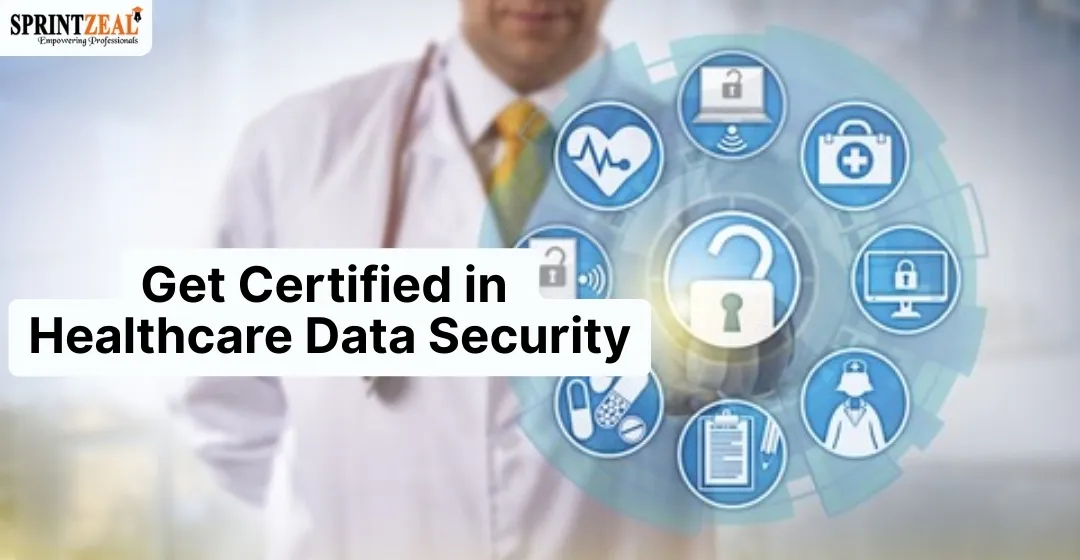
(A Complete Guide for Healthcare Professionals, IT Pros & Security Enthusiasts)
Healthcare data security is no longer optional — it’s a necessity. With rapidly increasing cyberattacks targeting patient information and strict regulatory requirements like HIPAA (Health Insurance Portability and Accountability Act), healthcare organizations and professionals must ensure that patient data remains protected and compliant. Certification in healthcare data security and compliance demonstrates your expertise in safeguarding sensitive health information and positions you for high-demand career opportunities.
This guide explains why certification matters, what certifications are available, and — most importantly — how to successfully earn them.
Healthcare is one of the most targeted industries for cybercrime. According to industry reports, millions of patient records are compromised yearly due to vulnerabilities in systems, applications, or human error. As a result:
Getting certified indicates that you understand how to protect data, ensure confidentiality, and maintain compliance with critical healthcare standards.
Certification benefits a range of professionals, including:
Whether you’re just entering the field or looking to advance your career, healthcare data security certification sets you apart.
To perform well in certification exams and in real-world roles, you should be familiar with:
Compliance means knowing how to interpret and enforce these regulations.
Security professionals must identify vulnerabilities and threats to data systems and then implement mitigation strategies.
Understanding confidentiality, integrity, and availability (CIA triad) and how to apply controls like firewalls, encryption, access policies, and monitoring.
Knowing how to detect, respond to, and recover from security breaches.
This includes secure transmission, storage, and access controls, as well as staff training—especially in environments using Virtual Medical Receptionist services or RCM software that handle sensitive patient communications and financial data. Aesthetic and medical practices that document treatments visually should apply the same rigor to Hipaa-compliant photo storage, ensuring clinical images are encrypted, access-controlled, and audit-tracked just like any other protected health information.
There are numerous certifications in healthcare security and compliance, each suited to different career paths. Below are the most recognized ones:
Offered by: (ISC)⊃2;
Ideal for: Healthcare IT and security professionals
Focus Areas:
Why it’s valuable:
HCISPP is widely recognized as the gold standard for healthcare security and privacy professionals.
Offered by: (ISC)⊃2;
Ideal for: Senior security professionals
Focus Areas:
Why it’s valuable:
A globally respected security certification recognized across industries.
Offered by: IAPP
Ideal for: Privacy professionals, compliance officers
Focus Areas:
Why it’s valuable:
Excellent if your role centers on privacy compliance.
Offered by: AHIMA
Ideal for: Privacy and security professionals in healthcare
Focus Areas:
Why it’s valuable:
Focused exclusively on healthcare privacy and security.
Offered by: CompTIA
Ideal for: Entry-level security professionals
Focus Areas:
Why it’s valuable:
Great starting certification before diving into healthcare-specific credentials.
Offered by: ISACA
Ideal for: Risk management professionals
Focus Areas:
Why it’s valuable:
Especially useful if your role involves securing financial, compliance, or credentialing systems like those used in Medical Credentialing Services.
Selection depends on your career goals:
|
Career Goal |
Recommended Certification |
|
Healthcare security specialist |
HCISPP, CHPS |
|
General security leadership |
CISSP |
|
Privacy & compliance roles |
CIPP/US |
|
Entry-level security |
CompTIA Security+ |
|
Risk management focus |
CRISC |
Your choice should factor in experience, career trajectory, and prerequisites required by certification bodies.
Most advanced certifications require professional experience:
If you lack experience, consider starting with:
These help prepare for advanced credentials.
Use multiple study resources:
Focus your study on core topics:
For healthcare professionals working with Virtual Medical Receptionist systems, RCM Software, or Medical Credentialing Services, make sure you understand how data flows through these systems and where vulnerabilities typically occur.
Practical experience strengthens your understanding. Try to:
Hands-on knowledge in environments like RCM Software systems and Virtual Medical Receptionist platforms gives you a real advantage when facing complex exam scenarios.
Once you’re ready:
Take note:
Before testing day:
Practice greatly increases confidence and passing rates.
On test day:
Once you pass, you’ll receive official certification credentials.
Most certifications require Continuing Professional Education (CPE) credits to renew:
Maintaining certification ensures your knowledge stays current — especially as regulations and threats evolve.
Earning a certification in healthcare data security and compliance provides the following:
Employers increasingly require credentials for roles like the following:
With certification, you stand out in hiring pools.
Certified professionals often earn more than non-certified peers. Credentials signal expertise, leading to better compensation.
Your training helps safeguard sensitive data in real environments such as:
This makes you more effective in implementation, auditing, and compliance work.
Security roles often require leadership in:
Certification gives credibility and confidence.
Challenge: Lack of experience
Solution: Start with junior certifications, volunteer for security tasks, or seek internships.
Challenge: Cost of training and exams
Solution: Look for employer support, scholarships, or community group discounts.
Challenge: Keeping up with evolving regulations
Solution: Join professional associations, attend webinars, and read updates by enforcement agencies.
The healthcare ecosystem is evolving rapidly. New trends include:
AI can detect patterns and anomalies in data usage, helping protect against sophisticated attacks. Professionals certified in security will play key roles in deploying safe AI systems.
Remote care—such as secure video consults—means even more emphasis on compliance and secure data exchanges.
New laws requiring even stronger data protections are emerging globally. Certified professionals will lead compliance efforts.
A Virtual Medical Receptionist handles scheduling, intake, and messaging. These systems must secure patient data both at rest and in transit. Practices weighing this option can compare virtual vs. in-house receptionist costs and security trade-offs before deciding.
A certified security professional can:
Revenue Cycle Management (RCM) Software touches financial and personal data. A data security specialist will:
This reduces risk and increases trust.
Medical credentialing involves collecting licensure and practice history. Protecting this information requires:
A security-certified professional ensures all safeguards are in place.
Here are expert tips to maximize success:
Collaborate with peers to review tough concepts.
Certification bodies often provide official study guides — use them as your foundation.
If you work in healthcare, apply what you learn to your job tasks—this cements knowledge.
Certifications open doors to positions like
Many of these roles focus on protecting systems like EHRs, billing systems, and networked medical devices.
Certification in healthcare data security and compliance is a game-changer. Not only does it prove your expertise in safeguarding sensitive information, but it also enhances career opportunities and earning potential. Whether you’re just starting or advancing in your field, choosing the right certification — such as HCISPP, CISSP, or CHPS — and preparing strategically can launch you into a meaningful and impactful career.
As healthcare adoption of technology grows—including virtual medical receptionist systems, comprehensive RCM software, and integrated medical credentialing services—the need for skilled, certified professionals will continue to rise. Investing in certification today prepares you to meet tomorrow’s challenges with confidence.

Thu, 08 October 2026
Mon, 29 June 2026
Wed, 29 April 2026
Tue, 03 December 2024

Tue, 15 October 2024

Wed, 23 October 2024

Sun, 09 August 2026

Tue, 10 December 2024


© 2026 Sprintzeal Americas Inc. - All Rights Reserved.


 USA : +1315-322-7821
 UK : +44 7700 174870
 IND : +919036108287
 AUS : +61 480 005 455