Why ISO 27001 Skills Are Becoming Critical Across Industries
Thu, 08 October 2026

Inspirational journeys
Follow the stories of academics and their research expeditions
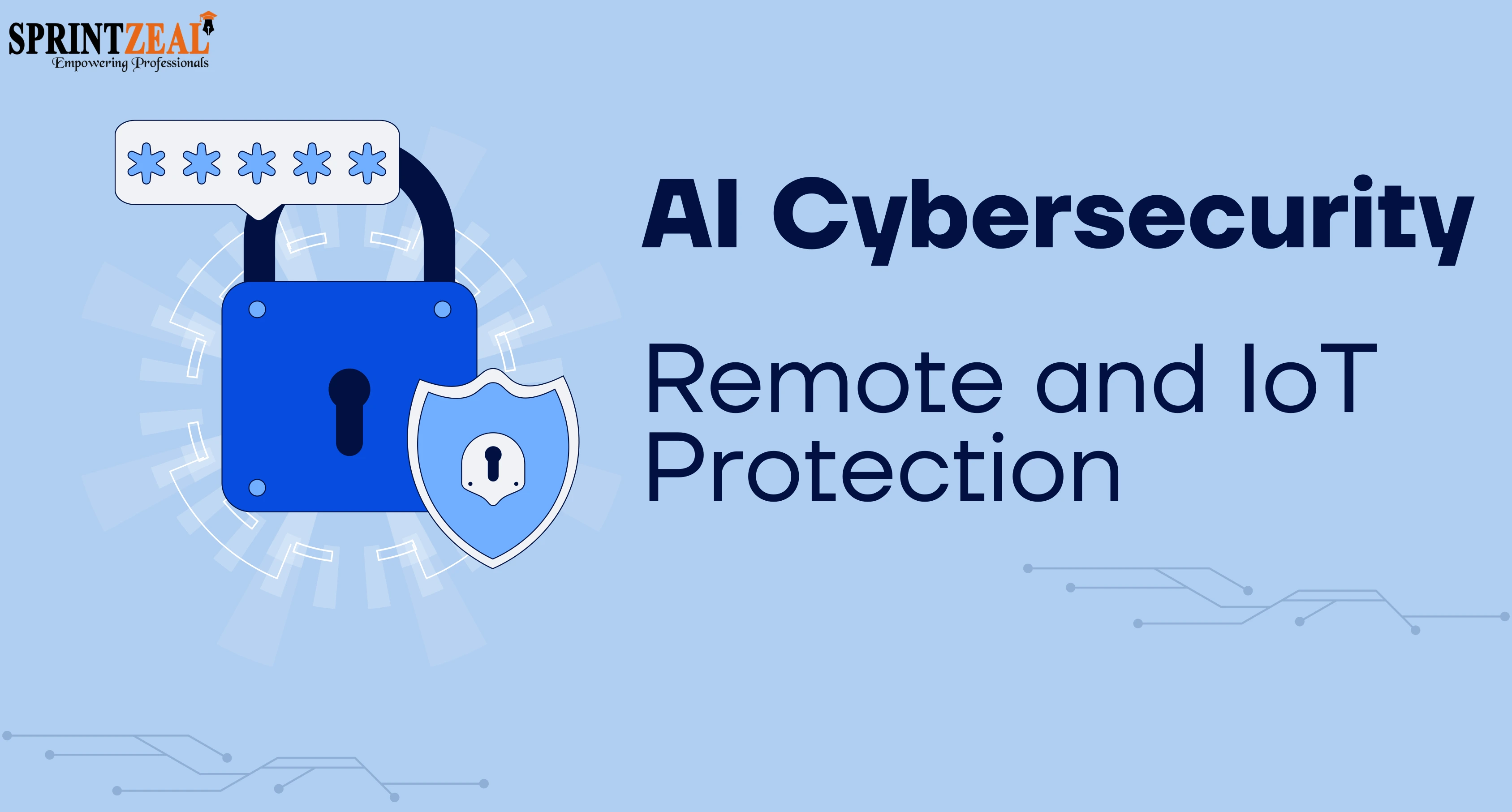
The year 2026 has officially arrived, and with it, the "traditional" corporate perimeter has effectively dissolved. Remember the days when "securing the network" meant protecting the four walls of an office? That world is gone. Today, your network is everywhere—in a home office in London, a connected SUV on a highway in Germany, and a smart thermostat in a satellite branch.
But here is the reality check: human IT teams can no longer defend this massive, sprawling infrastructure alone. The sheer volume of data is too high, and the hackers’ AI is too fast. To survive, we have to stop playing catch-up. We need to move beyond reactive defense and embrace a proactive, autonomous partnership between human intelligence and machine precision.
The digital landscape has become incredibly complex. We aren't just protecting laptops anymore; we are protecting a living, breathing ecosystem of connected devices. As the surface area for attacks expands, the "reactive" model—waiting for an alarm to sound before investigating—is essentially a recipe for disaster. If you're waiting for an alert, you’ve already lost. In 2026, the goal isn't just to stop a breach; it's to predict and neutralize the threat before it even touches your server.
Think of Machine Learning (ML) not as a replacement for your security team, but as a "force multiplier." If your security analysts are the generals, AI is the high-speed reconnaissance drone and the automated infantry combined. This partnership allows us to offload the mind-numbing task of scanning trillions of data points to algorithms that never sleep. This frees up our human talent to focus on high-level strategy and complex problem-solving. It’s about empowerment, not replacement.
The Predictive Layer: How Machine Learning Hunts Threats Before They Strike
Future-Proofing the Workforce: The Rise of 2026 Certifications
In a world of remote work, identity is the new perimeter. If a hacker gets hold of an employee’s credentials, they don't need to "break in"—they can just "log in." This is why the Identity Layer has become the primary target for modern cybercriminals.
The "Zero Trust" model is no longer a buzzword; it is a survival requirement. The philosophy is simple: Never trust, always verify. Just because a user has a valid username and password doesn't mean they should be granted unfettered access to your entire database. In 2026, we verify every single request, every single time, regardless of where it originates.
Even with the best AI in the world, a single "123456" password can bring a multi-billion dollar corporation to its knees. This is why a robust password manager is the cornerstone of modern identity security. We need to move away from the "human memory" model of security.
By utilizing specialized tools, organizations can enforce high-entropy, unique passwords for every single service. These tools do more than just store passwords; they offer zero-knowledge encryption and integrated two-factor authentication (2FA). When your employees use a tool that makes it impossible to reuse passwords across different platforms, you effectively neutralize credential stuffing attacks before they even start.
If the Identity Layer is your gatekeeper, the Predictive Layer is your early-warning system. This is where Machine Learning truly shines by shifting us from a defensive stance to an offensive one.
Reactive security is like a smoke detector—it only tells you when the house is already on fire. Proactive security, powered by ML, is like a system that senses a gas leak or an electrical spark and shuts off the power before a flame ever appears. By analyzing historical data and real-time traffic, AI can spot the "digital breadcrumbs" left behind by hackers during their reconnaissance phase.
This is where it gets interesting. Imagine an employee who usually logs in from New York between 9:00 AM and 5:00 PM. Suddenly, that same account attempts to access a sensitive financial database from a server in Singapore at 3:00 AM.
In the old days, a human analyst might not see that alert for hours. In 2026, the AI recognizes this as a "behavioral anomaly" instantly. It doesn't just send an email; it kills the session, locks the account, and triggers a re-authentication protocol in milliseconds. The threat is neutralized before the hacker can even execute a single command.
The scale of modern data is staggering. We are talking about petabytes of information moving through cloud infrastructures every day. No human team could ever hope to scan this traffic for patterns. ML algorithms, however, thrive in this environment. They can identify subtle patterns—like a slight increase in outbound data packets to an unknown IP—that signal a data exfiltration attempt in its earliest stages.
The "Edge" is where the digital world meets the physical world. In 2026, this is arguably the most dangerous part of the network because it is often the most overlooked.
Think that smart thermostat in the breakroom is harmless? Think again. Every IoT device is a tiny computer with its own IP address and, often, very weak security. Hackers frequently use these low-security devices as a "backdoor" into the main corporate cloud. Once they are "inside" the smart office network, they can pivot to your more sensitive servers. Securing the edge means treating every lightbulb and printer as a potential security risk.
The car is the new mobile office. In 2026, connected vehicles are integrated directly into corporate logistics and communication systems. This makes them a high-value target. A breach in a vehicle’s infotainment system can lead to a breach of the driver’s corporate credentials or even the GPS tracking of sensitive cargo.
Vehicle-to-Everything (V2X) communication allows cars to talk to traffic lights, other cars, and even the office building. While this is great for safety and efficiency, it creates a massive new attack surface. If a hacker can intercept or spoof these signals, they can gain a foothold in the broader corporate infrastructure. Protecting this edge requires specialized, niche security protocols that go far beyond standard IT security.
As technology shifts, so must our skills. The rise of AI and IoT has created a massive demand for new types of expertise. For IT managers and aspiring analysts, the "standard" certifications of five years ago are no longer enough. We are seeing a surge in demand for certifications focused on AI Governance, Cloud Security Architecture, and IoT/Automotive Security. Staying relevant in 2026 means being a lifelong student of the "Human-Machine Partnership."
We are living in an era where the speed of attack is measured in microseconds. To defend our remote infrastructure and the vast world of IoT, we must move beyond the old "walls and moats" mentality. By embracing a proactive stance, leveraging the predictive power of Machine Learning, and securing every identity and edge device, we can stay one step ahead. Cybersecurity in 2026 isn't just about stopping the "bad guys"; it's about building a resilient, intelligent system that empowers humans to do what they do best: lead, strategize, and innovate.
1. Why is a password manager considered a "force multiplier" for security teams?
A password manager automates the most difficult part of security: human behavior. By ensuring every employee has complex, unique passwords that they don't have to memorize, it eliminates the risk of credential reuse and weak passwords, allowing security teams to focus on technical threats rather than resetting compromised accounts.
2. Can AI and Machine Learning completely replace human security analysts?
No. While AI is excellent at pattern recognition and speed, it lacks the creative problem-solving and strategic thinking of a human. The best defense in 2026 is a "Human-Machine Partnership" where AI handles the data and humans handle the strategy.
3. What is the biggest security risk with IoT devices in 2026?
The biggest risk is that they are often used as "backdoors." Because these devices (like smart sensors or appliances) often have less processing power and weaker security protocols, hackers use them as an entry point to move laterally into the more secure corporate network.
4. How does behavioral anomaly detection differ from traditional security alerts?
Traditional alerts look for specific "known" threats (like a virus signature). Behavioral anomaly detection looks at patterns. It learns what "normal" looks like for your network and alerts you when something—even if it seems legitimate—deviates from that norm.
5. Why is automotive security now a corporate IT concern?
In 2026, cars are deeply integrated into the corporate ecosystem through cloud-based work tools and logistics software. A compromised vehicle is no longer just a personal risk; it’s a potential entry point for a hacker to access corporate data or track company assets.
The year 2026 has officially arrived, and with it, the "traditional" corporate perimeter has effectively dissolved. Remember the days when "securing the network" meant protecting the four walls of an office? That world is gone. Today, your network is everywhere—in a home office in London, a connected SUV on a highway in Germany, and a smart thermostat in a satellite branch.
But here is the reality check: human IT teams can no longer defend this massive, sprawling infrastructure alone. The sheer volume of data is too high, and the hackers’ AI is too fast. To survive, we have to stop playing catch-up. We need to move beyond reactive defense and embrace a proactive, autonomous partnership between human intelligence and machine precision.
The digital landscape has become incredibly complex. We aren't just protecting laptops anymore; we are protecting a living, breathing ecosystem of connected devices. As the surface area for attacks expands, the "reactive" model—waiting for an alarm to sound before investigating—is essentially a recipe for disaster. If you're waiting for an alert, you’ve already lost. In 2026, the goal isn't just to stop a breach; it's to predict and neutralize the threat before it even touches your server.
Think of Machine Learning (ML) not as a replacement for your security team, but as a "force multiplier." If your security analysts are the generals, AI is the high-speed reconnaissance drone and the automated infantry combined. This partnership allows us to offload the mind-numbing task of scanning trillions of data points to algorithms that never sleep. This frees up our human talent to focus on high-level strategy and complex problem-solving. It’s about empowerment, not replacement.
In a world of remote work, identity is the new perimeter. If a hacker gets hold of an employee’s credentials, they don't need to "break in"—they can just "log in." This is why the Identity Layer has become the primary target for modern cybercriminals.
The "Zero Trust" model is no longer a buzzword; it is a survival requirement. The philosophy is simple: Never trust, always verify. Just because a user has a valid username and password doesn't mean they should be granted unfettered access to your entire database. In 2026, we verify every single request, every single time, regardless of where it originates.
Even with the best AI in the world, a single "123456" password can bring a multi-billion dollar corporation to its knees. This is why a robust password manager is the cornerstone of modern identity security. We need to move away from the "human memory" model of security.
By utilizing specialized tools, organizations can enforce high-entropy, unique passwords for every single service. These tools do more than just store passwords; they offer zero-knowledge encryption and integrated two-factor authentication (2FA). When your employees use a tool that makes it impossible to reuse passwords across different platforms, you effectively neutralize credential stuffing attacks before they even start.
If the Identity Layer is your gatekeeper, the Predictive Layer is your early-warning system. This is where Machine Learning truly shines by shifting us from a defensive stance to an offensive one.
Reactive security is like a smoke detector—it only tells you when the house is already on fire. Proactive security, powered by ML, is like a system that senses a gas leak or an electrical spark and shuts off the power before a flame ever appears. By analyzing historical data and real-time traffic, AI can spot the "digital breadcrumbs" left behind by hackers during their reconnaissance phase.
This is where it gets interesting. Imagine an employee who usually logs in from New York between 9:00 AM and 5:00 PM. Suddenly, that same account attempts to access a sensitive financial database from a server in Singapore at 3:00 AM.
In the old days, a human analyst might not see that alert for hours. In 2026, the AI recognizes this as a "behavioral anomaly" instantly. It doesn't just send an email; it kills the session, locks the account, and triggers a re-authentication protocol in milliseconds. The threat is neutralized before the hacker can even execute a single command.
The scale of modern data is staggering. We are talking about petabytes of information moving through cloud infrastructures every day. No human team could ever hope to scan this traffic for patterns. ML algorithms, however, thrive in this environment. They can identify subtle patterns—like a slight increase in outbound data packets to an unknown IP—that signal a data exfiltration attempt in its earliest stages.
The "Edge" is where the digital world meets the physical world. In 2026, this is arguably the most dangerous part of the network because it is often the most overlooked.
Think that smart thermostat in the breakroom is harmless? Think again. Every IoT device is a tiny computer with its own IP address and, often, very weak security. Hackers frequently use these low-security devices as a "backdoor" into the main corporate cloud. Once they are "inside" the smart office network, they can pivot to your more sensitive servers. Securing the edge means treating every lightbulb and printer as a potential security risk.
The car is the new mobile office. In 2026, connected vehicles are integrated directly into corporate logistics and communication systems. This makes them a high-value target. A breach in a vehicle’s infotainment system can lead to a breach of the driver’s corporate credentials or even the GPS tracking of sensitive cargo.
Vehicle-to-Everything (V2X) communication allows cars to talk to traffic lights, other cars, and even the office building. While this is great for safety and efficiency, it creates a massive new attack surface. If a hacker can intercept or spoof these signals, they can gain a foothold in the broader corporate infrastructure. Protecting this edge requires specialized, niche security protocols that go far beyond standard IT security.
As technology shifts, so must our skills. The rise of AI and IoT has created a massive demand for new types of expertise. For IT managers and aspiring analysts, the "standard" certifications of five years ago are no longer enough. We are seeing a surge in demand for certifications focused on AI Governance, Cloud Security Architecture, and IoT/Automotive Security. Staying relevant in 2026 means being a lifelong student of the "Human-Machine Partnership."
We are living in an era where the speed of attack is measured in microseconds. To defend our remote infrastructure and the vast world of IoT, we must move beyond the old "walls and moats" mentality. By embracing a proactive stance, leveraging the predictive power of Machine Learning, and securing every identity and edge device, we can stay one step ahead. Cybersecurity in 2026 isn't just about stopping the "bad guys"; it's about building a resilient, intelligent system that empowers humans to do what they do best: lead, strategize, and innovate.
1. Why is a password manager considered a "force multiplier" for security teams?
A password manager automates the most difficult part of security: human behavior. By ensuring every employee has complex, unique passwords that they don't have to memorize, it eliminates the risk of credential reuse and weak passwords, allowing security teams to focus on technical threats rather than resetting compromised accounts.
2. Can AI and Machine Learning completely replace human security analysts?
No. While AI is excellent at pattern recognition and speed, it lacks the creative problem-solving and strategic thinking of a human. The best defense in 2026 is a "Human-Machine Partnership" where AI handles the data and humans handle the strategy.
3. What is the biggest security risk with IoT devices in 2026?
The biggest risk is that they are often used as "backdoors." Because these devices (like smart sensors or appliances) often have less processing power and weaker security protocols, hackers use them as an entry point to move laterally into the more secure corporate network.
4. How does behavioral anomaly detection differ from traditional security alerts?
Traditional alerts look for specific "known" threats (like a virus signature). Behavioral anomaly detection looks at patterns. It learns what "normal" looks like for your network and alerts you when something—even if it seems legitimate—deviates from that norm.
5. Why is automotive security now a corporate IT concern?
In 2026, cars are deeply integrated into the corporate ecosystem through cloud-based work tools and logistics software. A compromised vehicle is no longer just a personal risk; it’s a potential entry point for a hacker to access corporate data or track company assets.

Thu, 08 October 2026
Mon, 29 June 2026

Wed, 29 April 2026
Tue, 03 December 2024

Tue, 15 October 2024

Wed, 23 October 2024

Sun, 09 August 2026

Tue, 10 December 2024


© 2026 Sprintzeal Americas Inc. - All Rights Reserved.


 USA : +1315-322-7821
 UK : +44 7700 174870
 IND : +919036108287
 AUS : +61 480 005 455