Best AI Photo Enhancer Tools for Marketing Teams in 2026
Tue, 08 September 2026

Inspirational journeys
Follow the stories of academics and their research expeditions
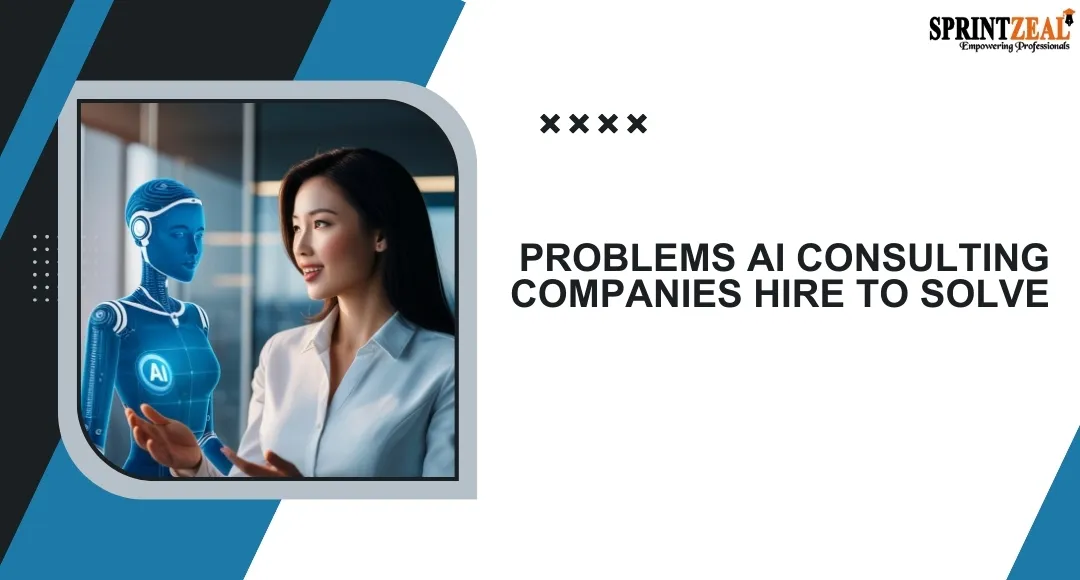
Most companies do not wake up one morning and decide to hire AI consultants for fun. They do it because something feels stuck. Growth slows. Data piles up. Teams argue about what is possible and what is realistic. Someone mentions AI in a meeting, half the room nods, the other half worries about cost and risk.
That tension is where AI consulting companies usually enter. They are not hired for theory. They are hired to fix confusion, reduce guesswork, and turn vague ideas into working systems. For many businesses, this includes AI product development services early-on, especially when internal teams lack the time or depth to build and test AI-driven products.
Let us talk plainly about the problems these companies are hired to solve. Not the glossy promises. The real issues that show up in boardrooms, Slack threads, and late night spreadsheets.
AI looks simple from the outside. You see chatbots, recommendations, fraud alerts, demand forecasts. Under the hood, it is messy. Data lives in different tools. Teams use different definitions. Systems were built years apart by different vendors.
A common problem sounds like this. You have data, but you do not trust it. Sales numbers differ from finance reports. Customer behavior looks noisy. Models trained on this data produce shaky results. Internal teams lose confidence fast.
AI consultants step in as neutral problem solvers. They ask uncomfortable questions. Where does this data come from? Who owns it? Why does this field exist? Their job often starts long before any model is trained.
There are many firms operating in this space, each with a different delivery style and technical depth. These companies are usually brought in when internal teams face unclear requirements, data issues, or high-risk decisions.
These firms differ in scale and methods. They are trusted for one shared reason. They reduce uncertainty when AI projects become difficult to manage.
Many companies jump too fast into tools. Someone buys licenses for TensorFlow or Azure ML. Another team experiments with OpenAI APIs. After a few months, nothing connects.
The real issue is not technical. It is strategic. Teams do not agree on what problem matters most. Is the goal cost reduction? Revenue lift? Risk control? Better customer experience?
AI consulting companies help narrow the focus. They translate business pain into solvable questions. For example, instead of saying “we need AI in marketing”, they reframe it as “we need to predict churn within 30 days using existing CRM and support data”.
That shift saves months of wasted effort.
This is one of the most common reasons companies call for help. Data warehouses are full. Dashboards look impressive. Decisions still rely on gut feeling.
Consultants analyze how data flows through the organization. They look at tools like Snowflake, BigQuery, Looker, Power BI, and Salesforce. They check how events are logged, how often data refreshes, and who actually uses reports.
Fixes often involve improving data quality and metrics, not creating another model. It is better to feature engineering, clearer metrics, or simpler decision rules. AI consulting companies know when not to use complex models. That restraint matters.
Some problems only appear when a company grows. Manual reviews explode. Support tickets triple. Quality checks slow everything down.
Think about fraud teams reviewing transactions one by one. Or HR teams screening thousands of resumes. Or logistics teams planning routes manually each morning.
AI consultants help automate parts of these workflows. They use tools like Python, scikit-learn, XGBoost, or vendor platforms such as AWS SageMaker. The goal is not full automation on day one. It is reducing human load where patterns repeat.
These changes often feel small at first. Over time, they compound.
Older systems cause quiet frustration. They were not built with AI in mind. Data exports break. APIs are limited. Documentation is outdated.
Internal teams often know this but feel trapped. Rewriting everything feels risky and expensive.
AI consulting companies help find workarounds. Sometimes they build lightweight data layers. Sometimes they create parallel pipelines that pull only what is needed. Sometimes they recommend phased modernization instead of a big rewrite.
The value here is experience. Consultants have seen similar setups before. They know where the landmines are.
Hiring AI talent is hard. Good data scientists expect clear problems, clean data, and leadership support. Many companies cannot offer that at first.
AI consultants fill the gap temporarily. They bring structured processes, from data audits to model evaluation. They also train internal teams along the way.
This reduces risk. Instead of hiring five specialists too early, companies learn what roles they truly need.
In industries like finance, healthcare, and insurance, AI mistakes carry real consequences. Bias, explainability, and auditability matter.
Consultants help design models that regulators can understand. They use tools like SHAP for explainability. They document assumptions. They test edge cases.
This work is often invisible to end users. It is critical for leadership and compliance teams.
A painful scenario repeats often. A pilot succeeds. Accuracy looks good. Everyone celebrates. Then nothing moves to production.
Why? Because production brings new problems. Monitoring. Model drift. Integration with existing systems. Ownership questions.
AI consulting companies help bridge this gap. They set up monitoring pipelines. They define retraining schedules. They clarify who responds when models degrade. This is where many internal projects quietly fail.
AI sits at the intersection of business, engineering, and data science. Misunderstandings are common.
Business leaders talk about revenue and risk. Engineers talk about APIs and latency. Data scientists talk about metrics and distributions.
Consultants act as translators. They write clear documentation. They run workshops. They align expectations without forcing artificial agreement.
This human layer is underrated. It often determines success.
It helps to be honest. Consultants cannot fix unclear leadership. They cannot force cultural change overnight. They cannot make bad data magically good.
They can show tradeoffs. They can suggest paths. Decisions still belong to the company.
The best outcomes happen when leadership stays involved and realistic.
Some signs appear again and again.
If several of these sound familiar, outside help often accelerates progress.
A common fear is dependency. Companies worry that consultants will take over and leave nothing behind.
Good engagements avoid this. Knowledge transfer is built in. Internal teams stay involved. Decisions remain transparent.
Ask how documentation works. Ask who owns models after delivery. Ask how handoffs happen.
Clear answers matter more than fancy slides
AI consulting companies are not hired for magic. They are hired to reduce uncertainty. They help companies move from scattered ideas to grounded action.
They solve problems tied to data trust, operational strain, talent gaps, and stalled execution. Sometimes the work is technical. Often it is organizational.
When used well, consultants shorten the distance between intent and results. They do not replace internal teams. They support them when the path forward feels unclear.
Summing it up, AI consulting is less about algorithms and more about making decisions possible again.

Tue, 08 September 2026
Mon, 24 August 2026
Wed, 19 August 2026
Mon, 17 August 2026
Mon, 17 August 2026
Thu, 13 August 2026

Mon, 24 August 2026
Tue, 28 July 2026
Thu, 23 July 2026

© 2026 Sprintzeal Americas Inc. - All Rights Reserved.

 USA : +1315-322-7821
 UK : +44 7700 174870
 IND : +919036108287
 AUS : +61 480 005 455