Top 3 AI Humanizers for Students
Tue, 22 September 2026

Inspirational journeys
Follow the stories of academics and their research expeditions
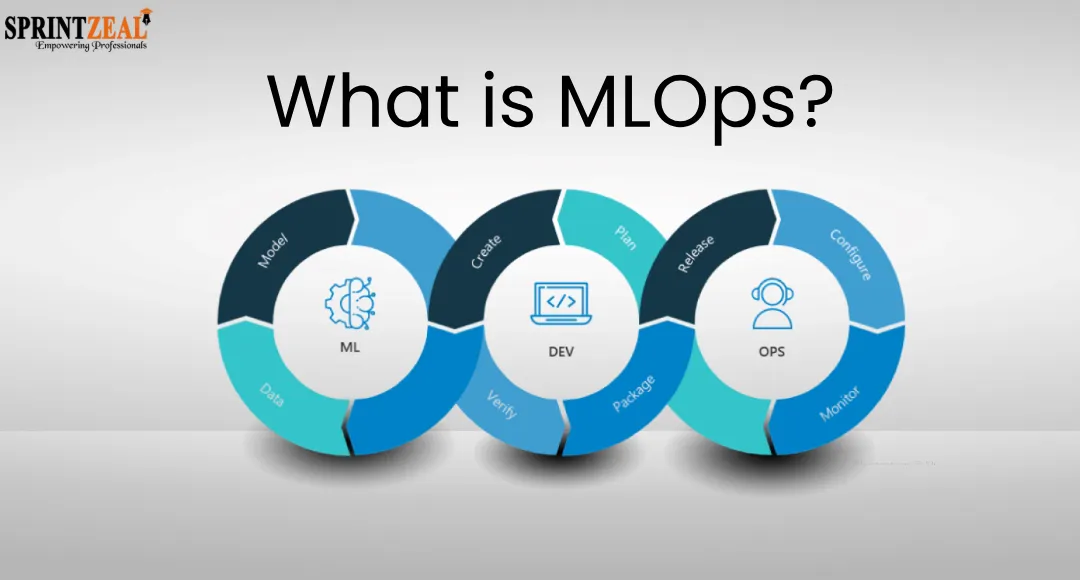
MLOps seems like something you must know about but don’t have the proper information for isn’t it? In simple terms, what is MLOps? It is a connection/data science/software delivery bridge, which lets ML models not only run in notebooks but also work reliably in production environments.
Traditional software releases rely on a fixed output; however, machine learning systems depend heavily on data, and data keeps evolving. Therefore, models that initially show promising results during training can later experience a drop in performance post-deployment. MLOps applies order and discipline through structured and repeatable processes, collaboration workflows, automation, and monitoring. It enables a rapid delivery of ML solutions that fail less and produce measurable business impact.
Have you questioned, "What is ml ops?" Then view it as a DevOps tool for machine learning that is more intricate. Besides managing code releases, it also oversees training datasets, features, model versions, experiments, validation steps, deployment pipelines, and post-launch model health. These are the reasons why MLOps is a must, have for AI-driven product companies at scale.
MLOps can be defined as an engineering practice consisting of practices and tools that develop standard/automate the machine learning workflows used in both the development and production phases of the project. In other words, MLOps creates a discipline that allows ML algorithms to be deployed faster and monitored continuously, and allows ML algorithms to be retrained if necessary without causing errors in the systems or producing unpredictable outcomes.
MLOps makes it possible for ML to be used in everyday situations. Many companies can develop ML models but even less can implement and maintain ML models in production. It is possible to create a model that performs well today, but tomorrow could radically change customer behaviors, the input data sets may change or a new trend occurs in the market that affects the ML algorithm, causing performance to drop and predictions to be less reliable. The MLOps Process provides stability to your ML pipeline by focusing on:
Automating repetitive tasks that occur in ML development (e.g., retraining models repeatedly during testing and deployment).
Collaboratively aligning the various teams involved in ML development (e.g., Data Scientists, ML Engineers & DevOps/IT).
Creating predictable outcomes by allowing a model’s results to be reproduced by using the same code and data used during development.
Continuously monitoring and tracking the performance of the model while in production (including drift/loss and the latency of the model).
Continuously developing and updating your ML model(s) as new data becomes available.
An analogy that may help you appreciate this is that developing an ML model is not simply a project but a system that is kept alive by MLOps processes to ensure that the accuracy and value of the model continue on into the future.
Below are the essential ingredients of MLOps which enable a full lifecycle of machine learningfrom raw data to production, ready AI.
Data Collection and Data Preparation Pipelines - Any ML system is basically for data, but production ML requires a lot more than just a dataset dumped into a notebook. Through MLOps, data can be continuously collected from trustworthy sources such as databases, APIs, logs, sensors, or even third, party platforms. Moreover, the emphasis is not only on getting data, but also on making sure that it is clean, complete, and suitable for use.
A strong data preparation pipeline typically includes:
Data ingestion and scheduled extraction
Cleaning (missing values, duplicates, outliers)
Standardization and formatting
Data labeling (if supervised learning)
Data validation checks (schema, ranges, null values)
Dataset versioning for reproducibility
If your data pipeline is unstable, your model will never be stable. That’s why in MLOps, data pipelines are treated like production software—automated, tested, and monitored.
2) Feature Engineering
After data has been cleaned, the next vital stage is to create features, the inputs which enable the model to recognize patterns. Feature engineering may involve different types of operations such as normalisation, encoding categories, aggregations, time, window features, and domain-specific metrics.
Nevertheless, a typical problem in production is that features during training may not be the same as features during inference. MLOps remedies this with the feature store, which serves as a centralised facility for storing, managing, and reusing features consistently among teams and different environments.
Key benefits include:
Reusable feature definitions
Consistent features for training and serving
Feature version control
Faster experimentation without rebuilding features repeatedly
This component is one of the biggest reasons why MLOps is essential for scaling ML beyond experiments.
3) Model Training and Experimentation Tracking
Usually, training a model is a process with iterations. The team tests different algorithms, varies hyperparameters, changes feature sets, etc. until they get the best model. On that account, MLOps contributes to organizing the process by making sure that all the experiments are recorded, documented, and reusable.
A mature experimentation workflow includes:
Training pipelines that can run automatically
Logging hyperparameters, metrics, and artifacts
Tracking datasets and feature versions used
Comparing model runs for performance selection
Storing outputs like model files, charts, and evaluation reports
So when someone asks what is MLOps, this is a big part of the answer—because without experiment tracking, teams waste time repeating work and lose clarity on what actually improved the model.
4) Model Validation and Testing (Unit + Data + Model Tests)
Before a model goes to production, it must be tested like any other critical system. In MLOps, validation includes multiple layers of testing—not just accuracy.
Testing typically covers:
Unit tests: for feature functions, preprocessing code, pipelines
Data tests: schema checks, missing values, range checks, distribution checks
Model tests: performance thresholds, fairness checks, robustness tests
Here’s a simple question to think about: Would you deploy a model if it performs well today but fails when input patterns change tomorrow? That’s exactly why MLOps testing exists—to reduce production surprises.
5) Model Deployment (Batch vs Real-Time Inference)
Deployment is where ML meets real business usage. MLOps enables smooth, automated deployment using CI/CD pipelines, model registries, and release strategies.
There are two major deployment types:
Batch inference: predictions run on a schedule (daily/weekly), ideal for reporting and forecasting
Real-time inference: predictions served instantly via APIs, ideal for fraud detection, personalization, and recommendations
MLOps ensures deployments are controlled through:
Model versioning and approvals
Rollbacks and safe releases (blue-green, canary)
Containerization and scalable serving
6) Monitoring Model Performance in Production
A deployed model is not “done”—it’s just live. Over time, data changes, user behavior evolves, and business conditions shift. This causes model performance to degrade, often silently. MLOps solves this with continuous monitoring.
Monitoring usually includes:Prediction accuracy and business KPI tracking
Data drift and concept drift detection
Latency and uptime monitoring
Bias and fairness monitoring (where required)
Alerts and retraining triggers
This is the final piece that completes the lifecycle and makes MLOps a continuous loop rather than a one-time workflow.
MLOps can be very successful when there is the use of a defined set of values, which helps make machine learning processes more reliable and less susceptible to error, as well as ready for use in production systems. If you are attempting to determine what ml ops is (or even just asking yourself the question "What is Ml Ops"), you should understand that Ml Ops goes beyond just deploying models; it is about establishing an overall framework that can consistently deliver accurate predictions over time using a reliable approach.
These fundamental principles are basically the lifeblood of real-world ML teams that make it possible.
Automation and Reproducibility
Automation is one of the crucial aspects of MLOps. Manual ML workflows simply don't have the capacity to be scaled up, especially when multiple datasets, models, and updates are involved. Automation enables teams to efficiently handle the repetitive work, such as data preprocessing, model training, testing, deployment, and retraining.
Reproducibility is crucial in MLOps. We ought to be able to see the same results each time we carry out the experiment if we use the same inputs. Many factors may impact the training result of a machine-learning model; for example, data volatility (e.g., data set changes, random seed variations), as well as changes made to features and/or libraries. If the same experiment cannot be repeated, it will make it impossible to troubleshoot and significantly increase the likelihood of failure in production.
Hence, in a nutshell, automation is there to speed up your work while reproducibility is there to ensure that your work is done in a safe manner.
Versioning (Code, Data, Model)
In the software development world, version control is mainly used to track code changes. But in MLOps, code is just a part of the total system. ML outcomes rely on the following equally:
Training data Feature engineering logic Model architecture and hyperparameters Training environment and dependencies As a result, MLOps versioning covers not only code but also data and models. The teams keep different versions of datasets, model artefacts, and pipeline scripts in order to establish traceability and rollback capability. If a model is not performing well in production, versioning allows you to quickly figure out what has changed and revert safely.
A good question to ask here is: If your model accuracy drops tomorrow, can you trace the exact dataset and model version that caused it? MLOps makes sure the answer is “yes”.
Machine Learning CI/CD/CT (Continuous Integration, Continuous Delivery, and Continuous Training) is the next evolution of engineering for machine learning. Like today’s CI/CD processes in software development, the MLOps methodology extends these processes to machine learning with the addition of “CT” (for Continuous Training).
CI (Continuous Integration) is the process of integrating code, data pipelines, and model-building scripts into one environment and using automated testing to ensure the entire data pipeline works properly.
CD (Continuous Delivery or Continuous Deployment) is the process of safely delivering a machine learning model to production by moving through different staging environments (dev, test, etc.) and utilising approval workflows.
CT (Continuous Training) is the process of monitoring your model and retraining it when new data becomes available or when drift is detected.
CI/CD/CT is where MLOps becomes truly life cycle orientated and ensures that your models can continuously improve and be retrained without disrupting production
Building an MLOps pipeline from development to production
The MLOps cycle usually starts in the development phase where data scientists investigate datasets, identify features, and test various algorithms. Instead of viewing this as a simple one, off model development, MLOps transforms this into a traceable process. The normal procedure is as follows:
Data ingestion and validation: Collect data from several sources and verify its quality (missing data, inconsistent data schema, outliers).
Feature engineering is the process of turning unprocessed data into usable features while making sure the feature logic is reusable.
Model training: Employ traceable experiments (artefacts, metrics, and hyperparameters) for model training.
Automated testing of data, features, and model performance (accuracy, precision/recall, fairness tests) should be performed.
Packaging and deployment: Get the model ready for batch or real-time predictions before deploying it to production via staging.
Monitoring: Track drift, errors, latency, and forecast quality in production.
This makes sure that there are no production failures at the eleventh hour, as it might be delay the production flow. Also it makes smooth functioning by checking up if the data science, engineering, and operations teams are all on the same page and working in the same process.
Continuous training and retraining triggers
Unlike traditional apps, ML models degrade over time because real-world data changes. That’s why continuous training is a key part of MLOps. Retraining is triggered when:
Data drift occurs (input patterns change)
Concept drift happens (relationships between features and output change)
Performance drops below a threshold (accuracy, F1-score, business KPIs)
New data volume reaches a limit (weekly/monthly refresh)
New features or labels become available
A good question to ask is: Is your model still learning from today’s data, or is it stuck in last year’s patterns? MLOps ensures it stays updated.
Model registry + approval workflow
Once models are trained, they need controlled management. This is where a model registry becomes essential. It acts like a central hub where teams store and track:
Model versions
Training data reference
Evaluation metrics
Deployment stage (dev → staging → production)
Governance is provided by the approval workflow.
Before being deployed into production, models are typically evaluated by ML engineers, quality assurance (QA), or other stakeholders. This prevents untested and/or low-quality models from being deployed into production without review while also providing an option to roll back if there are problems after model deployment.
Finally, if you are new to MLOps, one thing to remember about MLOps workflows is that they are about deploying models safely and repeatedly, and with full control.
Experiment Tracking Tools (MLflow, Weights & Biases)
Machine learning is a process of endless experimentation with different datasets, algorithms, hyperparameters, and metrics. This process can be managed with the help of tools such as MLflow and Weights & Biases (W&B).
They allow you to log:
Parameters (learning rate, epochs, model type)
Metrics (accuracy, precision, recall, loss)
Model artifacts (trained model files)
Notes, tags, and run history
This makes results reproducible and collaboration easier. Instead of “guessing which model was best,” you have clear evidence and records.
Workflow Orchestration (Kubeflow, Airflow, Prefect)
Orchestration is required to control the pipelines as soon as the ML workflows outgrow the notebook. Tools like Kubeflow, Apache Airflow, and Prefect can be used to handle this process.
Key benefits include:
Pipeline automation and scheduling
Dependency management between steps
Error handling and retries
Scalability across environments
If you’re building repeatable ML pipelines, orchestration tools are essential in any serious MLOps setup.
Model Deployment Tools (Kubernetes, Docker, Seldon, BentoML)
Deploying a model is not just exporting a .pkl file—it’s packaging it as a service that can handle real traffic. Tools like Docker and Kubernetes help containerize and scale ML inference services.
For ML-focused deployment, platforms like Seldon and BentoML make it easier to:
Serve models through REST APIs
Manage multiple model versions
Scale inference workloads
Deploy safely using rollout strategies
A quick check: Can your model handle 10x traffic tomorrow without breaking? MLOps deployment tools help you say yes confidently.
Monitoring Tools (Drift + Performance + Observability)
After deployment, models must be monitored continuously. Unlike normal apps, ML models can fail silently due to data drift and concept drift. Monitoring tools track:
Prediction quality over time
Data distribution changes
Latency, errors, uptime
Bias and fairness metrics (when required)
This is where MLOps proves its value—ensuring models remain accurate, stable, and trustworthy in production.
What DevOps does, and what MLOps adds to it
DevOps is primarily concerned with speeding up the delivery of software products and providing them in a consistent way by tearing down barriers that exist between development and operations groups. DevOps covers all phases of the lifecycle of a software application, such as writing, releasing, automating infrastructure, and monitoring app performance.
MLOps basically takes the DevOps formula and adds a few ML-focused layers to it that DevOps alone cannot address. The reason is that ML systems do more than simply deliver code; they also deliver models that are inherently different from code. Through MLOps, teams not only manage application code but also training data, feature pipelines, experiments, and model governance.
In summary, MLOps introduces the following new processes that DevOps doesn’t handle:
Dataset + feature management
Experiment tracking and reproducibility
Model validation and approval workflows
Continuous training and retraining pipelines
Model monitoring, drift detection, and rollback strategies
Why MLOps requires data and model monitoring
In DevOps, monitoring is primarily concerned with system health, including CPU, memory, availability, error logs, and latency. However, ML systems require something more profound: data monitoring and model monitoring.
Why MLOps needs data and model monitoring
Monitor system health in DevOps but also consider how machine learning systems are impacted by changes to both data and model performance.
Changes to real-world data happen continuously, regardless of whether or not you change any of your code; however, incoming changes to your dataset (customer behaviour, seasonal effects, fraudulent behaviour, etc.) will change over time. As a result, monitoring should take place at both a high level (as described above) and a more granular level based on what is happening with the datasets being provided to you for training purposes. This can cause:
Data drift (input distribution changes)
Concept drift (relationship between input and output changes)
Performance drop in accuracy, precision, recall, etc.
Ask yourself: If your ML model is still running fine technically but predictions are wrong—how would you detect it? That’s why MLOps treats monitoring as a core principle, not an optional step.
Here’s a detailed breakdown of how they differ : DevOps vs DataOps vs MLOps
Characteristic | DevOps | DataOps | MLOps |
Chief concern | Software delivery and infrastructure | Reliable data pipelines | End-to-end ML lifecycle |
Chief output | Applications/services | Clean, trusted datasets | Deployed ML models and pipelines |
What it oversees | Code, CI/CD, deployment, infrastructure | Data ingestion, transformation, quality | Code + data + features + models |
What it tracks | Logs, uptime, latency, errors | Data freshness, quality, lineage | Model performance + drift + bias |
Primarily used for | Web/apps, APIs, platforms | Analytics/BI/data engineering | AI products & ML systems |
For questions about MLOps and how to use MLOPs, we provide practical definitions: MLOPs is a set of “best practices” for ensuring continued reliability of machine learning models after they have been deployed – “deployed” does not mean “complete” – but rather “remains accurate, secure, and trustworthy” during the production phase.
Machine learning operations teams monitor both types of drift, data drift (input) and concept drift (what the model predicts), through ongoing monitoring to detect significant changes before an actual problem occurs. Organizations that have implemented an effective monitoring system will be able to proactively retrain before the effect of the data or concept drift results in impacts to the organization.
Governance, compliance and security are critical to successful production machine learning. The governance processes should have been established prior to deploying the machine learning models and included items such as version control, audit logging, and approval and authorisation processes for access control. Security processes should include the protection of datasets and data assets, restricting access to model endpoints, and establishing safe environments for deploying machine learning across the organisation, particularly when the organization operates in a regulated environment.
Finally, responsible artificial intelligence is essential. MLOPs must always include fairness review processes, bias monitoring processes, and explainability requirements. Responsible AI requires organisations to conduct regular reviews of their machine learning models to ensure that the overall outcome of the model results in fair treatment of users within the respective groups and to identify potential risks within the organisation.
Organizations need to implement safe deployment practices of their machine learning models. The use of canary testing to test the model against low production volumes before deploying to full production, the implementation of an A/B deployment process to compare the performance of different model variations, and providing the ability to roll back to a previous version are all methods that can be used to ensure that the deployment of machine learning models is successful.
Fraud Detection and Risk Scoring
Fraud detection models are primarily used banking, fintech and insurance sectors for identifying suspicious transactions in real, time. As a case in point, PayPal and Visa have fraud systems, powered by machine learning, that help them uncover unusual spending patterns, identify a mismatch in device/location, and detect a high frequency of transactions. In a similar way, American Express uses risk scoring to identify fraud and assess the credit risk of the customers. Because fraud tactics are evolving at a rapid pace, MLOps assists in automating retraining, detecting drift, and maintaining the accuracy of fraud models without disrupting the production pipelines.
Recommendation engines deliver personalized content and products to users. Using a customer's browsing and purchase history Amazon is able to recommend products while Netflix uses watch behavior and engagement signals to suggest movies and series. YouTube ranks videos through recommendations for the purpose of keeping users engaged. It is always a challenge as user preferences tend to change constantly. MLOps helps recommendation systems through various activities like performance monitoring, updating training data, safe model deployment, and running A/B testing to verify the result of the changes made.
Machine learning is used in the manufacturing and distribution sectors to enable companies to forecast machine failures before they occur. Predictive Maintenance has become increasingly important across industries (for example, to reduce downtime of industrial machines), such as using GE's predictive maintenance model for industrial machines; or to ensure that the company's use of sensors, such as vibration and temperature sensors, maintain accurate equipment health over time, as done at Siemens. In the retail and supply chain industries, forecast models provide companies with forecasting capabilities that enable firms such as Walmart to accurately assess demand and ensure proper inventory levels. Predictive and forecasting model maintenance is able to be maintained through MLOps, which supports forecast models through ongoing monitoring of model performance, data updating as seasonal demand or operational conditions change, securely deploying new models, and providing A/B testing to confirm model improvement.
So what is MLOps really? Simply put, it's the hands- on discipline that enables companies to effectively develop, launch, keep track of, and continuously enhance machine learning models that are used in a live environment In this article, we comprehensively answered the question, "what is mlops?" We began with the definition and fundamentals of MLOps, then went through the MLOps workflows, tools, CI/CD/CT practices, drift detection monitoring, governance, responsible AI, and eventually real business examples such as fraud detection, recommendation systems, and predictive maintenance.
The main point is that training a model is just the first step. Making it production, ready scalable, secure, and reliable over time is actually the real challenge, and this is exactly where MLOps becomes indispensable.
If you're planning on making a career in MLOps, you must learn the right mix of machine learning + DevOps + cloud + deployment pipelines. Enroll in the Sprintzeal Artificial Intelligence Certification Training today and gain real-world AI skills that employers demand—whether you’re starting your journey or scaling up your career in Machine Learning, Deep Learning, or MLOps.
1) What is MLOps?
MLOps is a collection of methods that automate and control every stage of a machine learning project, from first code to live service plus ongoing checks.
2) What is MLOps in simple terms?
It gives teams a repeatable way to turn successful experiments into stable, large scale production services.
3) Why is MLOps important?
It stops models from degrading - tracking data changes, triggering retraining and watching live metrics.
4) What problems does MLOps solve?
It removes model rot, hand deployed releases, siloed work but also experiments that no one can replay.
5) How is MLOps different from DevOps?
DevOps ships ordinary software - MLOps also handles data flows, model files and cycles of automatic retraining.
6) What are the key components of MLOps?
Data pipelines, model training, version control, CI/CD, live monitoring, as well as scheduled retraining.
7) Who should learn MLOps?
Data scientists, ML engineers, DevOps staff and anyone who builds AI products.
8) What tools are used in MLOps?
Typical choices are MLflow, Kubeflow, Docker, Kubernetes plus cloud services like AWS or GCP.
9) What industries use MLOps?
Hospitals, shops, factories or tech firms rely on MLOps.
10) Is MLOps a good career choice?
Demand is strong because more enterprises now run AI in production.
MLOps seems like something you must know about but don’t have the proper information for isn’t it? In simple terms, what is MLOps? It is a connection/data science/software delivery bridge, which lets ML models not only run in notebooks but also work reliably in production environments.
Traditional software releases rely on a fixed output; however, machine learning systems depend heavily on data, and data keeps evolving. Therefore, models that initially show promising results during training can later experience a drop in performance post-deployment. MLOps applies order and discipline through structured and repeatable processes, collaboration workflows, automation, and monitoring. It enables a rapid delivery of ML solutions that fail less and produce measurable business impact.
Have you questioned, "What is ml ops?" Then view it as a DevOps tool for machine learning that is more intricate. Besides managing code releases, it also oversees training datasets, features, model versions, experiments, validation steps, deployment pipelines, and post-launch model health. These are the reasons why MLOps is a must, have for AI-driven product companies at scale.
MLOps can be defined as an engineering practice consisting of practices and tools that develop standard/automate the machine learning workflows used in both the development and production phases of the project. In other words, MLOps creates a discipline that allows ML algorithms to be deployed faster and monitored continuously, and allows ML algorithms to be retrained if necessary without causing errors in the systems or producing unpredictable outcomes.
MLOps makes it possible for ML to be used in everyday situations. Many companies can develop ML models but even less can implement and maintain ML models in production. It is possible to create a model that performs well today, but tomorrow could radically change customer behaviors, the input data sets may change or a new trend occurs in the market that affects the ML algorithm, causing performance to drop and predictions to be less reliable. The MLOps Process provides stability to your ML pipeline by focusing on:
An analogy that may help you appreciate this is that developing an ML model is not simply a project but a system that is kept alive by MLOps processes to ensure that the accuracy and value of the model continue on into the future.
Below are the essential ingredients of MLOps which enable a full lifecycle of machine learningfrom raw data to production, ready AI.
A strong data preparation pipeline typically includes:
If your data pipeline is unstable, your model will never be stable. That’s why in MLOps, data pipelines are treated like production software—automated, tested, and monitored.
2) Feature Engineering
After data has been cleaned, the next vital stage is to create features, the inputs which enable the model to recognize patterns. Feature engineering may involve different types of operations such as normalisation, encoding categories, aggregations, time, window features, and domain-specific metrics.
Nevertheless, a typical problem in production is that features during training may not be the same as features during inference. MLOps remedies this with the feature store, which serves as a centralised facility for storing, managing, and reusing features consistently among teams and different environments.
Key benefits include:
This component is one of the biggest reasons why MLOps is essential for scaling ML beyond experiments.
3) Model Training and Experimentation Tracking
Usually, training a model is a process with iterations. The team tests different algorithms, varies hyperparameters, changes feature sets, etc. until they get the best model. On that account, MLOps contributes to organizing the process by making sure that all the experiments are recorded, documented, and reusable.
So when someone asks what is MLOps, this is a big part of the answer—because without experiment tracking, teams waste time repeating work and lose clarity on what actually improved the model.
4) Model Validation and Testing (Unit + Data + Model Tests)
Before a model goes to production, it must be tested like any other critical system. In MLOps, validation includes multiple layers of testing—not just accuracy.
Testing typically covers:
Here’s a simple question to think about: Would you deploy a model if it performs well today but fails when input patterns change tomorrow? That’s exactly why MLOps testing exists—to reduce production surprises.
5) Model Deployment (Batch vs Real-Time Inference)
Deployment is where ML meets real business usage. MLOps enables smooth, automated deployment using CI/CD pipelines, model registries, and release strategies.
There are two major deployment types:
MLOps ensures deployments are controlled through:
6) Monitoring Model Performance in Production
A deployed model is not “done”—it’s just live. Over time, data changes, user behavior evolves, and business conditions shift. This causes model performance to degrade, often silently. MLOps solves this with continuous monitoring.
Monitoring usually includes:Prediction accuracy and business KPI tracking
This is the final piece that completes the lifecycle and makes MLOps a continuous loop rather than a one-time workflow.
MLOps can be very successful when there is the use of a defined set of values, which helps make machine learning processes more reliable and less susceptible to error, as well as ready for use in production systems. If you are attempting to determine what ml ops is (or even just asking yourself the question "What is Ml Ops"), you should understand that Ml Ops goes beyond just deploying models; it is about establishing an overall framework that can consistently deliver accurate predictions over time using a reliable approach.
These fundamental principles are basically the lifeblood of real-world ML teams that make it possible.
Automation and Reproducibility
Automation is one of the crucial aspects of MLOps. Manual ML workflows simply don't have the capacity to be scaled up, especially when multiple datasets, models, and updates are involved. Automation enables teams to efficiently handle the repetitive work, such as data preprocessing, model training, testing, deployment, and retraining.
Reproducibility is crucial in MLOps. We ought to be able to see the same results each time we carry out the experiment if we use the same inputs. Many factors may impact the training result of a machine-learning model; for example, data volatility (e.g., data set changes, random seed variations), as well as changes made to features and/or libraries. If the same experiment cannot be repeated, it will make it impossible to troubleshoot and significantly increase the likelihood of failure in production.
Hence, in a nutshell, automation is there to speed up your work while reproducibility is there to ensure that your work is done in a safe manner.
Versioning (Code, Data, Model)
In the software development world, version control is mainly used to track code changes. But in MLOps, code is just a part of the total system. ML outcomes rely on the following equally:
Training data Feature engineering logic Model architecture and hyperparameters Training environment and dependencies As a result, MLOps versioning covers not only code but also data and models. The teams keep different versions of datasets, model artefacts, and pipeline scripts in order to establish traceability and rollback capability. If a model is not performing well in production, versioning allows you to quickly figure out what has changed and revert safely.
A good question to ask here is: If your model accuracy drops tomorrow, can you trace the exact dataset and model version that caused it? MLOps makes sure the answer is “yes”.
Machine Learning CI/CD/CT (Continuous Integration, Continuous Delivery, and Continuous Training) is the next evolution of engineering for machine learning. Like today’s CI/CD processes in software development, the MLOps methodology extends these processes to machine learning with the addition of “CT” (for Continuous Training).
CI/CD/CT is where MLOps becomes truly life cycle orientated and ensures that your models can continuously improve and be retrained without disrupting production
Building an MLOps pipeline from development to production
The MLOps cycle usually starts in the development phase where data scientists investigate datasets, identify features, and test various algorithms. Instead of viewing this as a simple one, off model development, MLOps transforms this into a traceable process. The normal procedure is as follows:
This makes sure that there are no production failures at the eleventh hour, as it might be delay the production flow. Also it makes smooth functioning by checking up if the data science, engineering, and operations teams are all on the same page and working in the same process.
Continuous training and retraining triggers
Unlike traditional apps, ML models degrade over time because real-world data changes. That’s why continuous training is a key part of MLOps. Retraining is triggered when:
A good question to ask is: Is your model still learning from today’s data, or is it stuck in last year’s patterns? MLOps ensures it stays updated.
Model registry + approval workflow
Once models are trained, they need controlled management. This is where a model registry becomes essential. It acts like a central hub where teams store and track:
Deployment stage (dev → staging → production)
Governance is provided by the approval workflow.
Before being deployed into production, models are typically evaluated by ML engineers, quality assurance (QA), or other stakeholders. This prevents untested and/or low-quality models from being deployed into production without review while also providing an option to roll back if there are problems after model deployment.
Finally, if you are new to MLOps, one thing to remember about MLOps workflows is that they are about deploying models safely and repeatedly, and with full control.
Experiment Tracking Tools (MLflow, Weights & Biases)
Machine learning is a process of endless experimentation with different datasets, algorithms, hyperparameters, and metrics. This process can be managed with the help of tools such as MLflow and Weights & Biases (W&B).
They allow you to log:
This makes results reproducible and collaboration easier. Instead of “guessing which model was best,” you have clear evidence and records.
Workflow Orchestration (Kubeflow, Airflow, Prefect)
Orchestration is required to control the pipelines as soon as the ML workflows outgrow the notebook. Tools like Kubeflow, Apache Airflow, and Prefect can be used to handle this process.
Key benefits include:
If you’re building repeatable ML pipelines, orchestration tools are essential in any serious MLOps setup.
Model Deployment Tools (Kubernetes, Docker, Seldon, BentoML)
Deploying a model is not just exporting a .pkl file—it’s packaging it as a service that can handle real traffic. Tools like Docker and Kubernetes help containerize and scale ML inference services.
For ML-focused deployment, platforms like Seldon and BentoML make it easier to:
A quick check: Can your model handle 10x traffic tomorrow without breaking? MLOps deployment tools help you say yes confidently.
Monitoring Tools (Drift + Performance + Observability)
After deployment, models must be monitored continuously. Unlike normal apps, ML models can fail silently due to data drift and concept drift. Monitoring tools track:
This is where MLOps proves its value—ensuring models remain accurate, stable, and trustworthy in production.
What DevOps does, and what MLOps adds to it
DevOps is primarily concerned with speeding up the delivery of software products and providing them in a consistent way by tearing down barriers that exist between development and operations groups. DevOps covers all phases of the lifecycle of a software application, such as writing, releasing, automating infrastructure, and monitoring app performance.
MLOps basically takes the DevOps formula and adds a few ML-focused layers to it that DevOps alone cannot address. The reason is that ML systems do more than simply deliver code; they also deliver models that are inherently different from code. Through MLOps, teams not only manage application code but also training data, feature pipelines, experiments, and model governance.
In summary, MLOps introduces the following new processes that DevOps doesn’t handle:
In DevOps, monitoring is primarily concerned with system health, including CPU, memory, availability, error logs, and latency. However, ML systems require something more profound: data monitoring and model monitoring.
Why MLOps needs data and model monitoring
Monitor system health in DevOps but also consider how machine learning systems are impacted by changes to both data and model performance.
Changes to real-world data happen continuously, regardless of whether or not you change any of your code; however, incoming changes to your dataset (customer behaviour, seasonal effects, fraudulent behaviour, etc.) will change over time. As a result, monitoring should take place at both a high level (as described above) and a more granular level based on what is happening with the datasets being provided to you for training purposes. This can cause:
Ask yourself: If your ML model is still running fine technically but predictions are wrong—how would you detect it? That’s why MLOps treats monitoring as a core principle, not an optional step.
Here’s a detailed breakdown of how they differ : DevOps vs DataOps vs MLOps
|
Characteristic |
DevOps |
DataOps |
MLOps |
|
Chief concern |
Software delivery and infrastructure |
Reliable data pipelines |
End-to-end ML lifecycle |
|
Chief output |
Applications/services |
Clean, trusted datasets |
Deployed ML models and pipelines |
|
What it oversees |
Code, CI/CD, deployment, infrastructure |
Data ingestion, transformation, quality |
Code + data + features + models |
|
What it tracks |
Logs, uptime, latency, errors |
Data freshness, quality, lineage |
Model performance + drift + bias |
|
Primarily used for |
Web/apps, APIs, platforms |
Analytics/BI/data engineering |
AI products & ML systems |
Fraud Detection and Risk Scoring
Fraud detection models are primarily used banking, fintech and insurance sectors for identifying suspicious transactions in real, time. As a case in point, PayPal and Visa have fraud systems, powered by machine learning, that help them uncover unusual spending patterns, identify a mismatch in device/location, and detect a high frequency of transactions. In a similar way, American Express uses risk scoring to identify fraud and assess the credit risk of the customers. Because fraud tactics are evolving at a rapid pace, MLOps assists in automating retraining, detecting drift, and maintaining the accuracy of fraud models without disrupting the production pipelines.
Recommendation engines deliver personalized content and products to users. Using a customer's browsing and purchase history Amazon is able to recommend products while Netflix uses watch behavior and engagement signals to suggest movies and series. YouTube ranks videos through recommendations for the purpose of keeping users engaged. It is always a challenge as user preferences tend to change constantly. MLOps helps recommendation systems through various activities like performance monitoring, updating training data, safe model deployment, and running A/B testing to verify the result of the changes made.
Machine learning is used in the manufacturing and distribution sectors to enable companies to forecast machine failures before they occur. Predictive Maintenance has become increasingly important across industries (for example, to reduce downtime of industrial machines), such as using GE's predictive maintenance model for industrial machines; or to ensure that the company's use of sensors, such as vibration and temperature sensors, maintain accurate equipment health over time, as done at Siemens. In the retail and supply chain industries, forecast models provide companies with forecasting capabilities that enable firms such as Walmart to accurately assess demand and ensure proper inventory levels. Predictive and forecasting model maintenance is able to be maintained through MLOps, which supports forecast models through ongoing monitoring of model performance, data updating as seasonal demand or operational conditions change, securely deploying new models, and providing A/B testing to confirm model improvement.
So what is MLOps really? Simply put, it's the hands- on discipline that enables companies to effectively develop, launch, keep track of, and continuously enhance machine learning models that are used in a live environment In this article, we comprehensively answered the question, "what is mlops?" We began with the definition and fundamentals of MLOps, then went through the MLOps workflows, tools, CI/CD/CT practices, drift detection monitoring, governance, responsible AI, and eventually real business examples such as fraud detection, recommendation systems, and predictive maintenance.
The main point is that training a model is just the first step. Making it production, ready scalable, secure, and reliable over time is actually the real challenge, and this is exactly where MLOps becomes indispensable.
If you're planning on making a career in MLOps, you must learn the right mix of machine learning + DevOps + cloud + deployment pipelines. Enroll in the Sprintzeal Artificial Intelligence Certification Training today and gain real-world AI skills that employers demand—whether you’re starting your journey or scaling up your career in Machine Learning, Deep Learning, or MLOps.
1) What is MLOps?
MLOps is a collection of methods that automate and control every stage of a machine learning project, from first code to live service plus ongoing checks.
2) What is MLOps in simple terms?
It gives teams a repeatable way to turn successful experiments into stable, large scale production services.
3) Why is MLOps important?
It stops models from degrading - tracking data changes, triggering retraining and watching live metrics.
4) What problems does MLOps solve?
It removes model rot, hand deployed releases, siloed work but also experiments that no one can replay.
5) How is MLOps different from DevOps?
DevOps ships ordinary software - MLOps also handles data flows, model files and cycles of automatic retraining.
6) What are the key components of MLOps?
Data pipelines, model training, version control, CI/CD, live monitoring, as well as scheduled retraining.
7) Who should learn MLOps?
Data scientists, ML engineers, DevOps staff and anyone who builds AI products.
8) What tools are used in MLOps?
Typical choices are MLflow, Kubeflow, Docker, Kubernetes plus cloud services like AWS or GCP.
9) What industries use MLOps?
Hospitals, shops, factories or tech firms rely on MLOps.
10) Is MLOps a good career choice?
Demand is strong because more enterprises now run AI in production.

Tue, 22 September 2026
Tue, 08 September 2026

Mon, 24 August 2026

Wed, 19 August 2026

Mon, 17 August 2026

Mon, 17 August 2026
Thu, 13 August 2026

Mon, 24 August 2026
Tue, 28 July 2026


© 2026 Sprintzeal Americas Inc. - All Rights Reserved.

 USA : +1315-322-7821
 UK : +44 7700 174870
 IND : +919036108287
 AUS : +61 480 005 455