Top 3 AI Humanizers for Students
Tue, 22 September 2026

Inspirational journeys
Follow the stories of academics and their research expeditions
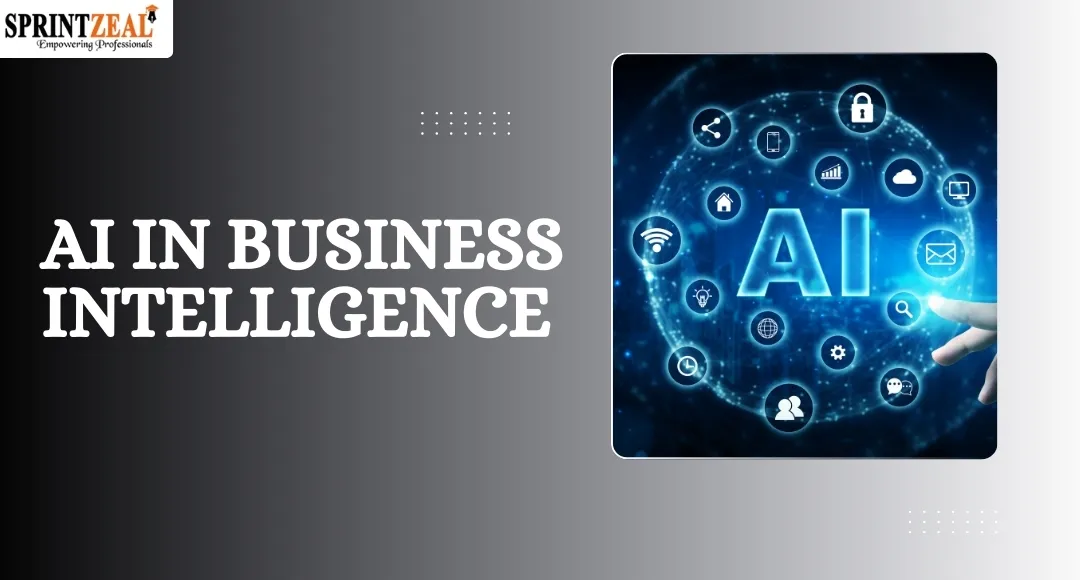
For decades, the world of Business Intelligence (BI) has operated like a driver staring exclusively through a rearview mirror. We called it "Diagnostic BI"—a sophisticated way of asking, “What just happened?” In this old-school model, teams would spend the better part of their week scrubbing messy spreadsheets and building colorful charts just to explain why a specific region missed its targets or why sales slumped last Tuesday. By the time the report finally hit a manager’s desk, the moment to actually fix the problem had usually vanished into thin air. Today, the rapid shift toward AI in data analytics has changed that trajectory entirely.
We are currently witnessing a massive architectural shift in how information is handled at the executive level. We are moving away from simply looking backward and entering the era of Anticipatory BI, where the core driver is the deep implementation of AI in Business Intelligence.
In our experience working with enterprise leaders, we have observed that those who delay this transition find themselves trapped in "analysis paralysis," while early adopters of AI in Business Intelligence are making decisions in hours that used to take weeks.
Think of AI in Business Intelligence as more than just a software upgrade; it is becoming the central nervous system of the operation. Instead of just showing you a static bar graph, it actually helps you understand the hidden "why" behind the numbers. By using AI for business, companies are finally breaking down those stubborn data silos—the ones where marketing doesn't talk to finance and logistics lives in a world of its own—to create one clear, connected picture of the present through the power of AI in Business Intelligence.
In the early days of digital business, a simple dashboard was considered a superpower. This was the era of descriptive analytics, where BI tools were essentially digital filing cabinets—organized, but static. However, the modern standard has evolved far beyond that, settling into the era of AI Tools.
As businesses moved to the cloud, the sheer volume of information exploded exponentially. We started dealing with real-time data processing, with information streaming in from every click, shipment, and social media mention. Suddenly, those traditional legacy systems couldn't keep up with the sheer speed of modern trade—a demand that AI in Project Management and Business Intelligence now handles with ease.
Traditional BI eventually hit what I call a "complexity ceiling." You can only add so many filters, tabs, and toggles to a dashboard before it becomes completely unusable for a busy executive. Analysts found themselves stuck in a loop that only AI in Business Intelligence could break:
This bottleneck meant that about 80% of a company’s data was actually going to waste, sitting in the "dark" where no one could see it. This is exactly where the evolution of BI tools took a necessary turn toward AI in Business Intelligence.
The breakthrough that changed the game was augmented analytics. Instead of requiring a human to manually hunt for patterns—which is like looking for a needle in a haystack—modern platforms have automated the "hunting" process. This represents a new peak for AI in Business Intelligence.
While Power BI AI features pioneered many of these integrations, the market has expanded into more specialized territories. Tableau Pulse, for instance, has moved the experience toward "digestible insights," pushing data stories directly to users rather than making them visit a dashboard. Meanwhile, ThoughtSpot has leaned heavily into a "search-first" architecture, allowing users to query data as easily as using a search engine. As we move into 2026, we are seeing the rise of AI-first platforms—built from the ground up without the baggage of legacy dashboards—that treat data as a live, conversational stream rather than a collection of static tables.
AI-driven analytics has changed the very relationship between the user and the data. We have moved away from rigid, pre-built screens to a more conversational experience powered by AI in Business Intelligence. In many modern platforms, AI agents for businesses play a key role by interacting with data, answering queries, and generating insights through natural language, making analytics more accessible and intuitive for users. Now, instead of clicking through a dozen filters to find out why shipping costs are up, you can simply ask the system a question in plain English. AI in Business Intelligence breaks the ceiling by handling the complexity in the background, delivering the "why" instantly so humans can focus on the "what now."
To find the best AI agents for business, you have to look past the flashy icons and see what’s actually happening in the engine room of AI in Business Intelligence. It isn't just one giant "AI" button; it’s a group of specialized experts—or models—working together to turn raw numbers into AI-powered business intelligence.
Traditional BI only answers the questions you’re smart enough to ask. AI in Business Intelligence, however, acts like a super-powered filter that catches what you missed. By using neural networks, these systems scan millions of rows of data to find hidden links that the human eye simply cannot see.
For years, data was a "second language" that only the IT department spoke fluently. Natural Language Processing (NLP) has finally democratized AI in Business Intelligence so that anyone—from a sales rep to the CEO—can get answers.
This is where AI for business operations and AI in Business Intelligence move from being "interesting" to being "essential" for survival.
This is the newest frontier in the AI in Business Intelligence stack. Computer Vision allows your business intelligence to step out of the computer and into the physical world.
By layering these pillars together, AI in Business Intelligence stops being a "feature" of your software and starts acting like a strategic partner that’s always three steps ahead of the market.
The buzz around artificial intelligence in business examples usually focuses on things like chatbots. But for the modern enterprise, the real, high-impact benefits of AI in BI happen in the quiet moments of decision-making powered by AI in Business Intelligence.
One of the biggest misconceptions about AI in Business Intelligence is that it is here to replace the analyst. In reality, it’s about scalability. A human analyst can deeply investigate maybe five or ten trends a week. AI in Business Intelligence can investigate ten thousand. By handling the "grunt work" of data cleaning, AI in Business Intelligence frees up your best people for high-stakes calls.
In business, information has an expiration date. When utilizing AI in Business Intelligence, operational efficiency isn’t just about doing things cheaper; it’s about doing them faster. AI in Business Intelligence shrinks that "Time to Insight" from weeks down to seconds. If a major global event disrupts a shipping lane, AI in Business Intelligence can instantly recalculate every delivery date in your system.
We all have biases. An optimistic sales manager might overlook a dip in lead quality because they want to hit their "stretch goal." This is where error reduction and objectivity in AI in Business Intelligence come in. AI in Business Intelligence doesn't care about office politics or meeting a quarterly bonus; it just looks at the math. By identifying patterns without a personal agenda, AI in Business Intelligence helps eliminate the "gut feeling" traps that lead to expensive mistakes.
Most companies are sitting on a goldmine of data they’ve been collecting for years but have never used. AI in Business Intelligence is the tool that finally unlocks the ROI of AI by turning that "dead data" into a living asset. The move to AI in Business Intelligence ensures that every byte of data you store is actually working for you, not just taking up space in the cloud.
It’s one thing to talk about AI in Business Intelligence in the abstract, but it’s another to see it actually solving problems on the ground. Whether we’re talking about AI for small business or global conglomerates, here is how AI in Business Intelligence is rewriting the rules of the game.
In finance, "close enough" isn't good enough. AI for accounting firms and internal teams using AI in Business Intelligence is becoming the ultimate safety net.
Modern marketing through AI in Business Intelligence isn't about shouting louder; it's about whispering the right thing to the right person.
If the last few years have taught us anything, it’s that supply chains are fragile. Supply chain resilience is now the new priority, and AI in Business Intelligence is leading the charge.
Data isn't just for spreadsheets; it’s for people, too. Strategic talent management is now a core part of AI in Business Intelligence.
Even for artificial intelligence for IT operations, these AI in Business Intelligence tools are essential for keeping the massive "engine" healthy, secure, and ready for action.
The rise of Generative AI in analytics is fundamentally changing the role of AI in Business Intelligence. If previous years were about AI in Business Intelligence helping us find the needle in the haystack, this era is about the haystack explaining itself to us in plain English.
When Google AI for business and other AI development companies integrate Large Language Models (LLMs) into AI in Business Intelligence, the results are transformative for the average user.
Sometimes, the biggest hurdle in AI in Business Intelligence isn't the analysis—it's having enough data to analyze without compromising privacy.
Safe Testing:
Generative models within AI in Business Intelligence can now create synthetic data. This is "fake" data that perfectly mimics real patterns without containing sensitive personal info. AI in Business Intelligence is finally closing the gap between having information and actually understanding it.
To truly modernize AI for business operations via AI in Business Intelligence, you need a plan to overcome "Data Gravity"—the way old habits and messy systems keep everything stuck in the past. For anyone looking into an AI for business course or eyeing an AI for business certification, the lesson is: AI in Business Intelligence starts with the foundations.
AI in Business Intelligence is only as smart as the information you feed it.
The best AI in Business Intelligence tool is the one that feels as natural to use as a search engine. Whether you partner with AI development companies or use built-in features, usability is the key to AI in Business Intelligence adoption.
Don't try to change the whole company overnight. Start your AI in Business Intelligence journey with a "Quick Win"—a specific problem like inventory optimization—to prove how much faster you can get insights through AI in Business Intelligence.
Expert Insight: In our recent implementation for a mid-sized retailer, we found that NLP queries reduced report turnaround time by 40%. However, the real lesson learnt the hard way was that the data had to be "conversation-ready" before the AI could touch it. Scaling too early without fixing data semantic layers leads to polished-looking but inaccurate results.
As you move toward data democratization with AI in Business Intelligence, you need clear data governance to ensure the right people have the right info safely. Regularly checking your AI in Business Intelligence models for objectivity keeps the system honest and reliable.
At the end of the day, AI in Business Intelligence needs to be seen as the ultimate co-pilot. Building a culture of "data literacy", supported with AI training for executives, ensures your team and leadership know how to interpret the story the AI in Business Intelligence is telling them, turning cold data into warm strategy.
The ultimate goal for AI in Business Intelligence is to become invisible. We are quickly moving toward a world of "Autonomous BI," where AI in Business Intelligence works quietly in the background, making micro-adjustments before you even finish your morning coffee. AI in Business Intelligence lets your human team focus on the vision and the big leaps that no machine can replicate.
We’ve all been there: drowning in data, staring at a blank Excel sheet. It’s time to change that. Go from "confused" to "commander" and turn raw numbers into stunning visual stories with Microsoft Power BI Certification Training or become the office hero with advanced Microsoft Excel Certification Training.
For those seeking to deepen their technical and strategic understanding of AI in Business Intelligence, we recommend the following authoritative sources:
How exactly is AI used in business intelligence?
AI in Business Intelligence acts as the "brain" that does the heavy lifting. Instead of a human manually hunting through data, AI in Business Intelligence uses machine learning to spot patterns and anomaly detection to flag glitches instantly. It turns every employee into a power user of AI in Business Intelligence.
Not really. AI in Business Intelligence is more like a world-class librarian. Traditional BI is the library, but AI in Business Intelligence is the intelligence that finds the answer, summarizes the context, and tells you what you should read next to grow the business.
No, AI in Business Intelligence provides a "promotion" for the analyst. By taking over the grunt work, AI in Business Intelligence allows the human to focus on big-picture strategy and creative problem-solving that no AI in Business Intelligence model can handle.
The four stages for AI in Business Intelligence are: integration (gathering info), descriptive (understanding the past), predictive (forecasting the future), and prescriptive (navigating the best path forward).
AI in Business Intelligence for small business is usually found in built-in features. Tools like Power BI AI or Google AI for business have these smarts already included, making high-level AI in Business Intelligence accessible for everyone without a massive IT budget.

Tue, 22 September 2026
Tue, 08 September 2026

Mon, 24 August 2026
Wed, 19 August 2026
Mon, 17 August 2026
Mon, 17 August 2026
Thu, 13 August 2026

Mon, 24 August 2026
Tue, 28 July 2026

© 2026 Sprintzeal Americas Inc. - All Rights Reserved.

 USA : +1315-322-7821
 UK : +44 7700 174870
 IND : +919036108287
 AUS : +61 480 005 455