Project Planning Across Time Zones: 7 Habits That Keep Distributed Teams on Schedule
Wed, 14 October 2026
Inspirational journeys
Follow the stories of academics and their research expeditions

A project summary is an important document, which has an overview, intellectual merits, and broader impacts. These parts need proper definitions.
A written project outline helps the project management. It makes procedures easier and brings team members and stakeholders together. It is used to look at progress, main achievements, and schedule updates. It helps staff, project managers, contractors, and service providers work better together. They can track what’s happening, which improves collaboration.
Good project management depends on communication. Objectives, scope, and results must be easy to understand in a project synopsis. This article covers the importance and instructions of a project summary.
A project summary gives an understanding of a project. It is important to add details such as goals, scope, and deliverables when writing a project summary so the stakeholders can easily understand it. It shows the points. The summary should grab attention. Include useful data. It serves as a communication tool keeping everyone informed about the project’s status.

Before writing a project summary, all the information should be considered. There are few steps to make a project summary clear and interesting. Having a neat structure will help people understand the process of the project and will keep it informative.
Step 1—is to Know Your Audience
It is important to understand who the audience of a particular project summary is and to understand who are the project stakeholders before writing it. Proposal software is used to adjust the tone and details added. If the reader is a high-level executive, then the project summary needs to focus on big-picture goals and results. It is also necessary to see how an essay writer writes so the information gained can be used to write a better project summary.
If writing isn't something you’re confident in, you can look to helpers for guidance. EssayHub writes essays for money, it gives examples of how to write summaries for different audiences.
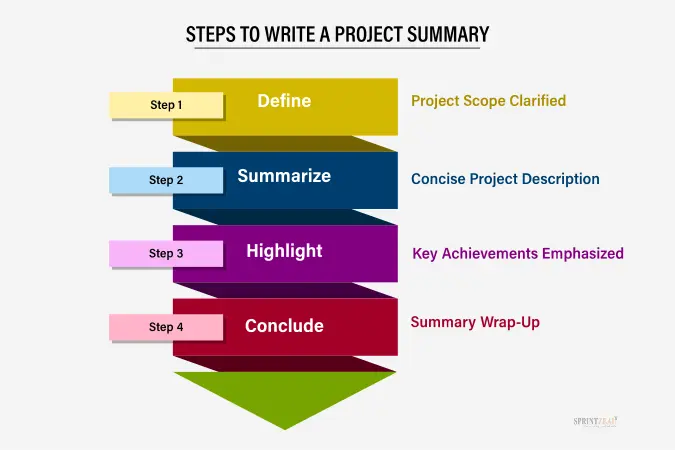
Step 2: Determine the Important Parts
The impact of overall elements should be used in any comprehensive project summary:
A title that is clear and understandable is important. It is important to understand the project goals, objectives, and the project scope, which are the project parameters, project deliverables, and important baselines. After that is done, we need to give a small explanation of the process that is needed to complete the project. Once that is done, you need to set a timeline of when the project will be done and what the required resources are to decide who the stakeholders are and what their responsibility is. Finally, to mention expected results and benefits
Step 3: Be Brief
A project summary should be short and to the point. Don’t include many technical details or industry words. This helps the reader stay focused and not get confused. Use Estimating Software and clear thoughts.
It is important to use bullet points to break information, which will help the readers understand the idea.
An AI-powered summary tool is used to keep the project summary short and easy to understand, which can be used to finish the task quickly.
You can use the AI essay writing tool again to check that the summary stays easy to understand. Another good option is a PDF summarizer. It can pull out points from project files. This lets you share facts in an organized way.

Step 4: Edit and Review
Once you have finished writing the project summary, you should. Edit it. Check the project summary for mistakes, unclear language, or errors. Make sure the project summary represents the project's objectives and key aspects.

Even though the project and the situation around it will decide what to put in a project summary, the guide below are important parts to add when writing a project summary. The information will be clear and informative when you know how to write a project summary.

Common features of a project summary:
Give a short description of the goals of the project and the problems it has to solve. Once that is done, list down the expected results. After that, understand the target audience and who the project summary is going to reach. Another important part is to calculate the expected budget for the project and the risk involved
Suggested Read—What Is Project Management?
Project summaries are good at adapting and suitable for a range of settings. In the following situations a project summary is extremely helpful:
A well-written project summary is useful for the decision makers. It shows the value of a project. It makes it simple for the decision makers to understand the importance of a project. It is also used to keep the stakeholders informed about the progress. When the stakeholders get this information, it helps them feel involved and confident.
Executive Presentations: A brief project summary makes sure that important information is provided efficiently in a simplified amount of time when presenting to senior executives or management.
Project Documentation: With a project summary in the collections of project documentation, potential team members and stakeholders will have easy access to it.
These project summary best practices will help your project summary be as successful as possible:
A project summary is an important part of project management. A structured project summary helps to keep the stakeholders and team informed and working together. This blog covers the important aspects to notice and use before writing a project summary. A project summary should be short, clear, and to the point, which will help people understand it easily.
If you want to improve your project summaries, think about getting the Project Management Professional (PMP) certification. Sprintzeal offers this training. Is a PMI Registered Training Provider? Boost your career with internationally recognized certification courses, and subscribe to our ebooks and newsletters that will aid upskilling.
For more information, click here or chat with our course expert.
What is the project's quick summary?
A project quick summary shows the main parts of a project, like goals, what will be delivered, what is added, and when things need to be done.
How do you write a one-page project summary?
A project summary on one page should include the goal. It should explain what will be delivered. It should show when each part will happen. It should list who is involved. Keep it easy to understand. Keep it clear and formatted properly. Focus on the points that matter most.
How to start a summary report example?
Start by explaining why the summary report was made and what the summary report is about. Then look at the results. Note what was learned. Finally suggest what should be done next.
What are the 7 steps of writing a summary?
The seven steps are, it is important to understand the text and get the right ideas to add the details, once the details are added, make the summary as short as possible, after putting together the information, read the entire summary one more time to see if there is anything to be added.
What is the summary report format?
An introduction, shown in a plot summary of the central concepts information and data, conclusions, confirmed conclusions, and suggestions, is generally in summary report format. The project of the summary format aims to give a simple and direct summary of the topic

Wed, 14 October 2026
Tue, 15 September 2026
Mon, 03 August 2026
Tue, 21 July 2026
Mon, 06 July 2026

Wed, 28 August 2024

Tue, 28 April 2026

Tue, 04 August 2026

Mon, 23 September 2024

Tue, 04 August 2026


© 2026 Sprintzeal Americas Inc. - All Rights Reserved.

 USA : +1315-322-7821
 UK : +44 7700 174870
 IND : +919036108287
 AUS : +61 480 005 455