Best AI Video Generators in 2027: Tested & Compared
Mon, 28 September 2026

Inspirational journeys
Follow the stories of academics and their research expeditions
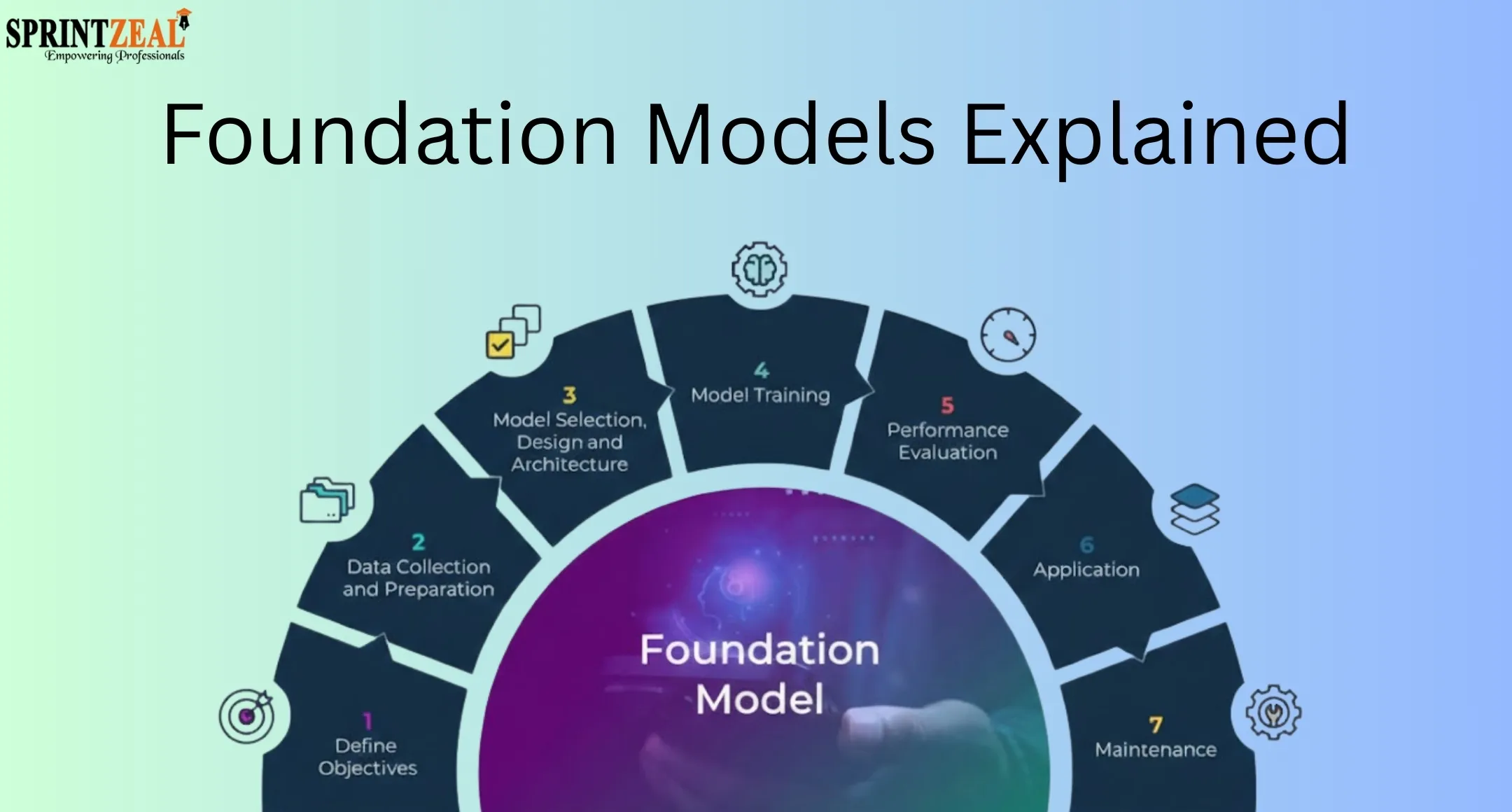
In a short span, foundation models have moved forward at a rapid pace. In 2018, researchers released BERT, a bidirectional language model trained on hundreds of millions of parameters. Since that point, AI systems have grown far more powerful. In 2023 GPT-4 showed a major increase both in size and in performance, following the sharp rise in the amount of compute that drives AI progress. OpenAI reports that the compute used to train large models has doubled every few months during the past decade.
Current foundation models – Claude 2, Llama 2 and Stable Diffusion - no longer limit themselves to predicting the next word. They produce lengthy text, render believable images, tackle hard problems, hold extended dialogue and read documents, all without fresh training for each task. This shift places foundation models at the center of present day artificial intelligence and changes the way companies and people use technology.
Foundation models are large-scale AI models that are trained on a huge amount of data using self-supervised learning. Unlike traditional models, which are designed for a single task, foundation models are designed to learn general patterns from text, images, audio, or code, which can then be applied to multiple tasks.
In simple terms, think of foundation models as a “base intelligence layer” for modern AI systems. Rather than developing models for translation, summarisation, and sentiment analysis tasks separately, a single pre-trained model can perform all these tasks.
Examples include:
Large language models trained on internet-scale text
Multimodal models that process text and images
Code generation models used in AI tools
This adaptability is what makes AI foundation models revolutionary.
Because they cut down development time and cost significantly. Rather than developing AI systems from scratch, organizations can make use of pre-trained foundation models and adapt them for:
Customer support automation
Content creation
Enterprise search
Code generation
Medical and financial data analysis
AI foundation models enable faster innovation, scalable deployment, and cross-industry AI transformation. They shift AI development from “task-specific training” to “general intelligence adaptation”.
Traditional ML models:
Trained on small, labeled datasets
Designed for one narrow task
Require retraining for new use cases
Foundation models:
Trained on massive unlabeled datasets
General-purpose and reusable
Adaptable via fine-tuning or prompts
This paradigm shift explains the rapid growth of AI foundational models in enterprise ecosystems.
Are foundation models the same as LLMs? Not exactly.
Foundation models are the broader category.
LLMs (Large Language Models) are a type of foundation model focused on text.
Generative AI refers to AI systems that create content—often powered by foundation models.
In short, foundation models are the backbone powering today’s most advanced AI applications.
The journey of foundation models didn’t begin overnight. There have been many years of research into AI (and other fields) that have led to the types of general-purpose AI models we see today. We will discuss how current AI models measure up against previous systems and where improvements can be made during the next phase of evolution.
AI foundation models emerged from research focusing on AI that can be applied across many different tasks and problems. While AI has traditionally been used to solve one specific problem at a time (for example, spam detection or image recognition), current AI models can provide an enormous amount of information to help with multiple different tasks. This ability to apply one model to many different applications has defined AI foundation models.
Train once on large-scale, diverse data
Learn generalized representations of language, images, or multimodal inputs
Adapt efficiently to new tasks with minimal additional training
This marked a shift from building many small task-specific models to developing one large adaptable model.
In 2017, the introduction of the transformer model represented a large milestone in AI development. The transformer model enabled more complex relationships to be processed with less restriction than older neural networks.
Why did transformers accelerate AI foundation models?
Parallel processing improved training efficiency
Attention mechanisms captured long-range dependencies
Scaling laws showed performance improves with more data and parameters
Large-scale pretraining soon became the standard approach:
Train on billions or trillions of tokens
Use self-supervised learning (no manual labeling required)
Transfer knowledge to tasks like translation, summarization, coding, or image generation
This approach turned foundation models into adaptable AI engines rather than isolated tools.
From Narrow AI to General-Purpose AI Foundation Models
Earlier AI systems were narrow — built for one clearly defined outcome. For example:
A chatbot trained only for customer service
A vision model trained only for object detection
Today’s AI foundation models can perform:
Text generation
Code completion
Image synthesis
Question answering
Multimodal reasoning
Instead of asking, “Can this model do this specific task?”, we now ask, “How can we adapt this foundation model for our use case?”
That’s the paradigm shift.
By using enormous pre-training, transfer learning, and scalable infrastructure, AI foundational models transitioned the AI industry from being strictly automative towards being more flexible and general in terms of intelligent systems – setting the stage for a new wave of enterprise and consumer AI development.
The key to truly harnessing their power is to comprehend how foundation models work. Machine learning models of the past are trained to perform only one specific task, whereas AI foundation models are developed on massive datasets and hence, they are capable of generalizing across different applications. However, the question is, what really happens at the core? We may unravel this in a systematic and hands-on approach.
Check out this blog on Top Machine Learning Tools to get the gist of machine learning models.
At the core of ai foundational models lies self-supervised learning — a technique that allows models to learn patterns without manual labeling.
Instead of feeding labeled data (like “this is a cat”), the model learns by predicting missing or masked parts of the data.
How it works:
The model is trained on massive datasets (text, images, audio, code).
It predicts the next word in a sentence, missing pixels in an image, or patterns in structured data.
Through billions of parameters, it captures grammar, logic, context, and relationships.
Example:
A language-based foundation model learns from internet-scale text and understands context, tone, and intent.
An image-based model predicts missing parts of an image to understand shapes and objects.
This large-scale pretraining enables foundation models to become “general-purpose learners.”
Once pretrained, AI foundation models can be adapted for specific tasks using transfer learning.
Instead of training from scratch:
You start with a pretrained foundation model.
Fine-tune it with smaller, domain-specific data.
Deploy it for specialized tasks.
Examples:
Fine-tuning a language model for legal document analysis.
Customizing a healthcare AI model for medical record summarization.
Adapting a vision model for defect detection in manufacturing.
This dramatically reduces:
Training cost
Development time
Infrastructure complexity
Why build a model from zero when you can build on a strong foundation?
Modern foundation models also support in-context learning. This means the model adapts behavior based on the prompt without retraining.
Instead of modifying weights:
You provide instructions in natural language.
The model interprets context.
It generates task-specific output instantly.
Example prompts:
“Summarize this article in 5 bullet points.”
“Write code in Python for sorting a list.”
“Explain this medical term in simple words.”
Prompt engineering has become a skill of its own, helping organizations extract maximum value from ai foundation models without expensive retraining.
For more knowledge on prompt engineering tools, you can go through this blog.
Most ai foundational models rely on powerful neural architectures:
Transformers – Used in large language models; excellent for sequence understanding and context handling.
Diffusion Models – Generate high-quality images by progressively refining noise.
GANs (Generative Adversarial Networks) – Use competing networks to produce realistic outputs.
These architectures enable:
Multimodal learning
Large-scale generalization
Cross-domain adaptability
In essence, foundation models work by learning universal patterns at scale, then adapting efficiently to new tasks — making them the backbone of modern AI innovation.
Nonetheless, it is important to note that not all AI foundation models have been created equally and depending on how they were designed and what purpose they're going to serve can be divided into various classes. This is important as it gives companies/developers an opportunity to make the correct choice rather than just following the popularity contest that many others might be doing when it comes to foundation models.
To make things clearer, let's look at them individually.
The large language model is by far the most well known class of AI foundation models and has received the most pubic attention. These types of foundation model(s) have been built using large quantities of text as the training data and their inteded purpose is to allow computers to read and write human languages, understand them through natural language processing(NLP) capabilities such as Speech Recognition/Speech Synthesis, Summarization(Summarizing Text in < 1>
Key characteristics:
Built using transformer architecture
Trained via self-supervised learning
Capable of in-context learning and zero-shot tasks
Common use cases:
Chatbots and virtual assistants
Content generation and summarization
Code generation
Knowledge retrieval and Q&A systems
LLMs are often what people refer to when discussing AI foundational models, but technically, they are just one category within the broader ecosystem.
Multimodal AI foundation models go beyond text. They can process and generate multiple types of data — including images, speech, video, and text — within a single unified architecture.
Core capabilities:
Image captioning from text prompts
Text-to-image generation
Speech-to-text and voice synthesis
Cross-modal reasoning (e.g., analyzing a chart and explaining it in text)
These models represent a major leap forward because they mimic how humans process multiple information formats simultaneously. Imagine asking a model to analyze a product image and generate marketing copy instantly — that’s the power of multimodal foundation models.
Is your organization still relying on single-modality AI systems?
Another critical category includes vision-focused and generative foundation models trained specifically for image or video understanding and creation.
Vision models are used for:
Object detection
Facial recognition
Medical image analysis
Autonomous driving perception
Generative models are used for:
Creating realistic images and artwork
Video generation
Synthetic data creation
Design prototyping
These AI foundational models typically use architectures like diffusion models or GANs, optimized for pixel-level learning and generation tasks.
Not every use case requires a general-purpose model. Many enterprises now rely on domain-specific AI foundation models trained on specialized datasets.
Examples include:
Healthcare diagnostic models trained on medical records
Financial risk assessment models
Legal document analysis systems
Cybersecurity threat detection models
These models combine large-scale pretraining with industry-specific fine-tuning, ensuring higher accuracy and compliance.
Foundation models now operate outside labs and run inside live systems. Their strength lies in handling varied jobs after only small parameter updates. A single model serves many purposes - firms no longer need to craft bespoke networks for every task.
Language work is the most mature deployment field - networks trained on massive text learn context, intent, tone and small linguistic shifts.
AI dialogue engines
Large models drive chat systems that hold multi turn talks, give detailed answers plus tailor replies.
Customer desks route seventy to eighty percent of basic tickets to such bots.
Text compression
The same models shrink long reports, papers or meeting records into short abstracts.
Legal teams use the tool to scan case files faster.
Meaning-based retrieval
Search shifts from keyword lookup to intent matching.
Inside companies, staff type questions and receive passages that answer the thought, not just the exact phrase.
Sentiment & Intent Analysis
Businesses use ai foundation models to analyze customer reviews, social media, and feedback forms for brand sentiment and actionable insights.
The result? More human-like interactions and better decision-making powered by contextual intelligence.
Foundation models are reshaping software development workflows. AI-driven coding assistants can generate, optimize, debug, and document code in real time.
Where they add value:
Code Autocompletion
Predictive code suggestions reduce repetitive work and speed up development cycles.
Bug Detection & Refactoring
AI foundational models analyze code structure and suggest improvements.
Documentation Generation
Automatically convert code blocks into readable documentation.
Cross-Language Code Translation
Convert legacy systems (e.g., Java to Python) with minimal manual intervention.
Imagine reducing development time by 30–40% simply by integrating foundation models into your CI/CD pipeline. For startups and enterprises alike, this is a competitive advantage that compounds over time.
One of the most visible impacts of foundation models is in generative AI. These models can create original content across multiple formats.
Applications include:
Text Generation
Blog posts, product descriptions, marketing copy, email campaigns, and technical documentation.
Image Generation
Design mockups, advertising creatives, illustrations, and concept art.
Video & Audio Creation
AI, generated voiceovers, automated video scripts, and synthetic media.
Multimodal Content Creation
AI foundation models can fuse text and images to produce presentations or interactive materials.
Marketing teams and content producers can experience a huge saving in their work exit time by using this, however, the quality control and the human supervision are still needed to ensure that the content is real and fits the brand voice.
Have you seen that it takes less and less time to make content these days while the amount of that content just keeps increasing? That shift is largely driven by ai foundation models.
Beyond technical capabilities, the real reason foundation models matter is business transformation. Organizations are investing heavily because of measurable ROI and long-term strategic benefits.
Traditional AI required building models from scratch for every task. That approach demanded:
High data labeling costs
Large ML engineering teams
Extended development timelines
With foundation models, companies leverage pretrained systems and fine-tune them for specific use cases.
Benefits include:
Reduced training costs
Lower data requirements
Faster experimentation cycles
Reusable AI infrastructure
Instead of reinventing the wheel, enterprises adapt ai foundation models to multiple departments — from HR automation to supply chain optimization.
Speed determines market leadership. Foundation models accelerate product development by enabling:
Rapid prototyping of AI features
Integration via APIs and cloud services
Continuous improvement through prompt engineering
For new businesses, this means creating AI, based products in a matter of months, not years. For big companies, it means changing old systems without having to get rid of them entirely.
Quick invention additionally encourages trial. The reasoning is that a group can try out a new AI service without needing a large investment.
Foundation models are built to operate at scale. Once deployed, they can handle:
Millions of queries per day
Multilingual interactions
Cross-platform integrations
Scalability ensures consistent performance as user demand grows.
From a strategic standpoint, organizations that adopt ai foundational models early gain:
Improved customer experience
Enhanced operational efficiency
Data-driven insights at scale
Stronger market positioning
In competitive industries, this technological edge can be the difference between disruption and obsolescence.
Cloud providers have made foundation models accessible through managed services and AI platforms.
Cloud-driven advantages:
On-demand GPU infrastructure
Pre-integrated APIs
Secure deployment environments
MLOps and monitoring tools
Businesses no longer need to manage heavy computational resources internally. Instead, they integrate ai foundation models into their cloud stack for flexibility and cost control.
This democratization of AI means even mid-sized companies can leverage powerful foundation models without billion-dollar R&D budgets.
Foundation models are revolutionizing the development and application of artificial intelligence. From multimodal to enterprise-scale and sustainable innovation, AI foundation models are set to become the foundation of next-generation AI systems. As organizations adopt AI foundational models, upskilling is equally important.
If you are interested in developing skills in AI and learning about foundation models that power modern systems, check out this in-depth Artificial Intelligence Certification Training
The future of AI is for people who not only know how to apply foundation models but also know how to apply them effectively.
What are foundation models in AI?
Foundation models are AI models of a massive scale that have been pre, trained and can be pre, trained on a huge amount of data and used for various tasks. The model is fundamentally different from traditional machine learning models that are engineered for a single specific use case only.
How are AI foundation models different from traditional ML models?
Artificial intelligence foundation models are the result of training through self, supervised learning on vast amounts of data that could be leveraged to perform various different tasks. On the other hand, traditional machine learning models are designed to perform a single task and have to be retrained each time a new task is introduced.
What are examples of AI foundational models?
Examples of AI foundation models are large language models, multimodal models, and domain, specific AI models applied in healthcare, finance, and enterprise automation.
What are the main challenges of foundation models?
Foundation models pose several challenges, including bias, hallucinations, high infrastructure costs, governance risks, and issues related to the environment.
What is the future of foundation models?
The next generation of AI foundation models will be characterized by multimodal intelligence, domain, specific models, environmentally friendly AI practices, and improved regulatory frameworks.
In a short span, foundation models have moved forward at a rapid pace. In 2018, researchers released BERT, a bidirectional language model trained on hundreds of millions of parameters. Since that point, AI systems have grown far more powerful. In 2023 GPT-4 showed a major increase both in size and in performance, following the sharp rise in the amount of compute that drives AI progress. OpenAI reports that the compute used to train large models has doubled every few months during the past decade.
Current foundation models – Claude 2, Llama 2 and Stable Diffusion - no longer limit themselves to predicting the next word. They produce lengthy text, render believable images, tackle hard problems, hold extended dialogue and read documents, all without fresh training for each task. This shift places foundation models at the center of present day artificial intelligence and changes the way companies and people use technology.
Foundation models are large-scale AI models that are trained on a huge amount of data using self-supervised learning. Unlike traditional models, which are designed for a single task, foundation models are designed to learn general patterns from text, images, audio, or code, which can then be applied to multiple tasks.
In simple terms, think of foundation models as a “base intelligence layer” for modern AI systems. Rather than developing models for translation, summarisation, and sentiment analysis tasks separately, a single pre-trained model can perform all these tasks.
Examples include:
Because they cut down development time and cost significantly. Rather than developing AI systems from scratch, organizations can make use of pre-trained foundation models and adapt them for:
AI foundation models enable faster innovation, scalable deployment, and cross-industry AI transformation. They shift AI development from “task-specific training” to “general intelligence adaptation”.
Traditional ML models:
Foundation models:
This paradigm shift explains the rapid growth of AI foundational models in enterprise ecosystems.
Are foundation models the same as LLMs? Not exactly.
In short, foundation models are the backbone powering today’s most advanced AI applications.
The journey of foundation models didn’t begin overnight. There have been many years of research into AI (and other fields) that have led to the types of general-purpose AI models we see today. We will discuss how current AI models measure up against previous systems and where improvements can be made during the next phase of evolution.
AI foundation models emerged from research focusing on AI that can be applied across many different tasks and problems. While AI has traditionally been used to solve one specific problem at a time (for example, spam detection or image recognition), current AI models can provide an enormous amount of information to help with multiple different tasks. This ability to apply one model to many different applications has defined AI foundation models.
This marked a shift from building many small task-specific models to developing one large adaptable model.
In 2017, the introduction of the transformer model represented a large milestone in AI development. The transformer model enabled more complex relationships to be processed with less restriction than older neural networks.
Why did transformers accelerate AI foundation models?
Large-scale pretraining soon became the standard approach:
From Narrow AI to General-Purpose AI Foundation Models
Today’s AI foundation models can perform:
Instead of asking, “Can this model do this specific task?”, we now ask, “How can we adapt this foundation model for our use case?”
That’s the paradigm shift.
By using enormous pre-training, transfer learning, and scalable infrastructure, AI foundational models transitioned the AI industry from being strictly automative towards being more flexible and general in terms of intelligent systems – setting the stage for a new wave of enterprise and consumer AI development.
The key to truly harnessing their power is to comprehend how foundation models work. Machine learning models of the past are trained to perform only one specific task, whereas AI foundation models are developed on massive datasets and hence, they are capable of generalizing across different applications. However, the question is, what really happens at the core? We may unravel this in a systematic and hands-on approach.
Check out this blog on Top Machine Learning Tools to get the gist of machine learning models.
At the core of ai foundational models lies self-supervised learning — a technique that allows models to learn patterns without manual labeling.
Instead of feeding labeled data (like “this is a cat”), the model learns by predicting missing or masked parts of the data.
How it works:
Example:
Once pretrained, AI foundation models can be adapted for specific tasks using transfer learning.
Instead of training from scratch:
Examples:
This dramatically reduces:
Why build a model from zero when you can build on a strong foundation?
Modern foundation models also support in-context learning. This means the model adapts behavior based on the prompt without retraining.
Instead of modifying weights:
Example prompts:
Prompt engineering has become a skill of its own, helping organizations extract maximum value from ai foundation models without expensive retraining.
For more knowledge on prompt engineering tools, you can go through this blog.
Most ai foundational models rely on powerful neural architectures:
These architectures enable:
In essence, foundation models work by learning universal patterns at scale, then adapting efficiently to new tasks — making them the backbone of modern AI innovation.
Nonetheless, it is important to note that not all AI foundation models have been created equally and depending on how they were designed and what purpose they're going to serve can be divided into various classes. This is important as it gives companies/developers an opportunity to make the correct choice rather than just following the popularity contest that many others might be doing when it comes to foundation models.
To make things clearer, let's look at them individually.
The large language model is by far the most well known class of AI foundation models and has received the most pubic attention. These types of foundation model(s) have been built using large quantities of text as the training data and their inteded purpose is to allow computers to read and write human languages, understand them through natural language processing(NLP) capabilities such as Speech Recognition/Speech Synthesis, Summarization(Summarizing Text in < 1>
Key characteristics:
LLMs are often what people refer to when discussing AI foundational models, but technically, they are just one category within the broader ecosystem.
Multimodal AI foundation models go beyond text. They can process and generate multiple types of data — including images, speech, video, and text — within a single unified architecture.
Core capabilities:
These models represent a major leap forward because they mimic how humans process multiple information formats simultaneously. Imagine asking a model to analyze a product image and generate marketing copy instantly — that’s the power of multimodal foundation models.
Is your organization still relying on single-modality AI systems?
Another critical category includes vision-focused and generative foundation models trained specifically for image or video understanding and creation.
Vision models are used for:
These AI foundational models typically use architectures like diffusion models or GANs, optimized for pixel-level learning and generation tasks.
Not every use case requires a general-purpose model. Many enterprises now rely on domain-specific AI foundation models trained on specialized datasets.
Examples include:
These models combine large-scale pretraining with industry-specific fine-tuning, ensuring higher accuracy and compliance.
Foundation models now operate outside labs and run inside live systems. Their strength lies in handling varied jobs after only small parameter updates. A single model serves many purposes - firms no longer need to craft bespoke networks for every task.
Language work is the most mature deployment field - networks trained on massive text learn context, intent, tone and small linguistic shifts.
AI dialogue engines
Large models drive chat systems that hold multi turn talks, give detailed answers plus tailor replies.
Customer desks route seventy to eighty percent of basic tickets to such bots.
Text compression
The same models shrink long reports, papers or meeting records into short abstracts.
Legal teams use the tool to scan case files faster.
Meaning-based retrieval
Search shifts from keyword lookup to intent matching.
Inside companies, staff type questions and receive passages that answer the thought, not just the exact phrase.
Sentiment & Intent Analysis
Businesses use ai foundation models to analyze customer reviews, social media, and feedback forms for brand sentiment and actionable insights.
The result? More human-like interactions and better decision-making powered by contextual intelligence.
Foundation models are reshaping software development workflows. AI-driven coding assistants can generate, optimize, debug, and document code in real time.
Where they add value:
Code Autocompletion
Predictive code suggestions reduce repetitive work and speed up development cycles.
Bug Detection & Refactoring
AI foundational models analyze code structure and suggest improvements.
Documentation Generation
Automatically convert code blocks into readable documentation.
Cross-Language Code Translation
Convert legacy systems (e.g., Java to Python) with minimal manual intervention.
Imagine reducing development time by 30–40% simply by integrating foundation models into your CI/CD pipeline. For startups and enterprises alike, this is a competitive advantage that compounds over time.
One of the most visible impacts of foundation models is in generative AI. These models can create original content across multiple formats.
Applications include:
Text Generation
Blog posts, product descriptions, marketing copy, email campaigns, and technical documentation.
Image Generation
Design mockups, advertising creatives, illustrations, and concept art.
Video & Audio Creation
AI, generated voiceovers, automated video scripts, and synthetic media.
Multimodal Content Creation
AI foundation models can fuse text and images to produce presentations or interactive materials.
Marketing teams and content producers can experience a huge saving in their work exit time by using this, however, the quality control and the human supervision are still needed to ensure that the content is real and fits the brand voice.
Have you seen that it takes less and less time to make content these days while the amount of that content just keeps increasing? That shift is largely driven by ai foundation models.
Beyond technical capabilities, the real reason foundation models matter is business transformation. Organizations are investing heavily because of measurable ROI and long-term strategic benefits.
Traditional AI required building models from scratch for every task. That approach demanded:
With foundation models, companies leverage pretrained systems and fine-tune them for specific use cases.
Benefits include:
Instead of reinventing the wheel, enterprises adapt ai foundation models to multiple departments — from HR automation to supply chain optimization.
Speed determines market leadership. Foundation models accelerate product development by enabling:
For new businesses, this means creating AI, based products in a matter of months, not years. For big companies, it means changing old systems without having to get rid of them entirely.
Quick invention additionally encourages trial. The reasoning is that a group can try out a new AI service without needing a large investment.
Foundation models are built to operate at scale. Once deployed, they can handle:
Scalability ensures consistent performance as user demand grows.
From a strategic standpoint, organizations that adopt ai foundational models early gain:
In competitive industries, this technological edge can be the difference between disruption and obsolescence.
Cloud providers have made foundation models accessible through managed services and AI platforms.
Cloud-driven advantages:
Businesses no longer need to manage heavy computational resources internally. Instead, they integrate ai foundation models into their cloud stack for flexibility and cost control.
This democratization of AI means even mid-sized companies can leverage powerful foundation models without billion-dollar R&D budgets.
Foundation models are revolutionizing the development and application of artificial intelligence. From multimodal to enterprise-scale and sustainable innovation, AI foundation models are set to become the foundation of next-generation AI systems. As organizations adopt AI foundational models, upskilling is equally important.
If you are interested in developing skills in AI and learning about foundation models that power modern systems, check out this in-depth Artificial Intelligence Certification Training
The future of AI is for people who not only know how to apply foundation models but also know how to apply them effectively.
1. What are foundation models in AI?
Foundation models are AI models of a massive scale that have been pre, trained and can be pre, trained on a huge amount of data and used for various tasks. The model is fundamentally different from traditional machine learning models that are engineered for a single specific use case only.
2. How are AI foundation models different from traditional ML models?
Artificial intelligence foundation models are the result of training through self, supervised learning on vast amounts of data that could be leveraged to perform various different tasks. On the other hand, traditional machine learning models are designed to perform a single task and have to be retrained each time a new task is introduced.
3. What are examples of AI foundational models?
Examples of AI foundation models are large language models, multimodal models, and domain, specific AI models applied in healthcare, finance, and enterprise automation.
4. What are the main challenges of foundation models?
Foundation models pose several challenges, including bias, hallucinations, high infrastructure costs, governance risks, and issues related to the environment.
5. What is the future of foundation models?
The next generation of AI foundation models will be characterized by multimodal intelligence, domain, specific models, environmentally friendly AI practices, and improved regulatory frameworks.

Mon, 28 September 2026
Tue, 22 September 2026
Tue, 08 September 2026

Mon, 24 August 2026
Wed, 19 August 2026
Mon, 17 August 2026
Mon, 17 August 2026
Thu, 13 August 2026

Mon, 24 August 2026

© 2026 Sprintzeal Americas Inc. - All Rights Reserved.

 USA : +1315-322-7821
 UK : +44 7700 174870
 IND : +919036108287
 AUS : +61 480 005 455