Project Planning Across Time Zones: 7 Habits That Keep Distributed Teams on Schedule
Wed, 14 October 2026
Inspirational journeys
Follow the stories of academics and their research expeditions
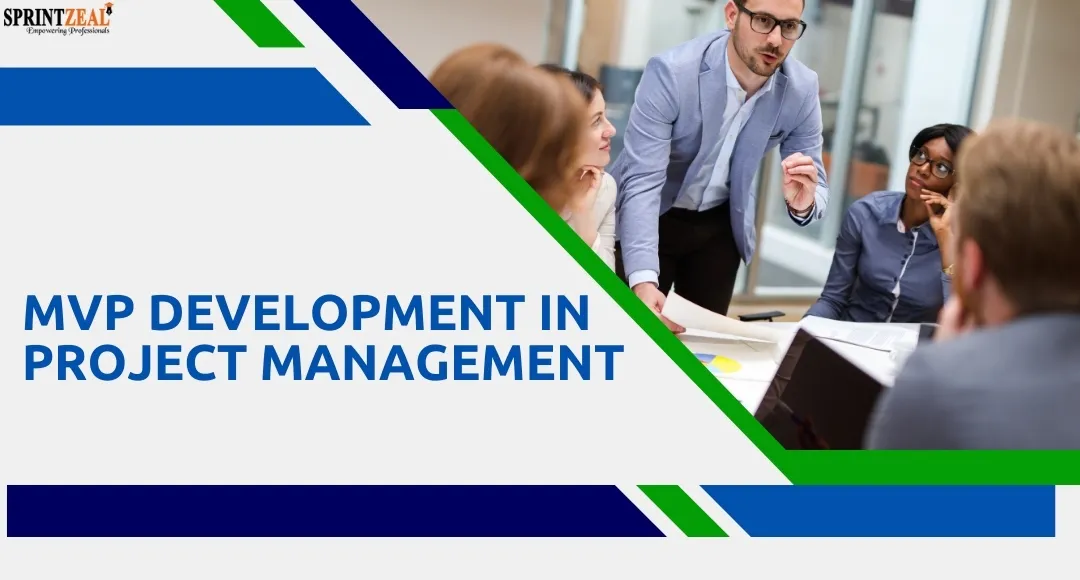
Project management has undergone a dramatic transformation over the past few years. What started as a startup buzzword has evolved into a sophisticated approach that's reshaping how organizations of all sizes approach product development, risk management, and resource allocation.
The traditional "plan-execute-deliver" model assumes that requirements can be fully understood upfront and that market conditions will remain stable throughout development. In reality, these assumptions rarely hold true. Markets shift, customer preferences evolve, and new technologies emerge continuously.
This article examines how MVP development is fundamentally changing project management practices, the key benefits and challenges of this approach, and what project managers need to know to succeed in this new environment. We'll explore practical implementation strategies and future trends shaping this evolution.
Project management has undergone a dramatic transformation over the past few years. What started as a startup buzzword has evolved into a sophisticated approach that's reshaping how organizations of all sizes approach product development, risk management, and resource allocation.
The traditional "plan-execute-deliver" model assumes that requirements can be fully understood upfront and that market conditions will remain stable throughout development. In reality, these assumptions rarely hold true. Markets shift, customer preferences evolve, and new technologies emerge continuously.
This article examines how MVP development is fundamentally changing project management practices, the key benefits and challenges of this approach, and what project managers need to know to succeed in this new environment. We'll explore practical implementation strategies and future trends shaping this evolution.
Traditional project management methodologies, while structured and predictable, often struggle in today's fast-paced business environment. These approaches assume that requirements can be fully understood upfront and that market conditions will remain stable throughout development.
Project managers using traditional approaches often deliver technically perfect products that miss the mark because they were based on outdated assumptions or incomplete market understanding. The lengthy planning cycles create rigidity that makes it difficult to adapt to new information or changing priorities.
MVP development introduces a paradigm shift: instead of trying to build the perfect product from day one, teams focus on delivering the minimum set of features needed to validate core assumptions and gather real-world feedback. This approach transforms project management from a predictive exercise into an iterative learning process.
The key insight is that uncertainty is not a problem to be eliminated through exhaustive planning, but a reality to be managed through rapid experimentation and adaptation. Project managers become facilitators of learning rather than just coordinators of tasks.
Traditional project management often measures success by adherence to budget, timeline, and scope. MVP-driven project management introduces new success metrics that prioritize learning and market validation over simply delivering on specifications.
This shift requires project managers to develop new skills in data analysis, customer insight synthesis, and strategic decision-making. Success is no longer about delivering what was planned, but about discovering what should be built.
MVP development replaces rigid, long-term roadmaps with flexible, outcome-based planning. Instead of detailed 12-month plans, project managers create adaptive roadmaps that outline desired outcomes while allowing specific features to evolve based on learning.
This approach requires sophisticated scenario planning and risk management skills. Project managers must balance the need for strategic direction with the flexibility to pivot based on new information. They become masters of managing uncertainty rather than eliminating it.
Traditional project management often works in silos, with different teams handling requirements, development, testing, and deployment sequentially. MVP development demands deep integration between functions, with project managers facilitating collaboration between product, engineering, design, and marketing from day one.
This integration extends beyond internal teams to include customers and users as active participants in the development process. Project managers must coordinate feedback loops, user testing sessions, and iterative design cycles while maintaining project momentum.
To make that collaboration practical, teams need a shared view of what they are building and how it will be tested. A platform for software development project management such as ONES.com connects requirements with development tasks, test cases, and bugs, helping product, engineering, and QA teams coordinate each iteration.
MVP development transforms how project managers approach resource allocation. Instead of committing entire budgets upfront based on assumptions, teams allocate resources in stages, with each phase of funding tied to specific learning milestones or validation points.
This stage-gate approach to budgeting requires project managers to develop new financial modeling skills and the ability to make tough decisions about when to continue investing versus when to pivot or stop. It's a shift from spending money to build features to investing in learning.
The first phase of MVP-driven project management focuses on validating that you're solving a real problem for a specific market segment. This involves extensive customer research, competitive analysis, and assumption testing before significant development resources are committed.
Project managers facilitate this phase by coordinating customer interviews, surveys, and market research activities. They help teams prioritize which assumptions to test first and design experiments that can deliver maximum learning with minimum investment. Organizations looking to implement these approaches effectively can benefit from a guide to SaaS MVP development which covers both technical and business aspects of building successful MVP products.
Once problem-solution fit is established, teams move to building the minimum set of features needed to deliver value and gather usage data. This phase requires careful scope management and ruthless prioritization.
According to research from McKinsey, companies that adopt MVP approaches reduce development costs by up to 40% while increasing their success rates for new products. This data highlights why the MVP methodology has become so popular across industries.
Project managers play a crucial role in managing stakeholder expectations during this phase, helping executives and team members understand why certain features are being excluded from the initial release. They facilitate difficult conversations about trade-offs and ensure the team stays focused on the core value proposition.
After the initial MVP launch, the focus shifts to rapid iteration based on user feedback and usage data. This is where project managers must excel at coordinating multiple parallel streams of development, testing, and learning.
The challenge is maintaining development velocity while ensuring that each iteration builds on previous learning and moves the product closer to product-market fit. Project managers become orchestrators of continuous improvement, balancing short-term wins with long-term strategic goals.
Eric Ries's Lean Startup methodology provides the foundational framework for MVP development. The Build-Measure-Learn loop encourages teams to minimize the time it takes to turn ideas into products, measure customer reactions, and learn whether to pivot or persevere.
Project managers implementing this approach need to become comfortable with uncertainty and failure as learning opportunities. They create environments where teams can experiment safely and learn quickly from both successes and failures.
While Agile and MVP are related concepts, they serve different purposes. Agile focuses on how to build products efficiently, while MVP focuses on what to build and why. The most effective project managers combine both approaches, using Agile practices to support MVP development goals.
This combination requires project managers to facilitate both technical and strategic discussions, helping teams balance engineering excellence with market validation. They ensure that sprint planning and retrospectives include both technical and business metrics.
Design thinking provides tools for understanding customer needs and generating innovative solutions, while customer development offers frameworks for testing those solutions with real users. Project managers integrate these approaches into their planning and execution processes.
This integration requires project managers to facilitate workshops, user testing sessions, and customer interviews while maintaining project timelines and deliverables. They become bridges between customer insight and technical execution.
One of the biggest challenges is helping stakeholders understand that MVP development isn't about building a "cheap" or "incomplete" product. It's about building the right product through iterative learning.
Solution: Develop clear communication frameworks that explain the MVP approach and its benefits. Use analogies and case studies to help stakeholders understand why starting small and learning fast is more valuable than comprehensive upfront planning.
Teams often struggle to maintain quality standards while moving quickly through MVP cycles. The pressure to deliver quickly can lead to technical debt and scalability issues.
Solution: Implement quality gates and automated testing processes that ensure each iteration meets minimum quality standards. Invest in technical infrastructure that supports rapid iteration without sacrificing reliability.
MVP development generates vast amounts of customer data and feedback, which can overwhelm teams and lead to analysis paralysis.
Solution: Develop clear frameworks for prioritizing feedback and identifying actionable insights. Establish decision-making processes that prevent endless debate while ensuring thorough consideration of available data.
Artificial intelligence and machine learning are increasingly being used to analyze customer behavior, predict market trends, and optimize product features. Project managers will need to develop skills in working with AI tools and interpreting their insights.
The shift to remote work has accelerated the need for digital collaboration tools and processes that support MVP development across distributed teams. Project managers must become experts in facilitating virtual collaboration and maintaining team cohesion.
Growing awareness of environmental and social issues is influencing product development decisions. Project managers will need to incorporate sustainability and ethical considerations into their MVP planning and execution processes.
The shift toward MVP development represents more than just a new methodology. It's a fundamental reimagining of how project management creates value in uncertain environments. Project managers who embrace this approach will be better positioned to lead their organizations through rapid change and increasing competition.
Success requires developing new skills, adopting new tools, and embracing a new mindset that prioritizes learning over planning and adaptation over prediction. The project managers who thrive in this environment will be those who can balance structure with flexibility, data with intuition, and speed with quality.
The future of project management is here, and it's iterative, adaptive, and relentlessly focused on delivering real value to real customers.

Wed, 14 October 2026
Tue, 15 September 2026
Mon, 03 August 2026
Tue, 21 July 2026

Mon, 06 July 2026
Wed, 28 August 2024

Tue, 28 April 2026

Tue, 04 August 2026

Mon, 23 September 2024

Tue, 04 August 2026


© 2026 Sprintzeal Americas Inc. - All Rights Reserved.

 USA : +1315-322-7821
 UK : +44 7700 174870
 IND : +919036108287
 AUS : +61 480 005 455