What Project Managers Should Know About Mobile App Development
Tue, 15 September 2026
Inspirational journeys
Follow the stories of academics and their research expeditions
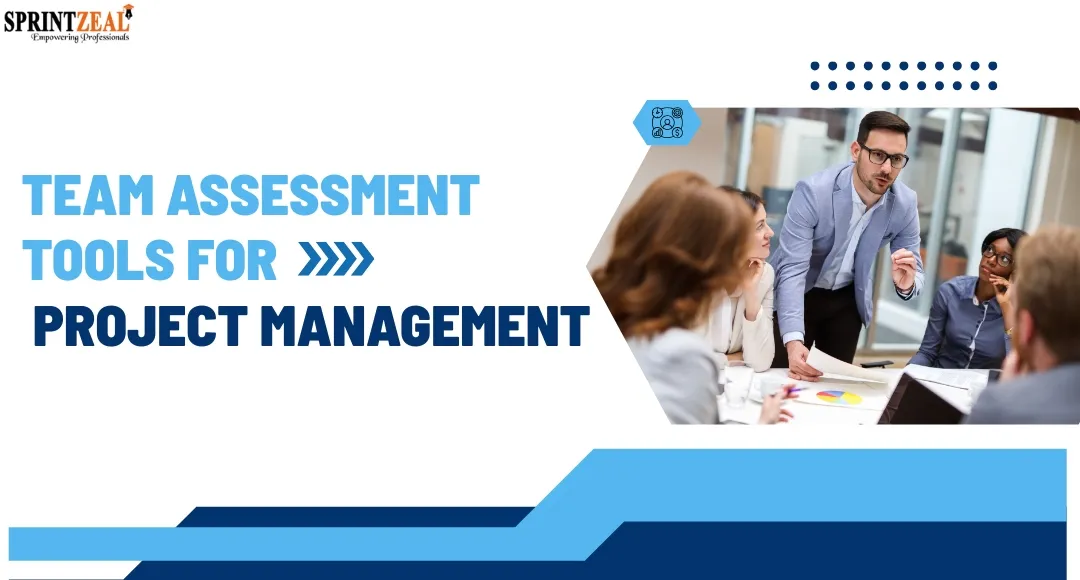
Project managers ship on time only when their teams communicate clearly. According to Axios HQ’s 2025 Internal Communications Report, the average employee loses 35 workdays, about $10,000 in salary, each year untangling muddled messages. Clarity is scarce at the top as well: the 2024 State of the Team report from TeamDynamics found that only 36 percent of managers can accurately describe how their team communicates and makes decisions. Remote work magnifies the waste. Slack threads bury intent, email chains splinter context, and “quick” meetings multiply instead of clarify..
Team assessment tools surface those hidden costs by turning soft signals—engagement, psychological safety, decision clarity—into metrics you can fix before the next sprint. This guide reviews seven options, from live collaboration coaches to enterprise-scale pulse platforms, so you can choose the right diagnostic and keep velocity predictable.
Our starting point was the fact gathering of the team assessment tool market. Some of the most significant sources included a meta-analysis of 51 controlled teamwork interventions that (significantly) found through 2024 (PubMed) reported statistically significant improvements in behaviour and performance, vendor ROI case studies, and practitioner discussing PMI and r/Leadership forums.
Based on that dataset, four non-negotiable filters were used:
Only seven platforms fit all of the four criteria. They all solve different bottlenecks without any overlapping characteristics. The second section begins by introducing a live collaboration coach that can be implemented during a sprint.
TeamDynamics converts a questionnaire of between 10 and 15 minutes into a real-time dashboard on which a squad communicates, makes decisions, and allocates ownership. Rather than profiling people separately, the site labels them with a shared type of team, and superimposes all their habits, and thus trends like slow approvals, uneven airtime, and baseline drift are immediately revealed.
Each report includes a guide of facilitators which contains scripts of meetings, role-swapping games, and prompts of retro five-minutes, which transforms insight to act before the sprint clock runs out.
Since TeamDynamics is a collectivist behaviour instead of an individual one, numerous PMs overlay an individual strengths tool on it; the following section discusses CliftonStrengths.
The HIGH5 Personality Test for Teams identifies the top five strengths of each team member and combines them into a Team Strengths Report that visualizes how the group works together. The assessment takes about 20 minutes, after which the platform maps individual strengths into shared team patterns, overlaps, and blind spots.
The real insight appears when profiles are viewed together. A team heavy on Strategists and Brainstormers but light on Deliverers may generate ideas faster than they finish them. Strength mapping turns these dynamics from intuition into visible data.
When teams understand each member’s natural strengths, collaboration becomes easier. The team report highlights complementary partnerships, dominant strengths, and potential gaps, helping managers assign roles and reduce friction. Organizations using strengths-based insights report improvements in engagement, productivity, and collaboration.
Have each team member complete the assessment and review the team strengths grid together. Discuss where the team is strong, where blind spots appear, and how different strengths combine during projects. This quickly reveals who drives ideas, who connects people, and who ensures execution.
The team assessment is available online. The Team Strengths Report starts at about $19 per employee, with an option to add full individual strengths reports for deeper insights.
The CliftonStrengths (Continuously known as Strengthsfinder by most) determines the best five themes of talents that each individual relies on the most. The 177-pair test is categorized into a time-based test, which lasts approximately 30 minutes; further on a few minutes later, you get a report listing the predominant drivers among Activators, Analytical (Gallup).
The wisdom is tripled in profiles that are placed adjacent. One product that has had a high strategic thinker but low execution theme will answer why planning beats delivery. Relationship builders(Client pod): Relationship builders are high in unanswered data questions. The debate on resources is no longer a matter of gut feel.
In the research by Gallup (2022), meta-analysis of 1.2 million individuals on 49,495 work units revealed that teams that based on the strengths feedback achieve an average of 12.5 percent greater productivity compared to teams that never do it (Gallup). Such a margin may be the on-time versus overdue.
Begin a new stream by both having the individual members share one of their greatest strengths and a recent sprint success story: how are you going to operate at top speed, how are you going to finish things off? CliftonStrengths is individual based thus use it alongside a team-based lens like TeamDynamics in order to unveil group habits.
Top 5 report costs $24.99 per individual, one time with no subscription gauge. The full 34-theme report runs $59.99. Their themes, known by more than 36 million completions globally, are already familiar to many of the teammates which reduces the time taken to ramp-up.
Then talents mapping is succeeded by a communication style framework that regularly jettisons meeting minutes without any loss of clarity.
Everything DiSC classifies work behaviour into four desirable styles D, i, S, C- and indicates the mix that each colleague exhibits. The online survey is completed within 15 20 minutes and provides an immediate personal profile with an overall team map. And as each dot comes on one grid, the vague friction of yesterday is a conspicuous chess-board.
When fellow team members customize messages to fit the recipient style and status checks get narrowed and rework decreases. Wiley, the publisher of DiSC, records over 10 million learners in 150,000 organisations and 97 percent global satisfaction rate, which is a testimony that the shared language scales in delivery environments.
Conduct a brief launch workshop; get the members to identify one communication improvement they would attempt during the next sprint retro.
Fold style hints into rituals: request high-C participants to verify estimates when planning sprints, request high-i voices to clarify handouts, etc.
Reopen the team map when a new team member comes in or when there is an outburst of some conflict; the Slide is to be a living example rather than a single occasion slide.
The Workplace profile would be at $90 per person, where discounts would be tiered to as low as 73.50 per person when doing large orders. It is a five-time payment which yields immediately a strained thread is set into a sparkling action.
The following category expands the viewpoint of behaviour to personality preferences with the oldest popular instrument: MBTI.
Myers-Briggs Type Indicator (MBTI) classifies behaviour into 16 four-letter types, ranging between INTJ and ESFP, through four preference pairs, namely Introversion / Extraversion, Sensing / Intuition, Thinking / Feeling and Judging / Perceiving. It is assessed using the official test which is supported by over 70 years of research and serves 88 percent of the Fortune 500 companies and millions of people annually (The Myers-Briggs Company).
Shared type language can aid the teammates in understanding what each other needs: an INTJ might need reflection, and an ESFP can like to work out the idea aloud. In a client survey conducted in 2021, 64 percent of the managers stated that team empathy increased following a debriefing of MBTI results and 61 percent of the managers indicated improvement in decision quality (The Myers-Briggs Company). A smaller number of misreads mean a constant sprint speed.
Take MBTI test prior to a kickoff or off-site.
Write the types of plot on a wall (or virtual) chart and tell every member to complete his sentence, You get my best work when...
Have the chart on stand-ups to have newcomers familiar with the landscape in a short time. To do more in-depth workflow analytics, include MBTI with a behavioural instrument like TeamDynamics or DiSC.
MBTIonline personal assessment: 59.95 the per-person charge.
MBTIonline Teams (assessment and team portal and report): $99.95 per participant.
These are single payments and no subscription meter begins to tick. What you have is a portable language of empathy which you are able to review every time tension flares up or you have a new member.
Culture Amp eliminates annual engagement surveys and introduces a feedback loop in its place. Pulses through slack or email are present and known to generate trust, clarity, and psychological safety and project the signals to dashboards sorted by team, tenure, or place. Exit interviews turn into hotspots.
Project schedules may be months, and the morale may vary between startup and rollout. Culture Amp maintains a live score board and even pushes managers with actions that are science-supported like to reward effort within 48 hours or to define decision authority.
In a 2024 Forrester Total Economic Impact analysis of a 3,000-employee composite company, a 311 percent ROI in three years and a net present value of $2.3 million were determined, based on an increase in engagement and a five percent decreased attrition (Forrester). The number of departures will be smaller, resulting in less mid-stream hand-off and clean critical path.
Introduce a pulse (either on a weekly or monthly basis) with five questions and make a promise to release one visible action each pulse.
Add lifecycle surveys, 30-day new-hire, project close-out, post-reorg, to feed one data lake to have the complete picture of the trend lines.
Assign owners and deadlines using inbuilt action tracker ensuring that insights are translated into behaviour change.
Culture Amp pricing varies based on the number of employees and modules; the majority of mid-market companies use the basic Engage product, which is billed yearly at $9-14 per worker. In the case of distributed teams that cost may be the equivalent of one missed milestone.
Next is TINYpulse which is the lighter weight counterpart to teams more interested in speed than depth.
TINYpulse reduces feedback to one question every week, which is anonymous and sent via Slack, Microsoft Teams or email. A happiness slider there, a stop / start / continue button there and you have a real time sentiment line that notifies you of workload, recognition or process pain before the snow ball effect.
Rapid projects also do not permit much time to sit down and be frustrated. Since the survey is completed in approximately 60 seconds, the response rate is 72 percent on average among 1,000 customers of TINYpulse (vendor data). In one of the case studies, an architecture company in Seattle reduced voluntary turnover by 22 to 12 percent in 12 months after responding to weekly pulse themes (TINYpulse).
Dropping The question should be in tempo with the sprint cycle; e.g., every Wednesday afternoon, and answer within seven days.
Close the loop visually: a You said / We did slide to the retro.
In case there are more friction layers, a layer in a diagnostic like DiSC or Culture Amp.
Engage costs between 5 -8 USD monthly on annual basis. It can be configured in a few seconds: adds addresses and creates the Slack bot. Such an investment tends to devalue the price of a single setback milestone due to invisible exhaustion.
The last tool is that our workflow is zoomed back to the natural energy of people to each stage of project life cycle.
8. Working Genius – match energy to every project phase
The question Patrick Lencioni poses in his book, Six Types of Working Genius, is the following: Where do you find energy in your work, and where do you find energy exhausted? After some 10 minutes, a participant will be given a report that indicates.
The six phases are in line with a project life cycle:
Blank-page ideation is an activity that should be driven by Wonder and Invention; Discernment and Galvanizing should be used to refine and rally, and Enablement and Tenacity should be used to ship the finished product.
Delivery stalls are usually a result of energy failures, and not talent failures. A team of Invertedness and little Tenacity is better at brainstorming than it is at stamping off tickets and a team of Tenacity and little Invertedness is polishing features like its clients are not asking it to, and lines up none requiring them. Working Genius brings into light those imbalances whenever roadmaps go off path.
With an adoption rate that is fast: over one million assessments have been taken since 2021 (Analytics Insight) and many project managers say that they see reset gains in just a half-day workshop.
Arrange the evaluation when doing backlog grooming; generate the team heat map.
Label every backlog object with its prevailing genius (i.e. bug-fix sprinting = Tenacity, discovery spike = Wonder or Invention).
Get every member to devote at least 60 percent of the week to a genius zone; morale up and rework down.
One assessment code costs 25.00 and volume discounts commence at 100 licences. Working Genius is a low-risk pilot because it does not need a facilitator and integrates talent, motivation and execution into a single framework.
The choice between seven team assessment tools begins with the diagnosing of the barrier and not the features of the software.
Use cadence and focus to reduce seven team assessment options to those productivity tools which your project actually requires.
One-time diagnostics is the best at kick-offs or resets whereas subscription services only work when the leadership is determined to have a visible feedback rhythm. The investment, which is $9 to $14 per employee per month (Culture Amp mid-market pricing), is not significant compared to the 90 to 200 percent of annual salary that organisations spend replacing a single software engineer that leaves in the middle of the sprint (SHRM). To compare the current market leaders side-by-side and feature-by-feature, see 2026 team performance assessment tools face-off of Analytics Insight.
Arrange a team debriefing in less than one week, lock two experiments, and establish a checkpoint after 30 days. Friction is revealed with the use of tools; rituals eliminate it. In order to prevent survey fatigue, you should release a You said / We did summary after every pulse.
The Project timelines are not delayed as much due to the lack of people in the Project teams rather because the Project teams also spend much time on those that cannot be easily seen.
These things are unclear decisions, different ways of communicating, non-safe teams that fail to share their ideas and those that are unsure of its role in the team.
This makes it to be very tedious whenever one person hands something to another.
When the Project teams are located at places and some individuals are, at home these problems occur even faster.
Without an avenue of determining what is happening you are merely guessing why the Project teams are not accomplishing much during any given sprint.
Team evaluation instruments enable us to eliminate guessing. We are able to have a glimpse of our team using TeamDynamics. Everything DiSC can be used to ensure that everyone speaks the same language. CliftonStrengths is a good way to discover the strengths of each member of the team. The MBTI instrument makes us know ourselves better and what people have a liking to. Culture Amp is also suitable to monitor the level of engagement in our teams at any given time. TINYpulse is a method of tracking our team. Working Genius is the tool which will make us see how we invest our energy in work. It is easy to understand the way our team acts through the right tool.. This is to say that we can improve it. Such team assessment tools are quite handy, in comprehending the behavior of teams and improving them.
The key is to follow through. You will need to execute the assessment. Debriefing then within a week. Once that is done, you need to select two experiments to attempt during the sprint.. Then you must test the progress after thirty days. The instruments will reveal the point of the problems. These issues will be eliminated by use of the rituals. Whenever you consider team health, such as any project risk that you are insuring the delivery, the spirits and the reputation of your roadmap. Team health is extremely critical and therefore, you need to consider it as any project risk and this will save your delivery, your morale, and the credibility of your roadmap.
A team assessment tool is a way to see how a team talks to each other, makes choices, deals with problems and shares work. This tool does not just rely on what people think it actually looks at things like how people are involved if they feel safe talking if they understand what is going on and how well they work together. It turns these things into numbers that a project manager can use to make things better in an amount of time like one or two project cycles. The team assessment tool helps the project manager understand the team better and the team assessment tool gives them ideas for how to improve the team's communication, decision making and conflict handling and how to distribute ownership of tasks among the team members using the team assessment tool.
If you want to see results now you should try TeamDynamics. It is really good for a check of how things are going and it has scripts to help make things run smoothly. If you want everyone to be on the page and have better conversations every day especially in meetings and when talking to important people then Everything DiSC is a good option. TeamDynamics is great, for a diagnostic. Everything DiSC helps with interactions and stakeholder communication.
Team level tools help us see how the team works together. For example we can use tools like TeamDynamics, Culture Amp and TINYpulse to do this. These tools are very useful for the team. Team level tools are used to diagnose how the team functions together. Team level tools, like TeamDynamics, Culture Amp and TINYpulse are very helpful.
Yes, when you use tools and actually follow through with what you said you would do. The tools themselves do not fix the problems with delivery. They do show you why things are going wrong with delivery. When teams look at the results, try out changes to see what works and then check again after 30 days to see what happened they usually see that they can predict what will happen during a sprint. They also have problems that need to be escalated and they do not have to spend as much time in meetings.
Choose tools built for asynchronous workflows:

Tue, 15 September 2026
Mon, 03 August 2026
Tue, 21 July 2026
Mon, 06 July 2026
Wed, 28 August 2024

Tue, 28 April 2026

Tue, 04 August 2026

Mon, 23 September 2024

Tue, 04 August 2026

Sat, 05 September 2026


© 2026 Sprintzeal Americas Inc. - All Rights Reserved.

 USA : +1315-322-7821
 UK : +44 7700 174870
 IND : +919036108287
 AUS : +61 480 005 455