Best AI Video Generators in 2027: Tested & Compared
Mon, 28 September 2026

Inspirational journeys
Follow the stories of academics and their research expeditions
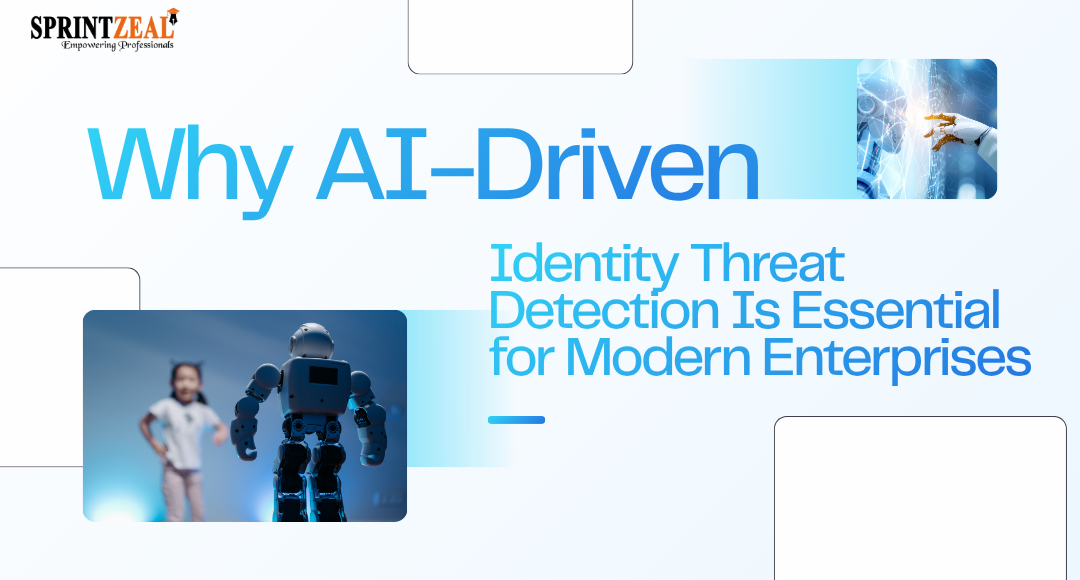
Cybersecurity threats are evolving faster than ever, and attackers are increasingly targeting digital identities instead of traditional network vulnerabilities. From compromised credentials and phishing attacks to session hijacking and privilege escalation, identity-based attacks have become one of the biggest security concerns for enterprises worldwide.
As organizations continue to adopt hybrid work environments, cloud applications, remote access technologies, and digital transformation initiatives, managing and securing user identities has become significantly more complex. Traditional security tools that rely on static rules and manual monitoring are no longer enough to detect sophisticated identity threats in real time.
This is where AI-driven identity threat detection is transforming modern cybersecurity strategies. By combining artificial intelligence with Identity and Access Management (IAM), Single Sign-On (SSO), user behavior analytics, and automated threat response, businesses can proactively identify suspicious activities before they lead to major security incidents.
In today’s threat landscape, enterprises need intelligent identity security systems that can continuously analyze user behavior, detect anomalies, and automate response actions without disrupting user productivity.
Modern cybercriminals are increasingly focusing on identity attacks because user credentials have become the easiest gateway into enterprise environments. Instead of directly attacking firewalls or endpoints, attackers often target employees through phishing campaigns, credential stuffing, social engineering, and MFA fatigue attacks.
Once attackers gain access to a legitimate account, they can move laterally across systems, escalate privileges, and access sensitive business data without immediately triggering traditional security alerts.
Some of the most common identity-related threats include:
The rapid increase in SaaS applications, cloud infrastructure, and remote access systems has further expanded the identity attack surface. Many organizations now manage thousands of user identities across multiple platforms, making manual identity monitoring nearly impossible.
This is why enterprises are increasingly adopting AI-powered identity security solutions to strengthen access control and improve real-time threat visibility.
Traditional identity security systems primarily rely on static rules, manual reviews, and predefined access policies. While these approaches were effective in the past, they struggle to keep up with today’s dynamic and fast-moving attack patterns.
For example, a user logging in with valid credentials may appear legitimate to a traditional authentication system, even if the login attempt originates from an unusual location or suspicious device.
Similarly, conventional identity and access management solutions may not detect subtle behavioral anomalies such as:
Security teams are also overwhelmed by massive volumes of alerts generated across cloud platforms, endpoints, VPNs, and authentication systems. As a result, many critical threats go unnoticed until significant damage has already occurred.
AI-driven identity threat detection addresses these challenges by continuously learning normal user behavior patterns and identifying deviations in real time.
Artificial intelligence enables security systems to analyze massive amounts of authentication and user activity data far more efficiently than manual monitoring methods.
Instead of relying only on fixed security rules, AI-based systems use machine learning algorithms and behavioral analytics to detect unusual identity activities.
One of the most valuable capabilities of AI in identity security is User Behavior Analytics (UBA). AI continuously analyzes how users normally interact with systems, applications, devices, and networks.
For example, AI can learn:
If a user suddenly exhibits abnormal behavior, such as logging in from another country or accessing sensitive systems outside regular hours, the AI system can immediately flag the activity as suspicious.
This proactive approach significantly improves threat detection accuracy while reducing false positives.
Single Sign-On has become a critical component of modern identity management because it simplifies user authentication and improves user experience across multiple applications.
However, an SSO solution also centralizes access, meaning a compromised SSO account can potentially provide attackers with access to several connected systems.
AI-powered SSO security helps organizations strengthen authentication processes by monitoring identity-related risks in real time.
Some important AI-driven SSO security capabilities include:
AI can analyze login attempts for unusual patterns, including:
AI enables adaptive authentication by dynamically adjusting security requirements based on risk levels.
For example:
This creates a balance between security and user convenience.
AI-powered authentication systems can identify patterns associated with credential stuffing and brute-force attacks much faster than traditional monitoring tools.
This helps organizations protect enterprise SSO environments from account takeover attempts.
Modern Identity and Access Management platforms are evolving beyond simple authentication and authorization functions. AI is helping IAM systems become more intelligent, adaptive, and automated.
AI-driven IAM systems can evaluate multiple risk factors before granting access, including:
This enables organizations to implement risk-based access control policies that improve overall cybersecurity posture.
Managing user onboarding and offboarding manually can create security gaps and operational inefficiencies.
AI-powered user provisioning helps automate:
Automated user lifecycle management reduces the risk of orphaned accounts and excessive permissions.
AI can continuously analyze access usage patterns and recommend permission adjustments based on actual user activity.
This supports the principle of least privilege, which helps minimize unnecessary access rights and reduce insider threat risks.
Identity Threat Detection and Response (ITDR) has emerged as one of the fastest-growing areas in cybersecurity. ITDR focuses specifically on detecting and responding to identity-based attacks across enterprise environments.
AI plays a central role in modern ITDR solutions by enabling:
For example, if AI detects suspicious authentication behavior combined with unusual privilege escalation attempts, the system can:
This rapid response capability helps organizations contain threats before attackers can move laterally across the network.
Organizations adopting AI-powered identity protection solutions gain several important advantages.
AI can identify suspicious behavior patterns in seconds, significantly reducing the time required to detect identity-related threats.
Automated threat analysis and response reduce alert fatigue and help security teams focus on high-priority incidents.
AI-driven adaptive authentication minimizes unnecessary login friction while maintaining strong security controls.
Many regulatory frameworks require organizations to implement strict identity governance and access control measures. AI-powered IAM and SSO solutions help improve compliance visibility and reporting.
As remote and hybrid work models continue to grow, AI-driven identity monitoring helps secure users accessing systems from multiple locations and devices.
Although AI-driven identity security offers significant benefits, organizations should also understand the associated challenges.
AI systems may occasionally flag legitimate activities as suspicious, especially during initial learning phases.
Behavioral monitoring requires careful handling of user activity data to maintain privacy and regulatory compliance.
Enterprises often use multiple identity providers, cloud applications, and legacy systems, which can complicate AI security integration efforts.
AI models must be regularly updated and monitored to ensure detection accuracy against evolving attack techniques.
Despite these challenges, AI remains one of the most effective technologies for strengthening identity protection strategies.
The future of cybersecurity is becoming increasingly identity-centric. As attackers continue targeting credentials and authentication systems, organizations will need more intelligent and proactive security approaches.
Several emerging trends are shaping the future of AI-driven identity security:
AI will continue playing a critical role in helping enterprises improve identity governance, strengthen authentication security, and reduce cyber risks across digital ecosystems.
Identity has become the new security perimeter for modern enterprises. Traditional security models are no longer sufficient to protect against sophisticated identity-based attacks targeting users, credentials, and access systems.
AI-driven identity threat detection enables organizations to move from reactive security to proactive identity protection. By combining artificial intelligence with Identity and Access Management, Single Sign-On security, user behavior analytics, and automated response capabilities, enterprises can significantly strengthen their cybersecurity posture.
As digital transformation continues accelerating across industries, investing in intelligent identity security solutions will become essential for organizations seeking to protect sensitive data, maintain compliance, and secure user access in an increasingly complex threat landscape.
Enterprises can detect identity-based threats by implementing continuous identity monitoring, behavioral analytics, adaptive authentication, and AI-powered threat detection systems. These technologies help identify suspicious login activities, compromised credentials, and unusual user behavior in real time.
Organizations can strengthen identity security by adopting Single Sign-On (SSO), Multi-Factor Authentication (MFA), Identity and Access Management (IAM), and Zero Trust security practices. AI-driven monitoring tools also help secure remote users and cloud-based access points.
Businesses can reduce account takeover risks by enabling adaptive MFA, monitoring login anomalies, enforcing strong password policies, and using AI-based authentication systems that detect suspicious access attempts and credential misuse.
Traditional security tools mainly focus on network and endpoint protection, while modern attackers increasingly target user identities and authentication systems. Identity-based attacks often use legitimate credentials, making them harder to detect without behavioral analytics and AI-powered monitoring.
Managing multiple identities across cloud applications, remote systems, and hybrid environments can create visibility gaps, excessive permissions, dormant accounts, and inconsistent access policies. Automated identity governance and AI-driven user management help address these challenges.

Mon, 28 September 2026
Tue, 22 September 2026
Tue, 08 September 2026

Mon, 24 August 2026
Wed, 19 August 2026
Mon, 17 August 2026
Mon, 17 August 2026
Thu, 13 August 2026

Mon, 24 August 2026

© 2026 Sprintzeal Americas Inc. - All Rights Reserved.

 USA : +1315-322-7821
 UK : +44 7700 174870
 IND : +919036108287
 AUS : +61 480 005 455