CISSP® Certification Training Course Online in Mumbai, India
 135,000+ Learners
4.4 39456 Ratings


Courses Running Daily

Locations Worldwide

Our Global Learners
About CISSP® Certification Training Course Online in Mumbai, India
Enhance your cybersecurity career as a security analyst with Sprintzeal's CISSP®—Certified Information Systems Security Professional certification training in Mumbai. Our CISSP classes and comprehensive certified information systems security professional course in Mumbai focus on live instructor-led sessions, including dedicated discussion time and Q&A. Benefit from 1000+ mock CISSP practice exam questions to boost your chances of earning this coveted credential. Passing the adaptive CAT exam requires moving past entry-level triage and thinking like a senior security leader. Our Mumbai training breaks down all 8 CBK domains through real-world enterprise scenarios, teaching you to bridge raw technical engineering with business risk management. Led by veteran practitioners who have handled actual breach responses, our live interactive sessions focus on high-yield scenario breakdowns and exam strategy. You'll refine your decision-making framework and build the confidence needed to clear the exam on your first attempt. Our CISSP course in Mumbai follows the current ISC2 CISSP exam outline. This outline took effect on April 15 2024. It is still the live version for every CISSP exam in 2026.
CISSP® Certification Training Course Online Key Features 100% Satisfaction Guarantee
- Globally recognized cybersecurity certification from ISC2
- Validates advanced knowledge across cybersecurity, risk management, and information security domains
- Covers all 8 domains of the CISSP Common Body of Knowledge (CBK)
- Demonstrates expertise in designing, implementing, and managing enterprise security programs
- Focuses on security governance, risk management, security architecture, and operations
- Enhances credibility as a security leader and trusted advisor
- Applicable across sectors including finance, healthcare, government, defense, telecommunications, and technology
- Approved for U.S. Department of Defense cyber roles under DoD Manual 8140.03
- Covers AI security topics that ISC2 now weaves across all eight domains








CISSP® Certification Training Course Online Benefits
The Certified Information Systems Security Professional (CISSP) is the most globally recognized cybersecurity certification. The U.S. Bureau of Labor Statistics (BLS) reports a national median annual pay of US$129,180 for information security analysts. The top 10% earned more than US$199,850 per year.
BLS is part of the U.S. Department of Labor. It projects jobs for information security analysts to grow 21% from 2025 to 2035. That is much faster than the 3% average for all jobs. This strong national demand also shapes the job market for CISSP®-certified professionals in Mumbai.
The ISC2 Cybersecurity Workforce Study surveyed a record 16,029 cybersecurity professionals. It found that 59% of teams now face critical or significant skills gaps. That number was 44% just one year earlier. BLS also notes that many employers prefer to hire candidates who hold an information security certification. This gives CISSP certified information systems security professional experts in Mumbai a clear edge when they apply for senior roles.
Course Curriculum
-
1.1 Understand, adhere to, and promote professional ethics
-
• ISC2 Code of Professional Ethics
-
• Organizational code of ethics
-
-
1.2 Understand and apply security concepts
-
• Confidentiality, integrity, and availability, authenticity, and nonrepudiation (5 Pillars of Information Security)
-
-
1.3 Evaluate and apply security governance principles
-
• Alignment of the security function to business strategy, goals, mission, and objectives
-
• Organizational processes (e.g., acquisitions, divestitures, governance committees)
-
• Organizational roles and responsibilities
-
• Security control frameworks (e.g., International Organization for Standardization (ISO), National Institute of Standards and Technology (NIST), Control Objectives for Information and Related Technology (COBIT), Sherwood Applied Business Security Architecture (SABSA), Payment Card Industry (PCI), Federal Risk and Authorization Management Program (FedRAMP))
-
• Due care/due diligence
-
-
1.4 Understand legal, regulatory, and compliance issues that pertain to information security in a holistic context
-
• Cybercrimes and data breaches
-
• Licensing and Intellectual Property requirements
-
• Import/export controls
-
• Transborder data flow
-
• Issues related to privacy (e.g., General Data Protection Regulation (GDPR), California Consumer Privacy Act, Personal Information Protection Law, Protection of Personal Information Act)
-
• Contractual, legal, industry standards, and regulatory requirements
-
-
1.5 Understand requirements for investigation types
-
• Administrative, criminal, civil, regulatory, industry standards
-
-
1.6 Develop, document, and implement security policy, standards, procedures, and guidelines
-
• Security policy, standards, procedures, and guidelines
-
-
1.7 Identify, analyze, assess, prioritize, and implement Business Continuity (BC) requirements
-
• Business impact analysis (BIA)
-
• External dependencies
-
-
1.8 Contribute to and enforce personnel security policies and procedures
-
• Candidate screening and hiring
-
• Employment agreements and policy driven requirements
-
• Onboarding, transfers, and termination processes
-
• Vendor, consultant, and contractor agreements and controls
-
-
1.9 Understand and apply risk management concepts
-
• Threat and vulnerability identification
-
• Risk analysis, assessment, and scope
-
• Risk response and treatment (e.g., cybersecurity insurance)
-
• Applicable types of controls (e.g., preventive, detection, corrective)
-
• Control assessments (e.g., security and privacy)
-
• Continuous monitoring and measurement
-
• Reporting (e.g., internal, external)
-
• Continuous improvement (e.g., risk maturity modeling)
-
• Risk frameworks (e.g., International Organization for Standardization (ISO), National Institute of Standards and Technology (NIST), Control Objectives for Information and Related Technology (COBIT), Sherwood Applied Business Security Architecture (SABSA), Payment Card Industry (PCI))
-
-
1.10 Understand and apply threat modeling concepts and methodologies
-
• Threat modeling concepts and methodologies
-
-
1.11 Apply supply chain risk management (SCRM) concepts
-
1.11 Apply supply chain risk management (SCRM) concepts
-
• Risk mitigations (e.g., third-party assessment and monitoring, minimum security requirements, service level requirements, silicon root of trust, physically unclonable function, software bill of materials)
-
-
1.12 Establish and maintain a security awareness, education, and training program
-
• Methods and techniques to increase awareness and training (e.g., social engineering, phishing, security champions, gamification)
-
• Periodic content reviews to include emerging technologies and trends (e.g., cryptocurrency, artificial intelligence (AI), blockchain)
-
• Program effectiveness evaluation
-
-
2.1 Identify and classify information and assets
-
• Data classification
-
• Asset Classification
-
-
2.2 Establish information and asset handling requirements
-
• Information and asset handling requirements
-
-
2.3 Provision information and assets securely
-
• Information and asset ownership
-
• Asset inventory (e.g., tangible, intangible)
-
• Asset management
-
-
2.4 Manage data lifecycle
-
• Data roles (i.e., owners, controllers, custodians, processors, users/subjects)
-
• Data collection
-
• Data location
-
• Data maintenance
-
• Data retention
-
• Data remanence
-
• Data destruction
-
-
2.5 Ensure appropriate asset retention
-
• End of Life (EOL), End of Support
-
-
2.6 Determine data security controls and compliance requirements
-
• Data states (e.g., in use, in transit, at rest)
-
• Scoping and tailoring
-
• Standards selection
-
• Data protection methods (e.g., Digital Rights Management (DRM), data loss prevention (DLP), cloud access security broker (CASB))
-
-
3.1 Research, implement and manage engineering processes using secure design principles
-
• Threat modeling
-
• Least privilege
-
• Defense in depth
-
• Secure defaults
-
• Fail securely
-
• Segregation of Duties (SoD)
-
• Keep it simple and small
-
• Zero trust or trust but verify
-
• Privacy by design
-
• Shared responsibility
-
• Secure access service edge
-
-
3.2 Understand the fundamental concepts of security models
-
• Biba, Star Model, Bell-LaPadula
-
-
3.3 Select controls based upon systems security requirements
-
• Systems security requirements and control selection
-
-
3.4 Understand security capabilities of Information Systems (IS)
-
• Memory protection, Trusted Platform Module (TPM), encryption/decryption
-
-
3.5 Assess and mitigate the vulnerabilities of security architectures, designs, and solution elements
-
• Client-based systems
-
• Server-based systems
-
• Database systems
-
• Cryptographic systems
-
• Industrial Control Systems (ICS)
-
• Cloud-based systems (e.g., Software as a Service (SaaS), Infrastructure as a Service (IaaS), Platform as a Service (PaaS))
-
• Distributed systems
-
• Internet of Things (IoT)
-
• Microservices (e.g., application programming interface (API))
-
• Containerization
-
• Serverless
-
• Embedded systems
-
• High-Performance Computing systems
-
• Edge computing systems
-
• Virtualized systems
-
-
3.6 Select and determine cryptographic solutions
-
• Cryptographic life cycle (e.g., keys, algorithm selection)
-
• Cryptographic methods (e.g., symmetric, asymmetric, elliptic curves, quantum)
-
• Public key infrastructure (PKI) (e.g., quantum key distribution)
-
• Key management practices (e.g., rotation)
-
• Digital signatures and digital certificates (e.g., non-repudiation, integrity)
-
-
3.7 Understand methods of cryptanalytic attacks
-
• Brute force
-
• Ciphertext only
-
• Known plaintext
-
• Frequency analysis
-
• Chosen ciphertext
-
• Implementation attacks
-
• Side-channel
-
• Fault injection
-
• Timing
-
• Man-in-the-Middle (MITM)
-
• Pass the hash
-
• Kerberos exploitation
-
• Ransomware
-
-
3.8 Apply security principles to site and facility design
-
• Site and facility design principles
-
-
3.9 Design site and facility security controls
-
• Wiring closets/intermediate distribution facilities
-
• Server rooms/data centers
-
• Media storage facilities
-
• Evidence storage
-
• Restricted and work area security
-
• Utilities and heating, ventilation, and air conditioning (HVAC)
-
• Environmental issues (e.g., natural disasters, man-made)
-
• Fire prevention, detection, and suppression
-
• Power (e.g., redundant, backup)
-
-
3.10 Manage the information system lifecycle
-
• Stakeholders needs and requirements
-
• Requirements analysis
-
• Architectural design
-
• Development /implementation
-
• Integration
-
• Verification and validation
-
• Transition/deployment
-
• Operations and maintenance/sustainment
-
• Retirement/disposal
-
-
4.1 Apply secure design principles in network architectures
-
• Open System Interconnection (OSI) and Transmission Control Protocol/Internet Protocol (TCP/IP) models
-
• Internet Protocol (IP) version 4 and 6 (IPv6) (e.g., unicast, broadcast, multicast, anycast)
-
• Secure protocols (e.g., Internet Protocol Security (IPSec), Secure Shell (SSH), Secure Sockets Layer (SSL)/Transport Layer Security (TLS))
-
• Implications of multilayer protocols
-
• Converged protocols (e.g., Internet Small Computer Systems Interface (iSCSI), Voice over Internet Protocol (VoIP), InfiniBand over Ethernet, Compute Express Link)
-
• Transport architecture (e.g., topology, data/control/management plane, cut-through/store-and-forward)
-
• Performance metrics (e.g., bandwidth, latency, jitter, throughput, signal-to-noise ratio)
-
• Traffic flows (e.g., north-south, east-west)
-
• Physical segmentation (e.g., in-band, out-of-band, air-gapped)
-
• Logical segmentation (e.g., virtual local area networks (VLANs), virtual private networks (VPNs), virtual routing and forwarding, virtual domain)
-
• Micro-segmentation (e.g., network overlays/encapsulation; distributed firewalls, routers, intrusion detection system (IDS)/intrusion prevention system (IPS), zero trust)
-
• Edge networks (e.g., ingress/egress, peering)
-
• Wireless networks (e.g., Bluetooth, Wi-Fi, Zigbee, satellite)
-
• Cellular/mobile networks (e.g., 4G, 5G)
-
• Content distribution networks (CDN)
-
• Software defined networks (SDN), (e.g., application programming interface (API), Software-Defined Wide-Area Network, network functions virtualization)
-
• Virtual Private Cloud (VPC)
-
• Monitoring and management (e.g., network observability, traffic flow/shaping, capacity management, fault detection and handling)
-
-
4.2 Secure network components
-
• Operation of infrastructure (e.g., redundant power, warranty, support)
-
• Transmission media (e.g., physical security of media, signal propagation quality)
-
• Network Access Control (NAC) systems (e.g., physical, and virtual solutions)
-
• Endpoint security (e.g., host-based)
-
-
4.3 Implement secure communication channels according to design
-
• Voice, video, and collaboration (e.g., conferencing, Zoom rooms)
-
• Remote access (e.g., network administrative functions)
-
• Data communications (e.g., backhaul networks, satellite)
-
• Third-party connectivity (e.g., telecom providers, hardware support)
-
-
5.1 Control physical and logical access to assets
-
• Information
-
• Systems
-
• Devices
-
• Facilities
-
• Applications
-
• Services
-
-
5.2 Design identification and authentication strategy (e.g., people, devices, and services)
-
• Groups and Roles
-
• Authentication, Authorization and Accounting (AAA) (e.g., multi-factor authentication (MFA), password-less authentication)
-
• Session management
-
• Registration, proofing, and establishment of identity
-
• Federated Identity Management (FIM)
-
• Credential management systems (e.g., Password vault)
-
• Single sign-on (SSO)
-
• Just-In-Time
-
-
5.3 Federated identity with a third-party service
-
• On-premises
-
• Cloud
-
• Hybrid
-
-
5.4 Implement and manage authorization mechanisms
-
• Role-based access control (RBAC)
-
• Rule-based access control
-
• Mandatory access control (MAC)
-
• Discretionary access control (DAC)
-
• Attribute-based access control (ABAC)
-
• Risk-based access control
-
• Access policy enforcement (e.g., policy decision point, policy enforcement point)
-
-
5.6 Implement authentication systems
-
• Authentication systems implementation
-
-
6.1 Design and validate assessment, test, and audit strategies
-
• Internal (e.g., within organization control)
-
• External (e.g., outside organization control)
-
• Third-party (e.g., outside of enterprise control)
-
• Location (e.g., on-premise, cloud, hybrid)
-
-
6.2 Conduct security control testing
-
• Vulnerability assessment
-
• Penetration testing (e.g., red, blue, and/or purple team exercises)
-
• Log reviews
-
• Synthetic transactions/benchmarks
-
• Code review and testing
-
• Misuse case testing
-
• Coverage analysis
-
• Interface testing (e.g., user interface, network interface, application programming interface (API))
-
• Breach attack simulations
-
• Compliance check
-
-
6.3 Collect security process data (e.g., technical and administrative)
-
• Account management
-
• Management review and approval
-
• Key performance and risk indicators
-
• Backup verification data
-
• Training and awareness
-
• Disaster recovery (DR) and Business Continuity (BC)
-
-
6.4 Analyze test output and generate report
-
• Remediation
-
• Exception handling
-
• Ethical disclosure
-
-
6.5 Conduct or facilitate security audits
-
• Internal (e.g., within organization control)
-
• External (e.g., outside organization control)
-
• Third-party (e.g., outside of enterprise control)
-
• Location (e.g., on-premises, cloud, hybrid)
-
-
7.1 Understand and comply with investigations
-
• Evidence collection and handling
-
• Reporting and documentation
-
• Investigative techniques
-
• Digital forensics tools, tactics, and procedures
-
• Artifacts (e.g., data, computer, network, mobile device)
-
-
7.2 Conduct logging and monitoring activities
-
• Intrusion detection and prevention (IDPS)
-
• Security information and event management (SIEM)
-
• Continuous monitoring and tuning
-
• Egress monitoring
-
• Log management
-
• Threat intelligence (e.g., threat feeds, threat hunting)
-
• User and entity behavior analytics (UEBA)
-
-
7.3 Perform configuration management (CM)
-
• Provisioning, baselining, automation
-
-
7.4 Apply foundational security operations concepts
-
• Need-to-know/least privilege
-
• Segregation of Duties (SoD) and responsibilities
-
• Privileged account management
-
• Job rotation
-
• Service-level agreements (SLA)
-
-
7.5 Apply resource protection
-
• Media management
-
• Media protection techniques
-
• Data at rest/data in transit
-
-
7.6 Conduct incident management
-
• Detection
-
• Response
-
• Mitigation
-
• Reporting
-
• Recovery
-
• Remediation
-
• Lessons learned
-
-
7.7 Operate and maintain detection and preventative measures
-
• Firewalls (e.g., next generation, web application, network)
-
• Intrusion detection systems (IDS) and intrusion prevention systems (IPS)
-
• Whitelisting/blacklisting
-
• Third-party provided security services
-
• Sandboxing
-
• Honeypots/honeynets
-
• Anti-malware
-
• Machine learning and artificial intelligence (AI) based tools
-
-
7.8 Implement and support patch and vulnerability management
-
• Patch and vulnerability management
-
-
7.9 Understand and participate in change management processes
-
• Change management processes
-
-
7.10 Implement recovery strategies
-
• Backup storage strategies (e.g., cloud storage, onsite, offsite)
-
• Recovery site strategies (e.g., cold vs. hot, resource capacity agreements)
-
• Multiple processing sites
-
• System resilience, high availability (HA), Quality of Service (QoS), and fault tolerance
-
-
7.11 Implement disaster recovery (DR) processes
-
• Response
-
• Personnel
-
• Communications (e.g., methods)
-
• Assessment
-
• Restoration
-
• Training and awareness
-
• Lessons learned
-
-
7.12 Test disaster recovery plans (DRP)
-
• Read-through/tabletop
-
• Walkthrough
-
• Simulation
-
• Parallel
-
• Full interruption
-
• Communications (e.g., stakeholders, test status, regulators)
-
-
7.13 Participate in Business Continuity (BC) planning and exercises
-
• Business Continuity (BC) planning and exercises
-
-
7.14 Implement and manage physical security
-
• Perimeter security controls
-
• Internal security controls
-
-
7.15 Address personnel safety and security concerns
-
• Travel
-
• Security training and awareness (e.g., insider threat, social media impacts, two-factor authentication (2FA) fatigue)
-
• Emergency management
-
• Duress
-
-
8.1 Understand and integrate security in the Software Development Life Cycle (SDLC)
-
• Development methodologies (e.g., Agile, Waterfall, DevOps, DevSecOps, Scaled Agile Framework)
-
• Maturity models (e.g., Capability Maturity Model (CMM), Software Assurance Maturity Model (SAMM))
-
• Operation and maintenance
-
• Change management
-
• Integrated Product Team
-
-
8.2 Identify and apply security controls in software development ecosystems
-
• Programming languages
-
• Libraries
-
• Tool sets
-
• Integrated Development Environment
-
• Runtime
-
• Continuous Integration and Continuous Delivery (CI/CD)
-
• Software configuration management (CM)
-
• Code repositories
-
• Application security testing (e.g., static application security testing (SAST), dynamic application security testing (DAST), software composition analysis, Interactive Application Security Test (IAST))
-
-
8.3 Assess the effectiveness of software security
-
• Auditing and logging of changes
-
• Risk analysis and mitigation
-
-
8.4 Assess security impact of acquired software
-
• Commercial-off-the-shelf (COTS)
-
• Open source
-
• Third-party
-
• Managed services (e.g., enterprise applications)
-
• Cloud services (e.g., Software as a Service (SaaS), Infrastructure as a Service (IaaS), Platform as a Service (PaaS))
-
-
8.5 Define and apply secure coding guidelines and standards
-
• Security weaknesses and vulnerabilities at the source-code level
-
• Security of application programming interfaces (API)
-
• Secure coding practices
-
• Software-defined security
-
World's No.1 Leading Company Providing Professional Training and Certification
Get LMS Videos for lifetime access.
Mode Of Training
Mumbai
Corporate Training
Customized to your team's needs
- Flexible enterprise schedule
- 8 domains + your compliance
- Secure team test simulation
- Principal risk consultants
- Internal LMS video hosting
- Hybrid or on-site delivery
- Tiered volume group discounts
Trained over 126000+ Working professionals across 143 Countries
Take this training with your colleagues and get additional discount
Download Company BrochureOverview of CISSP® Certification Training Course Online
Our CISSP certification training helps you in understanding major security concepts from the ISC2 CISSP CBK. Courseware set and taught by our expert CISSP trainers help you analyze and apply concepts from eight domains of globally approved information security standards. This CISSP course in Mumbai introduces you to the basics of IT security and also provides in-depth knowledge about important areas like data privacy, risk management, zero trust architecture, supply chain risk management (SCRM), and advanced security controls.
(We also offer Hybrid Classes, Enquire before you enroll for In-Person Classroom Training in Mumbai.)
- ANAB-accredited under ISO/IEC 17024
- U.S. DoDM 8140.03
- APPROVED BY DEPARTMENT OF DEFENSE
The CISSP training acts as a pathway to ensuring the procurement of the certification. The training is provided with adherence to the CISSP course plan which is designed for the successful clearing of the CISSP exam in Mumbai.
If you are working in information security for any organization—private, public, or government—getting the certified information systems security professional CISSP certification should be your top priority.
Benefits of CISSP Certification
Sprintzeal's CISSP boot camp and training is aligned with ISC2 CBK. Studying CBK – Common Body of Knowledge and other CISSP training material will ensure you are skilled to carry out essential functions in the field of IT security.
The CISSP certification validates your IT security skills, making you an all-rounder rather than just a regular information security professional in Mumbai. Our CISSP training in Mumbai will help you excel in the security domain and keep you updated on the latest advancements. The certification acts as a guarantee of your capability to perform the required role.
Developing deep capabilities across infrastructure and design layers equips you with the foundational top tech skills required by premier global enterprises.
Domains Covered in Our CISSP Program
The current CISSP exam outline took effect on April 15 2024 and remains in use in 2026. Our CISSP Training equips individuals with skills from the security domains listed below:
|
Domain |
Weight |
|
Domain 1: Security and Risk Management |
16% |
|
Domain 2: Asset Security |
10% |
|
Domain 3: Security Architecture and Engineering |
13% |
|
Domain 4: Communication and Network Security |
13% |
|
Domain 5: Identity and Access Management (IAM) |
13% |
|
Domain 6: Security Assessment and Testing |
12% |
|
Domain 7: Security Operations |
13% |
|
Domain 8: Software Development Security |
10% |
|
Total |
100% |
ISC2 now weaves AI security tasks across all eight CISSP domains. You will learn how data poisoning and adversarial attacks threaten AI systems. You will also learn how AI can support defense through safe automation.
To maximize your impact as a security leader, many CISSP-certified professionals strategically diversify their credentials. Depending on your career goals, we recommend the following professional pathways to build a comprehensive security portfolio:
- For Governance and Management: Many CISSP professionals broaden their leadership capacity by pursuing CISM Certification Training. While CISSP focuses on technical and managerial depth, CISM is the industry standard for those focused exclusively on information security governance and management.
- For Audit and Compliance: If your role involves validating organizational security, CISA Certification Training is the natural companion to CISSP. It focuses on the rigorous audit and compliance frameworks that link technical controls to business standards.
- For Cloud-First Strategies: As enterprise infrastructure migrates to the cloud, mastering the specific security challenges of virtual environments is critical. We recommend CCSP Certification Training to help you design and oversee secure cloud-native architectures.
- For Foundational Expertise: If you are building your team or looking to bridge specific technical gaps, CompTIA Security+ Certification Training provides the essential technical bedrock that supports the complex managerial frameworks taught in the CISSP curriculum.
- For Organizational Alignment: For those operating in highly regulated industries, the COBIT® 2019 Foundation training provides a vital framework for integrating IT goals with overall business objectives. COBIT 2019 is the current version that ISACA uses for its COBIT Foundation certificate.
Read - List of 25 career benefits of getting Cyber Security Certification
CISSP Certification Demand
- CISSP is globally recognized and one of the most valued IT credentials in the world.
- Widely accepted as it fits the strict requirements of the DoD 8140 series. ISC2 lists the CISSP as approved under DoD Manual 8140.03.
- To ensure full alignment with federal compliance landscapes, you can cross-reference roles within the official DoD Cyber Workforce directives manual.
- BLS projects about 14,100 openings for information security analysts each year from 2025 to 2035. BLS data covers the whole country. You can check jobs and wages in Mumbai with the BLS OEWS state and metro area profiles.
- The national median pay for information security analysts is US$129,180 per year. This is a useful benchmark for any certified system security professional in Mumbai. BLS lists computer and information systems manager as a common next step. That role earned a median of US$175,140.
Latest Job Scope Update on CISSP in Mumbai
The ISC2 Cybersecurity Workforce Study did not publish a headcount gap this year. ISC2 said the need for critical skills now outweighs the need for more staff. AI (41%) and cloud security (36%) topped the list of missing skills. Professionals holding a CISSP certification can massively benefit from this shortage. Chat with our Mumbai course experts to get training details.
To seamlessly master the executive-level technical discussions required during recruitment for these roles, review our definitive list of cybersecurity interview questions and responses.
Latest Job Scope Update on CISSP in Mumbai According to the recent (ISC)⊃2;; Cybersecurity Workforce Study, there's a talent gap with over 4.8 million unfilled job positions in the cybersecurity domain. Professionals holding a CISSP certification can massively benefit from this shortage. Chat with our Mumbai course experts to get training details.
To seamlessly master the executive-level technical discussions required during recruitment for these roles, review our definitive list of cybersecurity interview questions and responses.
Information security professionals can acquire essential skills with Sprintzeal's CISSP® certification training, updated to align with the latest CISSP CBK release.
Our comprehensively designed course discusses the eight domains of the Common Body of Knowledge (CBK)®, enriching participants in Mumbai with the expertise to excel in cybersecurity. To get the latest exam details, visit the official (ISC)⊃2; Exam Details page.
When you are prepared to choose a certified professional screening window or reserve an adaptive testing site, establish your account on the official Pearson VUE ISC2 portal.
Today, businesses are increasingly dependent on information technology. BLS reports that cyberattacks have grown in frequency. It also links the rising use of AI and e-commerce to strong demand for cybersecurity staff. Here is why attaining a CISSP certification will propel your career in Mumbai.
If you are analyzing structural industry specializations, read our comprehensive overview matching a career in cloud computing or cybersecurity to maximize your long-term value.
What is CISSP certification?
The Certified Information Systems Security Professional (CISSP) is an elite, globally recognized credential awarded by (ISC)⊃2;. It validates a professional's technical and managerial knowledge to effectively design, engineer, and manage the overall security posture of an organization. This CISSP security certification meets the strict ISO/IEC Standard 17024 requirements, making it a must-have for senior IT professionals in Mumbai. It was the first information security credential to meet the ANSI/ISO/IEC Standard 17024.
For official registration guidelines, continuous policy adjustments, and structural domain metrics, consult the verified ISC2 CISSP validation hub.
Globally Recognized
Since its inception, it has been the premier IT security certification. ISC2 now serves more than 265,000 certified members and associates worldwide. BLS notes that many employers prefer certified candidates. This makes CISSP certifications valuable for top-tier positions in Mumbai.
Earn Better Salaries
BLS reports a median pay of US$129,180 for information security analysts. The top 10% earn more than US$199,850. Analysts in the information industry earned the highest median at US$138,650. Pay for Mumbai professionals varies by role and industry. A CISSP certification course prepares you for senior roles that sit well inside these 6-figure salary bands.
Keeping this credential active through CPE credits validates your status among the industry's highest-paid certifications available today.
Securing this credential permanently validates your status among the industry's highest-paid certifications available today.
ISC2: Membership Benefits
You become an ISC2 member once you pass the exam and complete your endorsement. Membership gives you free webinars that earn CPE credits. It also opens the door to industry resources and networking at ISC2 SECURE events and the annual ISC2 Security Congress. Every certified information systems security professional must also follow the ISC2 Code of Ethics.
Great Credential for Government Jobs
The CISSP is an approved qualification under DoD Manual 8140.03. This makes it a strong credential for government and defense roles. It helps you secure high-ranking positions in the Mumbai public sector.
Top Job Roles & Career Stability
A CISSP course prepares you for highly stable, senior roles such as Chief Information Security Officer (CISO), Security Auditor, and IT Director. With cyber threats expanding locally and globally, the demand for CISSP certification in Mumbai is growing like wildfire, ensuring immense career stability.
Hands-on Experience Validation
Unlike basic theory courses, the Certified Information Systems Security Professional training and exam require demonstrable, real-world experience. Candidates need five years of cumulative paid work experience in two or more of the eight domains. One waiver can cut this to four years. From April 2026 onward the waiver needs a bachelor's or master's degree in computer science or IT or a related field. An approved credential from the ISC2 waiver list also works. Only one waiver can be used. ISC2 checks this experience before you can hold the certified information systems security professional title. This validates your practical ability to handle real-time cyber threats in Mumbai.
Classroom Training
Online Instructor-Led Training
Online Self-Paced Training
Onsite Training

Toll Free
+61 480 005 455
Mail Your Queries
support@sprintzeal.comGet 2 FREE Online Self Learning Course Access
World No.1 Leading Company to provide Professional Training and Certification
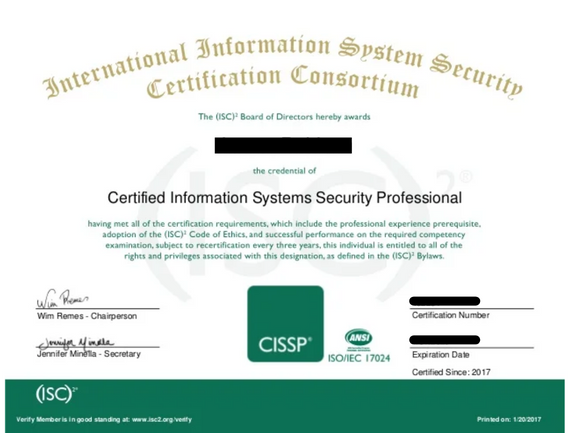
Exam & Certification
Meet our Trainers and Advisors
.webp)
Thayna Egidio
Thayná Egidio is a Customer Service and Account Management professional with over four years of experience in telecom and global IT environments. She specializes in service delivery, stakeholder management, ITSM improvements, and customer experience enhancement. Currently working at Orange Business, she focuses on managing client relationships, SLA compliance, and operational performance. Thayná is skilled in ITIL frameworks, problem management, and managed services. Fluent in English and Portuguese, with working knowledge of Spanish, she is passionate about delivering high-quality global IT support services.
Alfredo Nelson
Alfredo Nelson is an experienced IT specialist and project delivery manager with a strong background in computer repair, hardware support, and IT service management. He has worked extensively in desktop and laptop troubleshooting, system configuration, networking, and technical support for businesses and customers. Alfredo has managed repair operations and led onsite IT service projects while building expertise in system maintenance and customer support. His practical technical knowledge and hands-on experience make him a reliable IT professional. Skills include CompTIA A+.
Derrick J. Walters
Dr. D. J. Walters is a seasoned corporate trainer, consultant, and educator specializing in adult learning and project management. As the President and CEO of Walters Consulting, LLC, he delivers strategic consulting and certification training nationwide. He has instructed over 1,000 professionals in PMP and Agile certification preparation. Dr. Walters has also spent over two decades as an adjunct professor at institutions like DeVry and University of Phoenix. He holds an MBA and an Ed.D.

John W. Horn
John W. Horn is a highly experienced cybersecurity and data management professional with more than 25 years of expertise in cloud security, analytics, big data, and enterprise IT solutions. A U.S. Army veteran and skilled technology leader, he has worked with organizations such as NOAA, Charles Schwab, and the U.S. Department of Justice. He specializes in cybersecurity compliance, data privacy, and digital transformation. John is also an accomplished instructor and strategist known for building high-performing teams and delivering innovative technology solutions. Skills include CISSP and CompTIA SEC+.
Exam & Certification FAQ
To get an information systems security professional CISSP certification, a candidate must have a minimum of five years of paid work experience in two or more of the eight domains of the CISSP CBK. (One year can be waived with a bachelor's or master's degree in computer science or IT or a related field. An approved credential from the ISC2 list also qualifies.) If you have less than 5 years of experience, passing the exam grants you the "Associate of ISC2" title until your experience requirements are met. You then have six years to earn the required experience.
- Meet the eligibility criteria (5 years of experience).
- Take CISSP training in Mumbai (optional but highly recommended to ensure passing).
- Register and pass the CISSP exam.
- Submit your ISC2 endorsement within nine months of your exam date. Any ISC2 certified member in good standing can endorse you.
- Maintain your certification via CPE credits and the US$135 Annual Maintenance Fee.
You have up to four attempts to pass within a 12-month period. You must wait 30 days after the first failed attempt, 60 days after the second, and 90 days after the third.
The certificate is valid for three years. You must earn 120 CPEs (continuing professional education credits) to renew it. You also pay a single Annual Maintenance Fee of US$135 each year. This one fee covers every ISC2 certification you hold.
Yes, you can apply for certification CISSP re-exam. However, most of the candidates taking our CISSP training pass the exam in just one attempt.
Recommended read - How to Pass CISSP Exam in First Attempt
Your Pearson VUE proctor gives you an unofficial result when you check out of the test center. ISC2 then emails you the official result after its score review. This email also explains your next steps if you passed.
A solid career path starts with foundational credentials like the ISC2 certified in cybersecurity (or ISC2 certified in cyber security). From there, professionals in Mumbai usually pursue the CISA or COBIT 2019 Foundation, ultimately capping their expertise with the premier CISSP certification. ISC2 refreshed the CC exam outline in September 2026. Many hands-on practitioners also take the ISC2 SSCP before they move up to the CISSP.
While community forums like CISSP Reddit (or Reddit CISSP) and supplements like Destination CISSP mind-maps are great for tips, they should not replace structured learning. A formal CISSP course ensures you cover all domain updates comprehensively.
There is no option to re-evaluate a failing CISSP exam score. However, candidates who do not pass can re-take the exam after a waiting period. The specific waiting period can vary depending on the number of previous attempts. You can find the latest information on re-examination eligibility and waiting periods on the ISC² website: https://www.isc2.org/exams/after-your-exam
After completion of the CISSP training in Mumbai, you can schedule your CISSP Certification examination. To redeem the exam voucher from Sprintzeal, you must apply for the exam within six months of taking up our training and take the exam within one year. Our executives shall assist customers with training CISSP aspirants need, the exam application process, and any other details required.
Yes. Our CISSP certification course program in Mumbai is led by experts with over 10 years of experience. The course syllabus is aligned with (ISC)2 CBK and offers excellent skills and knowledge. This will help you clear the exam in one attempt.
Your CISSP certification becomes active once ISC2 approves your endorsement and you pay your first Annual Maintenance Fee. ISC2 then emails you to confirm your new certified status.
To get the CISSP course completion certificate from Sprintzeal you must,
- Attend all training sessions
- Complete the training in Mumbai
- Take up practice tests conducted by Sprintzeal and get atleast 60% score
Yes, to familiarize candidates with the CISSP Certification examination concepts and exam pattern, we provide practice tests. Although it isn’t mandatory, taking up mock tests is highly recommended for getting better results in the finals. It helps you clear the exam in just one attempt.
When searching for the cost for CISSP certification or the certified information systems security professional cost, you must account for the official exam fee. The standard CISSP exam cost (or cissp cost exam) is officially set by ISC² at $749 USD. Our local advisors can provide exact CISSP cert cost training bundles tailored for Mumbai.
Our Corporate Training Clients































Our Service Delivery
We offer world-class training to professionals from corporate companies, government firms, public & private sectors, and multinational organizations. Our main focus is to deliver high quality training at affordable rates to individuals from various industries. We help them get certifications and enhance their career in the most convenient, effective and best way possible.
- 9/10 Average Satisfaction Rate
- 96% Completitation Rate
- Friendly Environment & Expert Teacher
Client Feedback on CISSP® Certification Training Course Online in Mumbai, India

Daniel A
Cybersecurity & Compliance AdvisorI thought we were just going to go through the mock exam but we actually gained a lot more knowledge from the trainer. I now have a lot greater understanding of the exam, what to focus on and a better overall understanding of the materials. Thank you Sprintzeal!\

Caroline Saxon
Head of ComplianceThe training turned out to be much more valuable than I expected. The trainer provided in-depth explanations that significantly enhanced my understanding of the subject, not just the exam itself.
I now have a much clearer understanding of the exam structure, the key areas to focus on, and the concepts behind the course material. The trainer's expertise and engaging teaching approach made the sessions highly informative and enjoyable.
Afolabi Olofintuade
Information & Cybersecurity ProfessionalGood knowledge sharing and exam preparation. Friendly atmosphere and exchange of knowledge.

Mareena Verghese
Cybersecurity, Risk Management & Information Security AssessorThis course was very good and helped me understand CISSP and all the security domains. The trainer explained everything in a simple and easy-to-understand way. I learned a lot

Michael Potgieter
Information Security OfficerSouth Africa
I attended class for CISSP the training was well-structured and covered all eight CISSP domains in detail. The trainer demonstrated excellent knowledge of information security concepts and explained complex topics in a clear and practical manner. Real-world examples and interactive discussions helped me understand the concepts better and prepare effectively for the certification exam.

Julian Kidd
Principal CybersecuritySuper nice invigilator, who was very understanding and welcoming. I felt no anxiety or fear during this important exam.

Abhilash Verma
CISO - Americas Regulatory and GovernanceI attended the classroom training and the trainer along with the training also helped me with few additional notes to help me prepare for the exam . The sprintzeal support team was very helpful as well.

Jose Torres Gomez
IT Specialists (INFOSEC)United States
I enrolled in the CISSP course to expand my cybersecurity knowledge and enhance my career opportunities. The trainer delivered the security domains in a well-structured and easy-to-understand manner, making even complex concepts clear and practical. Overall, it was an excellent learning experience.

PeteWeston
Head of Information Security - Latitude MoneyAustralia
There are lot of providers for this training, I was confused whether to join this institute as they were a bit expensive than others. But I still feel, I made the right choice by enrolling for this. Highly supportive team, Skilled trainers and their one on one session was too good.

Kolawole Ajala
Senior Information Systems Security Officer/Acting ISSMUnited States
The trainer was highly experienced and had an excellent understanding of the CISSP domains. Even though some of the topics were quite challenging, they were explained in a simple, structured way with practical examples that made them much easier to understand. The sessions were interactive, and the trainer was always willing to answer questions and share real-world insights from the industry. The course materials were well-organized, and the Sprintzeal team was supportive throughout the entire process, from registration to training. Their prompt communication and professionalism made the overall experience smooth and hassle-free.
Frequently Asked Questions
Our online portal offers web-based training via high-quality video modules. CISSP classes in Mumbai are conducted by certified trainers, providing immense flexibility for busy IT professionals.
Live virtual training is a personalized, interactive format. The Mumbai candidate and the trainer are live and face-to-face over platforms like Microsoft Teams, discussing concepts and doubts in real-time.
Candidates have the opportunity to take up the CISSP course by attending physical sessions at a designated venue in Mumbai, allowing for group discussions and direct study sessions with the trainer.
Yes! We offer training in three modes: online, live online, and classroom. Participants are offered recordings of every session. If you miss a class in Mumbai, you can easily review the recording.
Sprintzeal offers a refund of the course fee (or a free re-exam voucher) if a candidate fails to clear the CISSP exam on their first attempt after completing our live-online or classroom training. Eligibility Rules:
Must attend all training sessions.
Must take practice tests and score 80% or above on the first attempt.
Must take the final exam within 30 to 45 days of completing the CISSP certification training.
Must submit the final scorecard within 15 days of receiving results.
Sprintzeal’s CISSP exam prep training offers flexibility in learning methods by offering training in three modes. It offers online training, instructor-led live online training, and classroom training. Our training approach is Practical, Goal-oriented, Structured, and Effective. Our approach will enable you to put your learning into practice. We have a proven track record of candidates passing the exam and getting the certification on the FIRST attempt.
Yes. To familiarize candidates with the exam pattern, we provide comprehensive practice tests. Taking up mock tests is highly recommended and dramatically improves first-attempt pass rates for Mumbai students.
To get the completion certificate in Mumbai, you must attend all training sessions, complete the full course syllabus, and score at least 60% on the internal practice tests.
Yes, after completion of the course you will receive a CISSP course completion certificate from Sprintzeal with the 30 hours CPE.
To know everything about the field of cybersecurity, its importance and top cybersecurity courses read this guide to cybersecurity.
With over 200000+ professionals trained across the globe the success rate of Sprintzeal’s training programs is impressive with 99.6 %.
You can reach us via chat option or email us.
We recommend booking your live classroom training in Mumbai 2 to 3 weeks in advance. This allows us to properly prepare all necessary materials and resources for a well-organized session.
Our Accreditations

























Learners Also Enrolled For








 USA : +1 315-666-4287
 UK : +44 7700 174870
 IND : +91 9036108287
 AUS : +61 480 005 455