Certified Deep Learning Expert (CDLE) AI3060 Certification Training in Amsterdam, Netherlands
 135,000+ Learners
4.4 39456 Ratings
 AI3060 _Sprintzeal "Certified Deep Learning Expert (CDLE) AI3060 Certification Training By sprintzeal")


Courses Running Daily

Locations Worldwide

Our Global Learners
About Certified Deep Learning Expert (CDLE) AI3060 Certification Training in Amsterdam, Netherlands
The IABAC Certified Deep Learning Expert course explores neural networks. You will learn how deep learning models are designed, trained and tested. The syllabus covers key architectures and model optimization. It also looks at methods used in complex AI tasks. Sprintzeal’s deep learning expert training connects these ideas with practical work. The certified deep learning expert certification can help professionals build skills for AI projects.
Certified Deep Learning Expert (CDLE) AI3060 Certification Training Key Features 100% Satisfaction Guarantee
- IABAC® Expert-Level Credential
- Hands-On Deep Learning Use Cases
- Advanced Deep Learning Curriculum
- Covers Modern Neural Architectures





Certified Deep Learning Expert (CDLE) AI3060 Certification Training Benefits
U.S. computer and information research scientist jobs are projected to grow 19.7% from 2024 to 2034, supporting advanced AI career opportunities.
In 2025, 88% of surveyed organizations used AI in at least one business function. Deep learning supports image and language applications.
U.S. computer and information research scientists earned a median annual wage of $140,910 in May 2024. This is not a course-specific salary.
World's No.1 Leading Company Providing Professional Training and Certification
Get LMS Videos for lifetime access.
Mode Of Training
Amsterdam
Live Online Training
€ 1876 € 2814
33% OFF ★ Popular

- 40 Hours of Classroom Training
- AI CERTs AI3060 Framework
- Digital Materials Included
- Certified AI Trainers
- Session Recordings Included
- Self-Paced Plus Live
- Competitive Training Pricing
Classroom Training
€ 3776 € 5664

- 5 Days of Classroom Training
- AI CERTs AI3060 Framework
- Printed And Digital Materials
- Certified AI Trainers
- Post-Training Access Available
- Weekend And Weekday Batches
- Competitive Training Pricing
Corporate Training
Customized to your team's needs
- Customized Computer Vision Training
- AI CERTs AI3060 Framework
- Customized Learning Materials
- Senior AI Consultants
- On-Demand Video Access
- Customized Scheduling Available
- Volume Discount Available
Trained over 126000+ Working professionals across 143 Countries
Take this training with your colleagues and get additional discount
Download Company BrochureOverview of Certified Deep Learning Expert (CDLE) AI3060 Certification Training
Certified Deep Learning Expert (CDLE) AI3060 Overview
Deep learning helps computers identify patterns in complex data. It supports applications such as image recognition, language processing and time-series analysis. The certified deep learning expert training course introduces the concepts and methods behind these applications.
The IABAC syllabus covers artificial neural networks and the principles of deep learning. Learners explore activation functions, loss functions, backpropagation and gradient descent. These concepts explain how neural networks learn from data and improve their predictions. The curriculum also covers regularization and hyperparameter tuning. These methods help learners understand how to manage model performance and reduce common training problems.
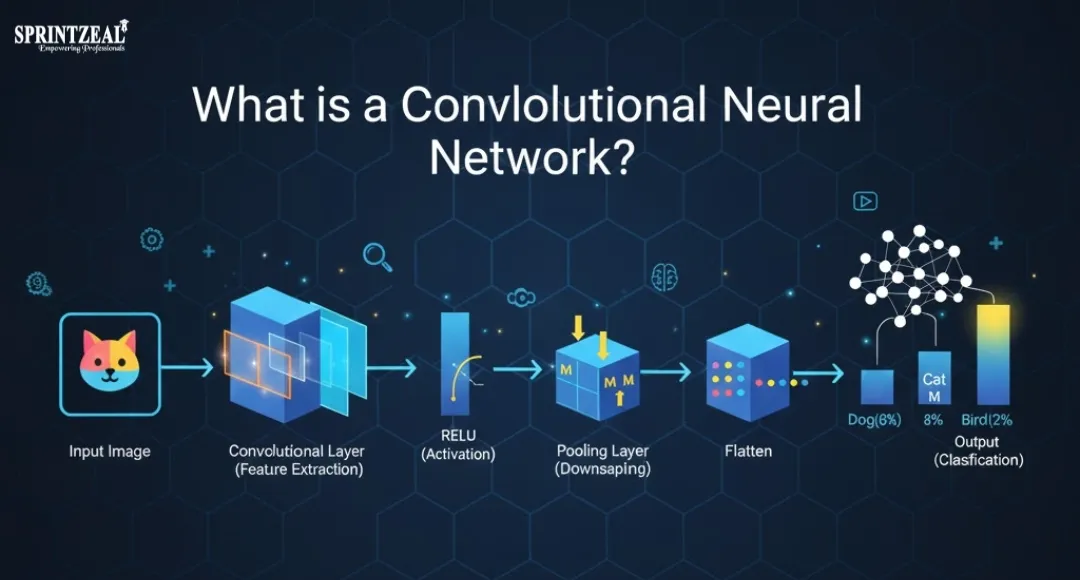
The deep learning expert course also explores different neural network architectures. Topics listed by IABAC include convolutional neural networks (CNNs), recurrent neural networks (RNNs) and long short-term memory (LSTM) networks. The syllabus extends to advanced architectures such as generative adversarial networks and variational autoencoders. It also includes attention mechanisms and deep reinforcement learning. These areas help learners understand how deep learning approaches can address different types of problems.
The curriculum connects these concepts with practical applications. It includes natural language processing, computer vision and time-series forecasting. Learners can explore tasks such as text classification, object detection and anomaly detection. Model evaluation is another important area. It covers performance metrics, interpretation and challenges such as class imbalance and bias. IABAC also lists frameworks such as TensorFlow and PyTorch among its deep learning topics.
A deep learning online course can be useful for professionals who want to develop knowledge of neural networks and related AI methods. The subject may interest data science professionals, machine learning practitioners and learners moving toward deep learning roles. Prior programming knowledge can also help when working with model development concepts.
The deep learning expert online training course offered through Sprintzeal is intended for learners preparing to study this field through structured training. Review the current course details and syllabus before enrolling to confirm the topics and learning format available for your selected session.
Deep learning helps systems learn patterns from complex data. The deep learning certification course introduces the methods behind neural networks and their use in AI applications.
The IABAC syllabus covers activation functions, loss functions, backpropagation and gradient descent. Learners explore how these components support neural network training. The course also introduces regularization and hyperparameter tuning. These techniques help learners understand model performance and the challenges that arise during training.
Course Objectives
The program aims to build a structured understanding of deep learning concepts. It covers the principles behind common neural network architectures and their applications.
- Understand the fundamentals of deep learning.
- Explore neural network structures and their functions.
- Learn how activation and loss functions support model training.
- Understand backpropagation and gradient descent.
- Study regularization and hyperparameter tuning.
- Explore convolutional and recurrent neural networks.
- Understand advanced architectures such as GANs and variational autoencoders.
- Examine deep learning applications in natural language processing and computer vision.
- Learn how to assess model performance and interpret results.
- Recognize common challenges such as bias and class imbalance.
Learning Outcomes
After completing the training, learners should be able to explain key deep learning concepts and describe how neural networks process data. They should also understand how different architectures serve different tasks.
Learners can develop a clearer understanding of model training and evaluation. They can identify the purpose of common optimization techniques and explain why model performance may change during training. These skills provide a foundation for further study and practical work in deep learning.
The deep learning certification training also introduces applications involving images, text and time-series data. Learners can connect the relevant architecture with the problem being addressed. For example, convolutional neural networks support image-related tasks, while recurrent networks can process sequential data.
The broader goal of deep learning training and certification is to help learners build subject knowledge in a structured way. Review the current IABAC syllabus and the selected Sprintzeal batch details to confirm the learning activities and coverage available.
Deep learning helps computers find patterns in complex data. This course suits learners who want to understand neural networks and advanced AI methods.
Who Should Enroll?
The program may suit:
- Data scientists building deep learning skills
- Machine learning engineers exploring neural networks
- AI developers working on intelligent systems
- Software professionals moving into AI
- Researchers studying deep learning methods
- Data professionals interested in image or language processing
Basic programming knowledge can help. Familiarity with Python and machine learning is also useful.
Eligibility and Prerequisites
Check the latest deep learning expert certification requirements before enrolling. The IABAC course page recommends a foundation in mathematics and programming. Basic machine learning knowledge can also help learners follow the syllabus.
These skills support learning. They should not be treated as mandatory requirements unless IABAC states that they are.
Learners exploring IABAC certification training should assess their current technical knowledge. Those new to the subject may benefit from learning Python and machine learning fundamentals first.
Deep learning relies on neural networks to learn patterns from data. This course explores how these networks work and where professionals use them.
The IABAC syllabus covers network architecture and model training. It includes CNNs, RNNs and LSTM networks. Learners also explore transfer learning and advanced deep learning methods.
Skills You Will Learn
The program covers key technical areas such as:
- Artificial neural network fundamentals
- Activation and loss functions
- Backpropagation and gradient descent
- Regularization and hyperparameter tuning
- Convolutional neural networks
- Recurrent neural networks and LSTM
- Transfer learning and pre-trained models
- Generative adversarial networks and variational autoencoders
- Natural language processing
- Computer vision and time-series analysis
- Model evaluation and interpretation
The neural networks certification training covers concepts used to build and train deep learning models. Learners can understand how network design affects model performance.
Exam Coverage
The course syllabus provides the foundation for preparing for the CDLE assessment. Learners should review the official IABAC syllabus and current examination guidance before booking. The topics include neural networks and deep learning architectures. They also cover model evaluation and practical applications.
The neural networks training course can help learners develop a clearer understanding of these methods. Practical experience with Python and deep learning frameworks can further support their learning.
The deep learning expert certification exam is based on the IABAC CDLE AI3060 syllabus. The assessment focuses on deep learning concepts and their practical use. Candidates should be ready to demonstrate their understanding through a project submission.
Exam Overview
|
Exam Detail |
Information |
|
Certification |
|
|
Certification Code |
CDLE AI3060 |
|
Governing Body |
IABAC |
|
Assessment Format |
Project submission |
|
Assessment Duration |
8 hours |
|
Open-Book Policy |
Yes, according to the published syllabus |
|
Project Evaluation |
Conceptual understanding, coding standards and model performance |
|
Published Pass Criteria |
Grades A+, A, B+, B, C+ or C |
|
Result Timeline |
Preliminary results are usually released within 9 days. Official results are usually released within 15 days. |
The published IABAC syllabus lists the Certified Machine Learning Expert course or demonstrable competence at that level as a prerequisite. It also recommends programming knowledge and a foundation in calculus, statistics, linear algebra, probability and machine learning. Formal training is not mandatory under the published document. Candidates should confirm the current eligibility rules before booking.
How to Prepare for the CDLE Assessment
Start by reviewing neural networks and the main deep learning architectures. Revise activation functions, loss functions and backpropagation. You should also understand how optimizers affect model training.
Next, practise building and evaluating a model. The syllabus covers Python, TensorFlow, Keras, CNNs, RNNs and LSTM networks. Review how to explain your approach and assess model performance.
The CDLE AI3060 certification preparation should include a small project before the assessment. Use it to practise data preparation, model development and result interpretation. Keep your code organised and make sure you understand each step.
Project Submission Tips
Follow the current IABAC project instructions closely. Use your own work and cite any borrowed ideas, text or other material as required by IABAC guidelines. Check the submission format before you begin.
The CDLE certification training can help learners review the syllabus and practise the skills needed for the project. Before booking, check the latest assessment instructions with IABAC or the authorised training provider.
The Certified Deep Learning Expert program focuses on neural networks and advanced deep learning methods. Its syllabus covers CNNs, RNNs, LSTM networks, transfer learning and generative models. Learners also explore NLP, computer vision and model evaluation.
An iabac deep learning expert certification may suit professionals who want to develop deeper knowledge of neural network design and training. It offers a more specialised path than a broad AI course.
|
CDLE AI3060 |
Other AI Certifications |
|
Focuses on deep learning |
May cover several AI disciplines |
|
Covers neural network architectures |
Coverage depends on the syllabus |
|
Includes CNNs, RNNs and LSTM networks |
May cover these at an introductory level |
|
Explores GANs and variational autoencoders |
Advanced generative methods may vary |
|
Covers transfer learning and model evaluation |
Practical topics differ by certification |
|
Includes NLP and computer vision applications |
May focus on broader AI concepts |
Which Certification Should You Choose?
Choose CDLE AI3060 if you want to focus on deep learning models and their applications. It may be relevant to data scientists, machine learning engineers and AI developers who want to build specialised skills.
An artificial intelligence expert certification course may be a better fit if you want broader coverage of AI. The IABAC CAIE AI3050 syllabus includes machine learning, neural networks, NLP, computer vision, reinforcement learning and AI ethics.
Compare the published syllabus with your learning goals. The best option depends on whether you want specialised deep learning knowledge or a wider understanding of AI.
Deep learning skills can support work on image recognition, language systems and predictive models. The CDLE AI3060 syllabus covers neural networks, CNNs, RNNs, generative models and model evaluation. These topics connect with several technical career paths.
A deep learning expert certification can help demonstrate knowledge of these methods. However, employers also look at coding ability, project experience and problem-solving skills.
Career Opportunities
|
Job Role |
Key Responsibilities |
|
Deep Learning Engineer |
Develop and optimise deep learning models |
|
Machine Learning Engineer |
Build and maintain machine learning systems |
|
AI Engineer |
Develop AI solutions for practical problems |
|
Computer Vision Engineer |
Build models for image and video analysis |
|
NLP Engineer |
Develop systems that process human language |
|
Data Scientist |
Analyse data and create predictive models |
|
Research Engineer |
Test model architectures and improve performance |
|
Applied AI Specialist |
Adapt AI methods to business needs |
The right role depends on your experience and technical strengths. Some positions require advanced programming skills and strong mathematical knowledge.
Deep learning expert training can help learners strengthen their understanding of neural networks and model development. Building projects with Python and frameworks such as TensorFlow or PyTorch can help turn that knowledge into practical skills.
Industries Hiring Deep Learning Professionals
Deep learning has applications across industries that use complex data.
Career opportunities may appear in:
- Technology and software
- Healthcare and medical research
- Banking and financial services
- Retail and e-commerce
- Manufacturing and robotics
- Transportation and automotive
- Telecommunications
- Research and development
For example, computer vision models can help inspect products on manufacturing lines. Healthcare researchers may use deep learning to analyse medical images. Retail teams can apply predictive models to demand planning.
Salary Outlook
Pay varies by country, employer, experience and job responsibilities. Specialist roles may require more experience than entry-level data positions.
The U.S. Bureau of Labor Statistics reported a median annual wage of $112,590 for data scientists in May 2024. It also projects 33.5% employment growth for data scientists from 2024 to 2034. These figures provide wider market context. They are not deep learning salary estimates.
The IABAC CDLE AI3060 syllabus covers advanced neural network methods and model evaluation. A deep learning expert training pathway can complement practical work with datasets and model development. The certification alone does not guarantee a job or higher salary.
Sprintzeal offers a structured learning path for professionals who want to build their deep learning knowledge. The course explores neural networks and their use in solving complex data problems.
The Certified Deep Learning Expert (CDLE) AI3060 syllabus covers core concepts and advanced methods. Learners can study CNNs, RNNs, transfer learning and generative models. It also introduces model evaluation and techniques for working with image, text and time-series data.
Why Professionals Choose Sprintzeal
- Understand deep learning fundamentals.
- Explore neural network architectures.
- Study CNNs and RNNs.
- Learn about model training and optimisation.
- Explore transfer learning methods.
- Understand generative models.
- Study natural language processing.
- Explore computer vision applications.
- Learn model evaluation techniques.
- Understand bias and class imbalance.
Structured Learning and Skill Development
The deep learning expert certification training online pathway can help learners connect theory with practical applications. You can study how neural networks process data and how different architectures support different tasks.
These concepts are useful when exploring image recognition, language processing and forecasting. Practical work with Python and deep learning frameworks can help reinforce your understanding.
Certification Preparation
Sprintzeal can support your preparation by helping you review the course topics in a structured way. The official IABAC syllabus remains the reference for the certification requirements.
The course itself does not replace the certification assessment. Review the latest IABAC eligibility and examination guidance before registering.
Why Choose Deep Learning Expert Training in Amsterdam
Deep Learning Expert training explores neural networks and advanced model architectures. Sprintzeal provides structured learning aligned with the IABAC syllabus.
Artificial Intelligence job market in Amsterdam
AI roles include machine learning engineering, computer vision and research. U.S. computer and information research scientist employment is projected to grow 22% from 2025 to 2035.
Major employers hiring Deep Learning Expert professionals in Amsterdam
Technology firms, healthcare companies, financial institutions and research teams use deep learning. They seek skills in neural networks, model training and evaluation.
Average Deep Learning Expert Certified salaries in Amsterdam
There is no verified global salary average for this certification. U.S. computer and information research scientists earned a median annual wage of $140,300 in May 2025.
Industries needing Deep Learning Expert skills
Healthcare, automotive, finance, retail and technology use deep learning. Applications include image recognition, language processing and forecasting.
Classroom Training
Online Instructor-Led Training
Online Self-Paced Training
Onsite Training

Toll Free
+44 7700 174870
Mail Your Queries
support@sprintzeal.comGet 2 FREE Online Self Learning Course Access
World No.1 Leading Company to provide Professional Training and Certification
Exam & Certification
Exam & Certification FAQ
Candidates should understand basic machine learning, Python and relevant mathematics. Complete the IABAC assessment and meet the stated certification requirements.
Sprintzeal lists selected instructor-led batches over five training days. Assessment preparation and completion may require additional time.
The CDLE AI3060 assessment uses an open-book, project-based format with an eight-hour assessment window. Candidates must complete the required submission.
The project-based assessment can be completed online. A physical exam centre is not required for the online assessment route.
Continue learning as deep learning methods evolve. Follow the renewal terms attached to your IABAC credential and maintain relevant practical skills.
Complete the certification assessment and build projects using neural networks. Showcase your Python skills and experience with model training and evaluation.
Our Corporate Training Clients






























Our Service Delivery
We offer world-class training to professionals from corporate companies, government firms, public & private sectors, and multinational organizations. Our main focus is to deliver high quality training at affordable rates to individuals from various industries. We help them get certifications and enhance their career in the most convenient, effective and best way possible.
- 9/10 Average Satisfaction Rate
- 96% Completitation Rate
- Friendly Environment & Expert Teacher
Frequently Asked Questions
Relevant roles include deep learning engineer, computer vision engineer and machine learning engineer. Employers also assess programming and project experience.
AI pay varies by role and experience. U.S. computer and information research scientists earned a median annual wage of $140,300 in May 2025.
AI careers include AI engineer, data scientist and research specialist. Deep learning knowledge can support roles involving neural networks and complex data.
Deep Learning Expert professionals develop and evaluate neural network models. Their work may involve images, language, forecasting or other complex data.
Study neural networks, model training and evaluation. Complete the IABAC assessment and meet the certification requirements.
No reliable global average exists for holders of this specific certification. U.S. research scientists earned a $140,300 median annual wage in May 2025.
Sprintzeal has published selected live online batches at $1,975. The enrollment listing displays the fee for each available session.
Choose training that covers neural networks, model optimization and practical applications. Sprintzeal offers structured learning aligned with the IABAC syllabus.
It can deepen your understanding of neural networks and advanced AI methods. Practical experience is essential when applying for technical roles.
Yes. Sprintzeal offers live online training for learners worldwide. This format lets you join instructor-led sessions remotely.
Sprintzeal's CDLE AI3060 training covers neural networks and advanced deep learning methods. Topics include CNNs, RNNs and model evaluation.
The syllabus covers neural network design, training and evaluation. These concepts can support projects in computer vision, natural language processing and forecasting.
Build advanced AI knowledge through Sprintzeal's Deep Learning Expert training. Develop practical skills and showcase your work through relevant projects.
Sprintzeal provides structured training aligned with the IABAC syllabus. Learn about neural network architectures and methods for evaluating model performance.
Our Accreditations




















































Learners Also Enrolled For


 AI3020-2499.webp)
 AI3070-7979.webp)
 AI3080 (1)-1420.png)

 USA : +1 315-666-4287
 UK : +44 7700 174870
 IND : +91 9036108287
 AUS : +61 480 005 455