Lean Six Sigma Black Belt Certification Training Course in United States
 135,000+ Learners
4.4 39456 Ratings


Courses Running Daily

Locations Worldwide

Our Global Learners
About Lean Six Sigma Black Belt Certification Training Course in United States
The Lean Six Sigma Black Belt training in Dallas TX offers experiential learning aligned with TÜV SÜD South Asia’s CLSSBB framework, including full access to an e-learning portal, a complimentary study kit, and practice test papers. The syllabus helps you implement Six Sigma and Black Belt methodology with advanced tools and techniques. Your enrollment includes the official exam voucher, helping you become a TÜV SÜD certified Six Sigma expert in Dallas TX.
Lean Six Sigma Black Belt Certification Training Course Key Features 100% Satisfaction Guarantee
- Aligned with TÜV SÜD South Asia CLSSBB Standards
- Official Exam Voucher & $280 Value Study Kit Included
- Validates advanced expertise in process improvement and operational excellence
- Demonstrates ability to lead complex, cross functional improvement projects
- Enhances decision-making through statistical and analytical methods
- Develops leadership skills for organizational transformation initiatives
- Recognized globally across manufacturing, IT, healthcare, finance, and service industries







Lean Six Sigma Black Belt Certification Training Course Benefits
According to a detailed Salary Survey by QP, the average annual salary for Lean Six Sigma Black Belts have been increasing every year and Master Black Belts earn an average of $134,981. This makes Lean Six Sigma Black belt certification one of the most valuable certifications to hold.
Acquiring the TÜV SÜD Certified Lean Six Sigma Black Belt (CLSSBB) can significantly increase the lean six sigma black belt salary by 27%. It is important to hold the Lean Six Sigma Black Belt certification to enjoy that significant hike in salary.
Six Sigma related job openings are plenty in the market and holding a certification in Six Sigma is a powerful asset in today's job market as lean six sigma black belt certification salary is rapidly increasing. This has caused a demand for quality Lean Six Sigma Black Belt Courses.
Course Curriculum
-
Module 1.1 — The Basics of Six Sigma
-
• Meaning and purpose of Six Sigma; history and evolution of Six Sigma and continuous improvement.
• How Six Sigma connects customer expectations, business performance and process outcomes.
• Overview of the DMAIC problem-solving roadmap and expected project deliverables.
-
-
Module 1.2 — Fundamentals of Six Sigma
-
• The Y = f(x) problem-solving model and the relationship between process inputs and outputs.
• Voice of the Customer (VOC), Voice of the Business and Voice of the Employee.
• Six Sigma roles and responsibilities; project team structure and stakeholder engagement.
• Defining processes and Critical-to-Quality (CTQ) characteristics.
• Cost of Poor Quality (COPQ), Pareto analysis and prioritization of key issues.
• Core metrics: defects per unit (DPU), defects per million opportunities (DPMO), first-time yield (FTY), rolled throughput
yield (RTY) and cycle time; deriving and interpreting metrics.
Applied exercise: Translate a sample business issue into a measurable problem statement and identify CTQs and baseline metrics.
-
-
Module 1.3 — Selecting Lean Six Sigma Projects
-
• Identifying project opportunities and aligning them to customer needs and organizational goals.
• Building a business case and project charter: problem statement, goal, scope, boundaries, stakeholders and milestones.
• Developing project metrics and establishing baseline/target measures.
• Financial evaluation, benefit estimation and benefits-capture planning.
Applied exercise: Draft a project charter and quantify the expected operational and financial benefit.
-
-
Module 1.4 — The Lean Enterprise
-
• Lean principles, history and the relationship between Lean and Six Sigma.
• Identifying the seven wastes: overproduction, correction/defects, inventory, motion, overprocessing,
conveyance/transportation and waiting.
• 5S workplace organization: Sort, Straighten, Shine, Standardize and Sustain/Self-Discipline.
Applied exercise: Use a process walk-through to identify waste and propose a 5S improvement.
-
-
Module 2.1 — Process Definition
-
• Cause-and-effect / fishbone diagrams to structure potential causes.
• Process mapping and SIPOC (Suppliers, Inputs, Process, Outputs, Customers).
• Value stream mapping to identify flow, delay and non-value-added activity.
• X-Y diagrams linking potential inputs to outputs.
• Failure Modes and Effects Analysis (FMEA): failure modes, effects, causes, risk prioritization and preventive actions.
Applied exercise: Create a SIPOC and process map, then identify and prioritize process risks using FMEA.
-
-
Module 2.2 — Six Sigma Statistics
-
• Basic and descriptive statistics: measures of central tendency and dispersion.
• Understanding distributions, normal distributions and normality.
• Graphical analysis for exploring data, spotting patterns and communicating variation.
• Selecting appropriate summaries and visualizations for process data.
Applied exercise: Summarize a process dataset and assess whether the normality assumption is reasonable
-
-
Module 2.3 — Measurement System Analysis (MSA)
-
• Measurement precision versus accuracy and the implications for decisions.
• Bias, linearity and stability of measurement systems.
• Gage Repeatability and Reproducibility (Gage R&R;): concepts and interpretation.
• Variable and attribute measurement-system analysis; selecting the appropriate approach.
Applied exercise: Interpret a measurement-system study and decide whether the data are fit for analysis
-
-
Module 2.4 — Process Capability
-
• Capability analysis and the distinction between process stability and capability.
• Evaluating capability for continuous, attribute and discrete data.
• Monitoring techniques and the importance of validating assumptions before drawing conclusions.
• Using capability findings to establish priorities for process improvement.
Applied exercise: Review a capability scenario and recommend next steps based on stability and capability evidence.
-
-
Module 3.1 — Patterns of Variation
-
• Multi-Vari analysis to explore sources and patterns of process variation.
• Recognizing classes of distributions and understanding how distribution shape affects analysis.
• Using observed variation to generate and refine hypotheses about process drivers.
-
-
Module 3.2 — Inferential Statistics
-
• Purpose and logic of statistical inference.
• Sampling techniques, sampling plans and appropriate uses of samples.
• Central Limit Theorem and its implications for sample statistics and inference.
• Distinguishing sample evidence from population conclusions and communicating uncertainty.
-
-
Module 3.3 — Hypothesis Testing
-
• Goals and general workflow of hypothesis testing; defining null and alternative hypotheses.
• Statistical significance versus practical significance.
• Type I and Type II errors, alpha and beta risk, and implications for decision-making.
• Types of tests, assumptions, test selection and interpretation of p-values and confidence in conclusions.
Applied exercise: Write hypotheses for a process question and select a suitable test based on the data and business context.
-
-
Module 3.4 — Hypothesis Testing with Normal Data
-
• One-sample and two-sample t-tests.
• One-sample variance testing.
• One-way ANOVA for comparing multiple groups.
• Testing assumptions, including normality and equal variances.
• Sample-size considerations, conducting tests and interpreting results in context.
Applied exercise: Compare process means across groups and explain both statistical and operational implications.
-
-
Module 3.5 — Hypothesis Testing with Non-Normal Data
-
• Mann–Whitney and Kruskal–Wallis tests.
• Mood’s Median and Friedman tests.
• One-sample Sign and one-sample Wilcoxon tests.
• One- and two-sample proportion tests.
• Chi-squared tests using contingency tables.
• Selecting non-parametric or categorical-data methods when parametric assumptions are unsuitable.
Applied exercise: Choose a defensible test for non-normal or categorical data and interpret the outcome.
-
-
Module 4.1 — Simple Linear Regression
-
• Correlation and the distinction between association and causation.
• Developing and interpreting simple linear regression equations.
• Residual analysis to assess model fit and identify potential issues.
• Using regression results to support process prediction and improvement decisions.
Applied exercise: Build a simple regression model and evaluate its usefulness using residual evidence.
-
-
Module 4.2 — Multiple Regression Analysis
-
• Multiple linear regression and introduction to non-linear regression.
• Interpreting predictors and model outputs in a multi-factor process.
• Confidence intervals and prediction intervals: purpose and interpretation.
• Residual analysis, model diagnosis and checking assumptions.
• Data transformation, including the Box–Cox approach, where appropriate.
Applied exercise: Interpret a multi-predictor model and recommend checks before operational deployment.
-
-
Module 4.3 — Designed Experiments
-
• Objectives of designed experiments and their role in identifying influential factors.
• Experimental methods, factors, levels, responses and treatment combinations.
• Planning considerations: randomization, replication, blocking, resources and process risk.
• Distinguishing controlled experimentation from observational analysis.
Applied exercise: Develop an experiment plan to test potential drivers of a process response.
-
-
Module 4.4 — Full Factorial Experiments
-
• 2^k full factorial designs and their use in studying multiple factors.
• Linear and quadratic mathematical models, where relevant to the design.
• Balanced and orthogonal designs; main effects and interaction effects.
• Model fitting and diagnosis, including the use of center points.
Applied exercise: Interpret a factorial-design scenario and explain main effects and interactions.
-
-
Module 4.5 — Fractional Factorial Experiments
-
• Purpose and structure of fractional factorial designs.
• Confounding and aliasing of effects; understanding the trade-off between effort and information.
• Experimental resolution and selecting a design appropriate to the project objective.
• Using screening experiments to identify factors for further investigation.
Applied exercise: Compare full and fractional factorial options for a constrained improvement project.
-
-
Module 5.1 — Lean Controls
-
• Maintaining 5S and standardized work practices.
• Kanban as a visual pull and replenishment control.
• Poka-Yoke (mistake-proofing) to prevent errors or detect them immediately.
• Selecting control methods that fit the process and reduce recurrence of the original problem.
Applied exercise: Design a practical visual control or mistake-proofing intervention for a process failure.
-
-
Module 5.2 — Statistical Process Control (SPC)
-
• Data collection for SPC: operational definitions, rational subgroups, sampling frequency and data quality.
• Control-chart anatomy: center line, control limits, process signals and interpretation.
• I-MR, Xbar-R and Xbar-S charts for appropriate continuous-data scenarios.
• U, P and NP charts for suitable count, defect-rate and proportion data.
• Cumulative Sum (CuSum) and Exponentially Weighted Moving Average (EWMA) charts.
• Calculating center lines and control limits; understanding the impact of variation and subgrouping.
Applied exercise: Select an appropriate chart type and interpret a process-monitoring scenario
-
-
Module 5.3 — Six Sigma Control Plans
-
• Control methods and ownership for sustaining the improved process.
• Cost-benefit analysis for proposed controls.
• Elements of a control plan: process step, characteristic, specification, method, frequency, owner and record.
• Response-plan elements: reaction triggers, containment, escalation, corrective action and verification.
• Handover, monitoring cadence and benefits tracking after project completion.
Applied exercise: Prepare a control plan and response plan that make the improved process sustainable
-
World's No.1 Leading Company Providing Professional Training and Certification
Get LMS Videos for lifetime access.
Mode Of Training
Dallas TX
Live Online Training
$ 1975 $ 2963
33% OFF ★ Popular

- 40 Hours Live Online Training
- Official TÜV SÜD Exam Voucher & $280 Worth Study Kit Included
- Access to experienced industry trainers
- Certification Preparation & Exam Guidance
- Best Price Guarantee
Classroom Training
$ 5275 $ 6413

- 5 days Classroom Training
- Official TÜV SÜD Exam Voucher & $280 Worth Study Kit Included
- Access to experienced industry trainers
- Certification Preparation & Exam Guidance
- Best Price Guarantee
Corporate Training
Customized to your team's needs
- Custom duration corporate training
- Flexible Pricing Options
- Dedicated training materials, Study Kits & Exam Vouchers provided
- Expert-led corporate training sessions
- Recorded sessions for employees
- Flexible onsite online training
Trained over 126000+ Working professionals across 143 Countries
Take this training with your colleagues and get additional discount
Download Company BrochureOverview of Lean Six Sigma Black Belt Certification Training Course
What is Lean Six Sigma Black Belt certification?
Lean Six Sigma Black Belt certification validates advanced skills in leading complex improvement projects, applying statistical analysis and mentoring Green Belts.
Lean Six Sigma Black Belt Certification Training Overview
Sprintzeal’s Lean Six Sigma Black Belt Training Program in Dallas TX is heavily focused on helping professionals apply the complex fundamentals of lean methodologies to enterprise-scale projects. It is aimed at those working in Quality Management and aspiring to add the TÜV SÜD Certified Lean Six Sigma Black Belt (CLSSBB) credential to their resume or implement the tools and techniques learned to massively enhance an existing process.
While the Lean Six Sigma Green Belt Certification is designed with the intent to equip practitioners with a strong grasp of the fundamentals, our Lean Six Sigma Black Belt Training Course offers advanced knowledge that drives major process improvement and enables one to quickly identify and solve systemic problems. The Six Sigma Black Belt training course offered by Sprintzeal in Dallas TX is highly reputed for its incredible success rate.
The fusion of Lean and Six Sigma black belt principles helps in achieving fast rates of improvement. This 6 Sigma Black Belt course focuses heavily on the concept of variation of quality and helps in continuous process improvement. The primary purpose of the Six Sigma black belt professional operating in Dallas TX is measuring, structuring, and analyzing enterprise performance problems.
Also explore our Lean Six Sigma Green Belt Certification Training.
Lean Six Sigma Black Belt Certification Course Objectives
The Six Sigma Black Belt certification can help you master the following:
- Understanding the advanced tools of process discovery and value stream mapping.
- Usage of complex hypothesis testing, regression, and Design of Experiments (DOE).
- Deep understanding of concepts, implementation & objectives of the Black Belt Six Sigma approach.
- Understanding the elements of 8 wastes and Lean practices across Dallas TX supply chains.
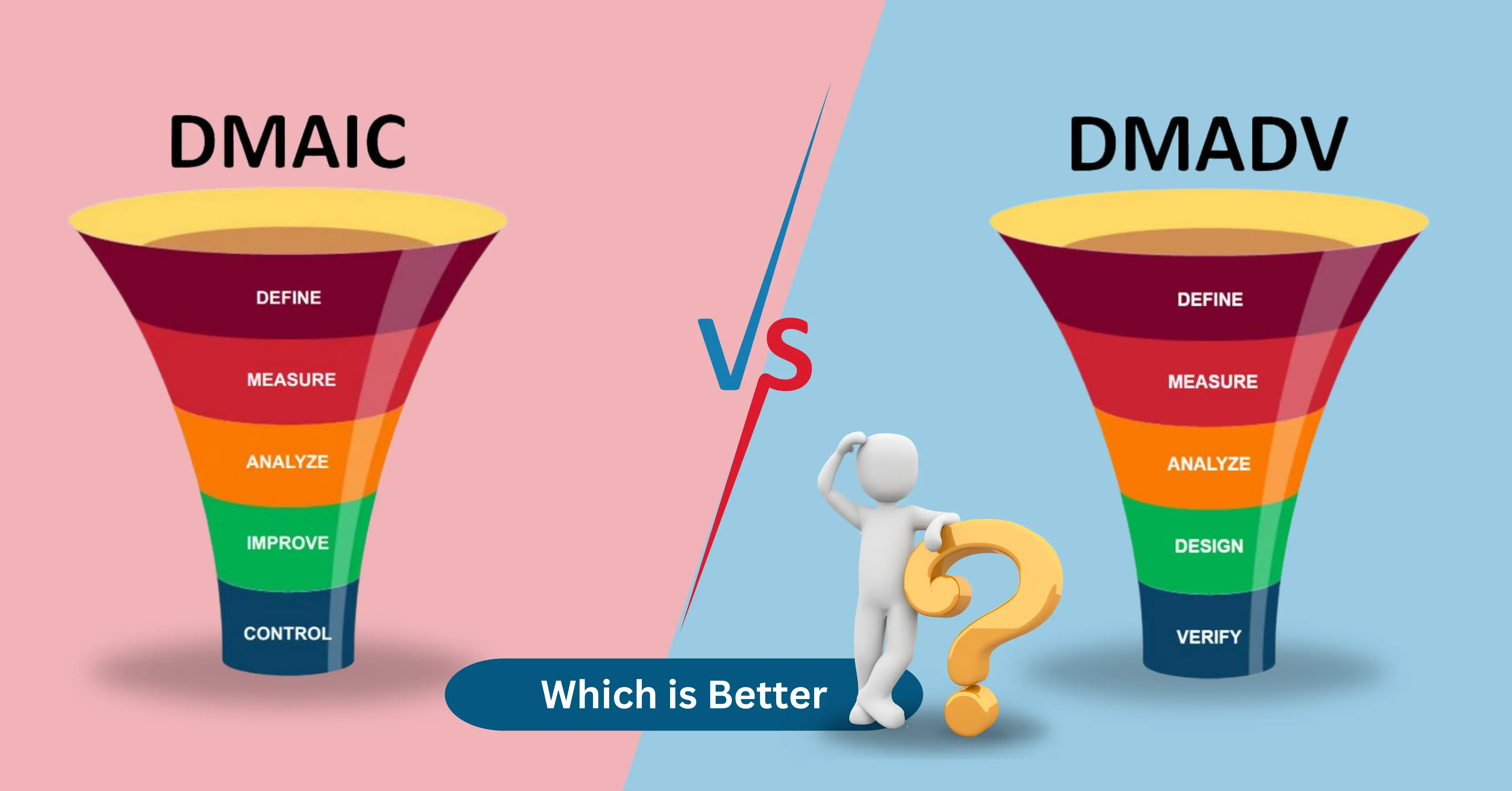
- Ability to use the DMAIC (Define, Measure, Analyze, Improve, Control) methodology at a senior level.
- Understanding and eliminating dominant sources of variation in corporate processes.
- Skills to achieve sustainable quality and process control in Dallas TX ecosystems.
Getting the 6 Sigma Black Belt certification acts as undeniable proof of your ability to perform top-tier leadership roles.
(Check out Sprintzeal’s E-learning portal to get access to over 100+ popular courses).
Benefits of Lean Six Sigma Black Belt Certification
The practices and skills acquired by attending the Lean Six Sigma Black Belt certification boot camp itself are fundamental building blocks in this field. Some of the sigma black belt certification advantages in Dallas TX include:
- Massive employee satisfaction and team morale.
- Rapid career advancement with a TÜV SÜD Certified Lean Six Sigma Black Belt (CLSSBB).
- Dramatically improves business processes.
- Upgraded managerial and leadership ability.
- Strong applicability across diverse Dallas TX industries.
- Excellent salary prospects.
- Sustainable organizational growth.
- Better understanding of the Lean Six Sigma Black Belt framework.
- Ensures strict compliance with global quality standards.
- Gain hands-on experience in black belt lean management.
- Improved company culture.
What will Sprintzeal do for you in Dallas TX?
- Offers flexibility and curates the Six Sigma training based on your specific requirements.
- Lets you choose from various modes of black belt training – classroom, online, and live-virtual in Dallas TX.
- Includes your official TÜV SÜD CLSSGB/CLSSBB exam voucher and a complimentary study kit worth $280 with enrollment.
- Guidance and support for any course offered on the website.
- Six Sigma training provided directly by industry experts (minimum 36 training hours).
- FREE trial and guidance for the course of your interest.
- 24x7 support to make your learning experience better in Dallas TX.
- Provides special offers and discounts to you on other courses offered by Sprintzeal.
(Sprintzeal also offers training in Dallas TX for many other popular Quality Management courses like the Lean Six Sigma Green Belt).
You can take a look at all the courses offered by Sprintzeal
Sprintzeal delivers this Certified Lean Six Sigma Black Belt (CLSSBB) training in alignment with TÜV SÜD South Asia.
Lean Six Sigma Black Belt - Who should get it in Dallas TX?
As a Six Sigma black belt professional, you will fill key positions in management. You will look over your juniors and actively assist them in projects. It is a role of great responsibility because your decisions will affect the Dallas TX project significantly.
Who Should Take This Lean Six Sigma Black Belt Course?
- Senior management, team leaders, and quality assurance engineers wishing to rapidly climb the managerial hierarchy in Dallas TX.
- Professionals aiming to implement Lean, Design for Six Sigma (DFSS), DMAIC, and Total Productive Maintenance (TPM).
- People looking for a highly lucrative career change.
- Individuals who are passionate about advanced quality management processes and statistical tools.
Learning Objectives of Six Sigma Black Belt Certification: Solving complex problems is one of the main roles of a Six Sigma black belt certified professional. Moreover, you will act as the project leader and take key strategic decisions. Assigning roles to everyone in the Dallas TX team is your responsibility. Most importantly, you will be able to use Lean Six Sigma Black Belt concepts in all your projects to improve the quality of products. You will have a lot of variation in roles. Eliminating errors from the project and improving its success rate is another essential role of a Black Six Sigma belt professional.
About Lean Six Sigma Master Black Belt
Above all, Six Sigma master black belt level professionals are global leaders who will find employment in any part of the world. They are the face of an organization and occupy the absolute highest managerial posts within an organization. Lean Six Sigma Master Black Belt level of operational excellence guarantees top-tier compensation in Dallas TX.
Who should get a Six Sigma Master Black Belt Certification?
- People who currently hold a Six Sigma black belt and want to learn further.
- Individuals who want to occupy the highest levels of management in a Dallas TX organization.
- Business professionals who want an executive career change.
- Individuals interested in leading multi-million dollar global portfolios.
Six Sigma Master Black Belt Prerequisite:
- You need to be a verified Six Sigma Black Belt professional.
- Also, you must possess 5 years of active experience in project management.
Six Sigma Master Black Belt Learning Objectives:
The Six Sigma Master Black Belt will help you fully understand and implement DMAIC tools across multiple concurrent projects. Along with that, you will be able to lead your Dallas TX organization in various enterprise-level business projects. In addition, you will become an elite expert in problem assessment and will be able to identify key systemic issues. After obtaining the master black belt certification, you can initiate projects and look after their proper completion. You will also guide those below you and help them understand the project details properly.
How does Sprintzeal help me prepare for the exam?
Our trainers combine live online sessions, assignments, practice questions, and mock tests—alongside a complimentary study kit worth $280 and your included TÜV SÜD exam voucher—so you can prepare for the exam with confidence.
Lean Six Sigma Black Belt Training Online for United States
Lean Six Sigma Black Belt training online for United States provides a flexible way to develop advanced process improvement and project leadership skills aligned with TÜV SÜD South Asia’s CLSSBB curriculum:
- Introduction (5% weightage / 5 marks):
Problem-solving methodologies (PDCA), Lean practices, Toyota Production System, continuous vs. batch flow, pull systems, 8 wastes, Theory of Constraints (TOC), and TRIZ. - Define (15% weightage / 15 marks):
Project selection, Voice of Customer/Business/Process (VOC, VOB, VOP), Kano analysis, COPQ/COGQ, QFD, Balanced Scorecard, CTQ drill-down trees, SIPOC, project charter, project management tools (Gantt, Critical Path), and Kotter's 8-Step Change Model. - Measure (25% weightage / 25 marks):
Process mapping, Value Stream Mapping (VSM), operational definitions, Measurement Systems Analysis (MSA & Gage R&R), basic statistics and Minitab graphical analysis, process stability, and process capability (Cpk, Sigma level, normal/non-normal/attribute capability, FPY, and RTY). - Analyze (15% weightage / 15 marks):
Exploratory root cause analysis, process stratification, Multi-Vari charts, FMEA (Severity, Occurrence, Detection, RPN), hypothesis testing in Minitab (1-sample/2-sample/paired t-tests, ANOVA, Mann-Whitney, Kruskal-Wallis, chi-square, logistic regression), correlation/regression, and gap analysis. - Improve (15% weightage / 15 marks):
Brainstorming, SCAMPER, mind mapping, Six Thinking Hats, Design of Experiments (DOE—full & fractional factorial, main/interaction effects, cube & contour plots), Lean tools (5S, Push vs. Pull, SMED, Kaizen), Pugh Matrix, Force Field Analysis, and piloting. - Control (15% weightage / 15 marks):
Mistake proofing (Poka-Yoke), SOPs, Statistical Process Control (SPC) and control charts (I-MR, X-R, X-S, U, C, P, NP charts), Visual Factory/Management, Total Productive Maintenance (TPM), control plans, and project closure. - Lean Methodologies (10% weightage / 10 marks):
Enterprise-wide Lean principles, waste elimination, flow optimization, and continuous improvement integration.
Classroom Training
Online Instructor-Led Training
Online Self-Paced Training
Onsite Training

Toll Free
+1 315 666 4368
Mail Your Queries
support@sprintzeal.comGet 2 FREE Online Self Learning Course Access
World No.1 Leading Company to provide Professional Training and Certification
Exam & Certification
Exam & Certification FAQ
- Test duration: 180 minutes
- Number of questions: 100 multiple-choice questions (1 mark each)
- Format: Online, open-book examination. A passing score of 70% (70 out of 100) or above is required to earn the Certified Lean Six Sigma Black Belt (CLSSBB) credential.
- Eligibility Criteria: Candidates should be a qualified Lean Six Sigma Green Belt (preferred from a TÜV SÜD certified training partner) and have attended a minimum of 36 hours of instructor-led Lean Six Sigma Black Belt training, OR possess a minimum of 5 years of work/project experience in one or more areas of the CLSSBB Body of Knowledge.
Our Corporate Training Clients































Our Service Delivery
We offer world-class training to professionals from corporate companies, government firms, public & private sectors, and multinational organizations. Our main focus is to deliver high quality training at affordable rates to individuals from various industries. We help them get certifications and enhance their career in the most convenient, effective and best way possible.
- 9/10 Average Satisfaction Rate
- 96% Completitation Rate
- Friendly Environment & Expert Teacher
Client Feedback on Lean Six Sigma Black Belt Certification Training Course in United States

JulianKalac
Process EngineerCanada
I was initially skeptical but once the session started it all went seamless and the training provided was by top trainer.
Rachid ELHARSALI
Lean Six Sigma Senior Black BeltGreat experience and instructor really went above and beyond to make sure we would be prepared for the exam.

Rox Baratti
Change ManagerAttending the Lean Six Sigma Black Belt training from Sprintzeal was outstanding. The trainer explained complex process improvement concepts in a simple and practical manner, making them easy to apply in real projects

Bruno Penatieri
Lean Construction SpecialistBrazil
I enrolled in this course to develop advanced process improvement and leadership skills, and my experience with Sprintzeal was outstanding. The training was well-structured, and the trainer used real-world case studies and practical examples to explain complex methodologies in a clear and engaging manner. The interactive sessions enhanced my understanding and provided valuable insights that I can apply in my professional role

Julian Kalac, P.Eng
Certified Lean Six Sigma Master Black BeltExcellent customer service! Anne has been very helpful and kind in setting up the course for me.

Monther Haddad
Datacenter TechnicianI had a great experience with Sprintzeal. The training was well organized, the support was excellent, and the overall learning experience was very good.

Margarida CôrteReal
Teacher of EconomicsPortugal
What I appreciated most was the focus on applying Lean Six Sigma methodologies to real business challenges rather than just preparing for the certification exam. The practical insights and hands-on approach gave me the confidence to use these techniques in my professional role. The Sprintzeal support team was also excellent throughout the entire process. From registration to course coordination, everything was handled smoothly, and they were always available to answer questions and provide assistance.

Ana Carolina Guimarães
Consultora ExecutivaBrazil
From start to finish, this training has been an incredibly enjoyable and rewarding learning experience. The instructor was absolutely phenomenal—exceptionally knowledgeable, highly experienced, and capable of breaking down complex quality Management concepts into easily digestible insights. I learned so much more than I ever expected.

KentaroNagasaka
Senior Manager, Design Assurance Global, Quality AssuranceJapan
I would highly recommend Sprintzeal as a trusted training platform. The training was highly informative, well-organized, and provided an excellent learning experience. The course structure, trainer's expertise, and overall support made the learning journey smooth and valuable. Overall, I had a very positive experience with Sprintzeal and found the training to be truly beneficial.
sarah stockman
United States
Excellent Support System
Throughout the training, I felt supported by both the instructors and the administrative team. Any queries or concerns were addressed promptly, and the follow-up support post-training has been commendable. It's a testament to Sprintzeal's commitment to their students' success.
Frequently Asked Questions
The chances of getting a job increase manifold on getting certified. It surely acts as a powerful add-on that gives you an edge over your competitors in the Dallas TX market. However, since several other things are also taken into consideration by interviewers, we cannot give a 100% guarantee.
With over 200,000+ professionals trained across the globe, the success rate of Sprintzeal’s training programs for our Dallas TX cohorts is an impressive 99.6%.
Our Accreditations






























Learners Also Enrolled For


 USA : +1 315-666-4287
 UK : +44 7700 174870
 IND : +91 9036108287
 AUS : +61 480 005 455